Driven by thick forests, perennial rivers, and year-round flowering plants, local farmers have embraced beekeeping not only as a source of income but as a means to conserve the environment.
Chipinge – Zimbabwe: Benjamin Chatambura, 57, checks one of the hives that border his small plot while adjusting his veil under the shade of a big acacia tree. With his hands worn from years of expertise and respect for his trade, he smokes the hive gently while bees buzz around him. Chatambura, beekeeping is not just a job; it is a lifeline. Beekeeping has provided a solution to some of Chipinge’s most urgent problems in recent years.
“These bees help me feed my family,” he boasts quietly. “Every honey drop matters.”
The perfect environment for bees is one of dense woodlands and year-round flowering wild plants. More than that, though, beekeeping has helped many people in this rural area, where jobs are hard to come by and drought frequently affects agriculture, get out of poverty.
The honey, beeswax, and other goods produced by Chatambura’s hives are highly sought-after both locally and in urban areas. He has been able to raise his level of living, purchase necessities, and send his kids to school. The benefits are not only monetary.
“Beekeeping has taught us to care for our forests,” he explains. “Bees will leave and our revenue will follow if we don’t protect our environment.”
A Sweet Solution Amidst Struggle
The ecosystem of the area depends heavily on the forests that provide the bees with their natural habitat. Regrettably, deforestation and wildfire are two major dangers to these woodlands. But the popularity of beekeeping has given the locals a new reason to preserve these trees.
According to findings by this publication, since beekeeping initiatives were implemented in Chipinge, the frequency of forest fires has dramatically decreased. Historically, in order to gain access to wild hives, honey gatherers would frequently do extensive damage to the forest by starting uncontrolled fires. Villagers are now learning more sustainable methods thanks to training and assistance from non-governmental organisations. They now extract honey in a method that permits the bees to flourish rather than destroying entire colonies. This shift has made a visible impact on forest health.
More than 1,500 farmers in the district have started beekeeping, according to the Food Agriculture Organization (FAO). Nearly 40% of beekeepers say they actively participate in afforestation efforts, demonstrating that this has not only decreased fire incidences but also promoted forest regeneration. These farmers are guaranteeing the sustainability of the ecosystem and their livelihoods for future generations by preserving the plants and trees that bees depend on.
An Ecosystem-Saving Enterprise
The beneficial effects of beekeeping on biodiversity in Chipinge are among its less obvious but no less significant benefits. According to environmentalist Margaret Chihota, bees are essential to pollination, which promotes the growth of many plant species. As a result, the genetic variety of both cultivated and wild crops is preserved, which is crucial for environmental resilience and food security.
In recent years, Zimbabwe has lost millions of hectares of forest, mostly as a result of unsustainable agriculture and logging.
“However, as more Chipinge farmers adopt beekeeping, they are reversing this trend by actively participating in forest conservation. By using indigenous plants and wildflowers that require minimal water, the beekeepers are supporting the natural habitat while reducing the need for additional agricultural land,” said Chihota.
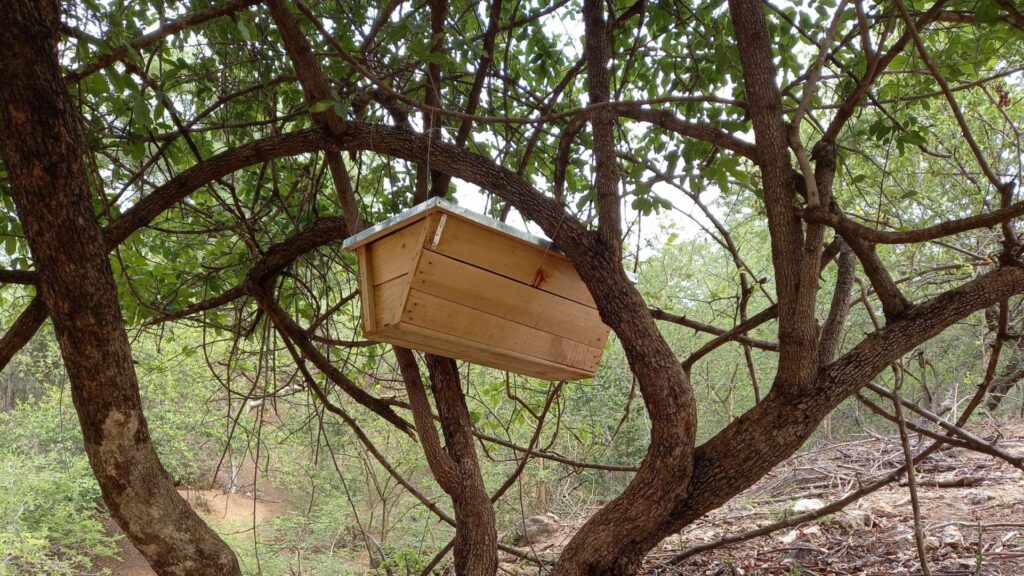
The forest-based beekeeping model that Chipinge employs is efficient and self-sustaining. Hive locations provide ecosystem functions without altering the surrounding woodland’s natural appearance. In order to foster a positive interaction between the bees, the land, and the people who depend on them, beekeepers frequently erect hives at acacia trees close to rivers and floral plants.
Challenges and the Way Forward
Beekeeping has challenges despite its many advantages. Products made from bees, such as honey, and royal jelly, nevertheless have a small market. Due to a lack of processing facilities, beekeepers are limited in their supplies. Also farmers like Chatambura frequently struggle to find permanent markets for their goods.
In response, some NGOs are working to connect beekeepers with markets and provide training on value addition.
“These organizations are helping farmers reach a wider audience and increase their earnings by teaching them how to process and package their products,” Chihota says. “There are also calls for government support, with local leaders urging policymakers to recognize beekeeping as a key part of rural development.”
Regular community gatherings, workshops, and training sessions are held to address the lack of access to information and technology. Farmers gain knowledge about the best methods for managing hives, collecting honey, and protecting the environment.
“We need education if we want this industry to grow,” Chatambura says. “We can turn beekeeping into a steady source of income if we have the right information.”
In order to give farmers resources and support, local leaders are arguing that beekeeping should be incorporated into Zimbabwe’s forestry and agricultural policy. Additionally, there are also pushing for better infrastructure, and rural beekeeping officers who could provide market information and technical support.
For the hundreds of beekeepers in Chipinge, the future looks bright. They have turned a simple, ancient practice into a modern solution to some of their biggest challenges of deforestation and environmental degradation.
“We’ve found a way to live in harmony with our land,” says Chatambura, as he gazes out over his hives. “This is how our children and their children should go forward.”