The original video shows Ramaphosa urging countries to lift travel bans following the emergence of the Omicron COVID-19 variant in November 2021.

This video, shared on Facebook, claiming to show South African President Cyril Ramaphosa pleading with countries to lift travel bans imposed on South Africa over xenophobia, is FALSE.
In the clip, President Ramaphosa purportedly states, “We call upon these countries that have imposed travel bans on our country to immediately and urgently reverse their decisions and lift the bans they’ve imposed before any further damage is done to the economy and to the livelihoods of our people. There is no scientific justification whatsoever for keeping these restrictions in place.”
The text accompanying the video reads, “Forgive us, don’t ban us. South Africa begs for ban lift resulting from xenophobic claims.”
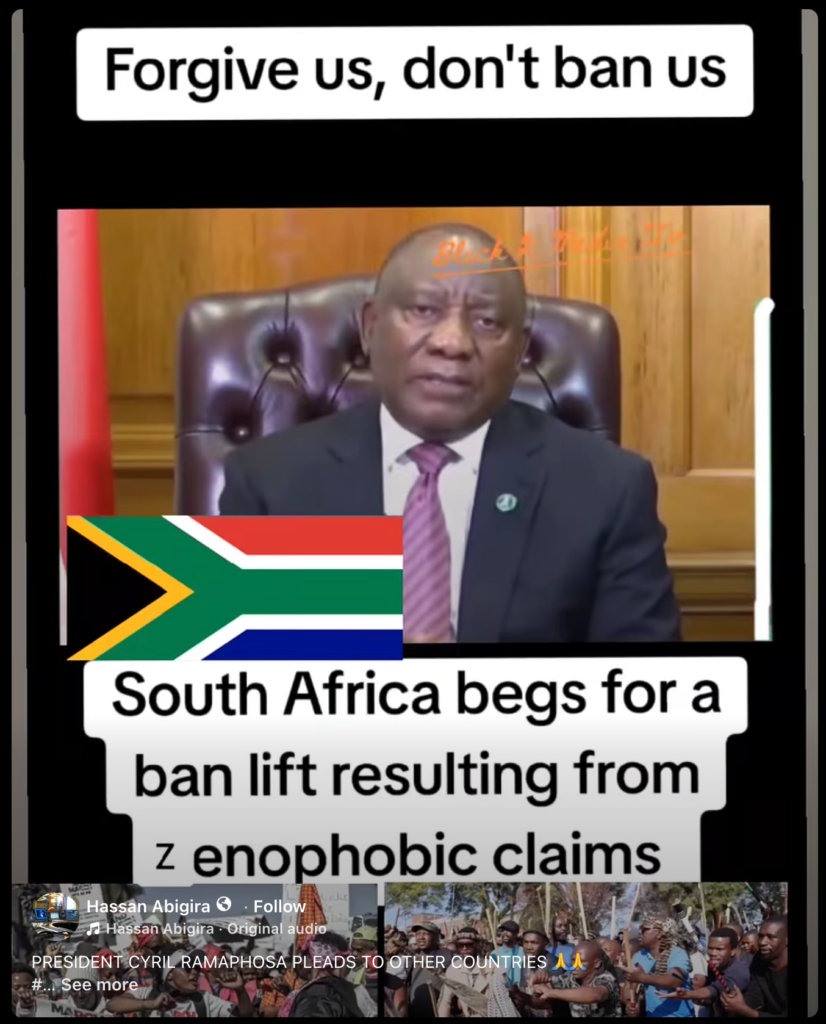
However, the clip is misleading and unrelated to recent events in South Africa. A reverse image search of keyframes extracted from the video shows that it dates back to November 2021.
The footage shows President Ramaphosa calling for the lifting of travel bans imposed after the detection of the Omicron COVID-19 variant in South Africa. His remarks addressed those restrictions, not allegations of xenophobia.
The viral clip has therefore been taken out of context and falsely presented as a recent appeal by President Ramaphosa for the lifting of travel bans allegedly imposed because of xenophobic attacks in South Africa.
PesaCheck has looked into a video shared on Facebook claiming to show South African President Cyril Ramaphosa pleading with countries to lift travel bans imposed on South Africa over xenophobia and finds it to be FALSE.
This post is part of an ongoing series of PesaCheck fact-checks examining content marked as potential misinformation on Facebook and other social media platforms.
By partnering with Facebook and similar social media platforms, third-party fact-checking organisations like PesaCheck are helping to sort fact from fiction. We do this by giving the public deeper insight and context to posts they see in their social media feeds.
Have you spotted what you think is fake or false information on Facebook? Here’s how you can report. And, here’s more information on PesaCheck’s methodology for fact-checking questionable content.
This fact-check was written by senior PesaCheck fact-checker Pius Enywaru and edited by PesaCheck senior copy editor Mary Mutisya.
The article was approved for publication by PesaCheck chief copy editor, Stephen Ndegwa.

PesaCheck is East Africa’s first public finance fact-checking initiative. It was co-founded by Catherine Gicheru and Justin Arenstein, and is being incubated by the continent’s largest civic technology and data journalism accelerator: Code for Africa. It seeks to help the public separate fact from fiction in public pronouncements about the numbers that shape our world, with a special emphasis on pronouncements about public finances that shape government’s delivery of Sustainable Development Goals (SDG) public services, such as healthcare, rural development and access to water / sanitation. PesaCheck also tests the accuracy of media reportage. To find out more about the project, visit pesacheck.org.
This fact-check is republished by The Besana Mail – Zim Truth Radar with the permission of Code for Africa under a partnership agreement.