Lawrence Moyo
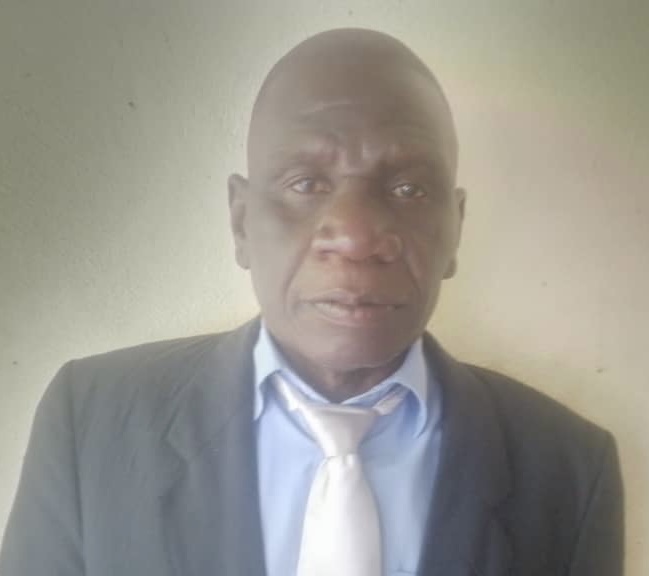
Preservation of indigenous knowledge conversations are taking centre stage in Zimbabwe and elsewhere as languages and culture face extinction. Many factors have been cited as the root causes, but to have a closer look at it, Onita Sibanda (OS) speaks to Lawrence Moyo (LM) aka Penpusher – Jiti, a writer and poet who takes pride in the Nambya language.
OS: Good evening folks! Welcome to The Weekly Guest at Besana, a discussion on Children issues. We host guests from various fields across Zimbabwe and the globe. My name is Onita Sibanda. Today’s topic is Blast from the past – Preservation of Indigenous Knowledge. I am joined by Lawrence ‘Penpusher’ Moyo AKA Jiti.
LM: It’s my pleasure to be here.
OS: Welcome on the show! We are happy to have you today. You are one of the popular people in Hwange. Kindly introduce yourself.
LM: My name is Lawrence Moyo. I earned the moniker Penpusher because of my strong passion for letter writing. In the drama circles I’m known as Jiti. In a nutshell I’m a writer, poet and comedian. Born and bred in Hwange.
OS: Thank you for the brief intro Jiti. You are well known for your newspaper column ‘Blast from the past’. When you see yourselves growing and you look at our children today, is there any change and what must be done?
LM: There is a world of difference between contemporary children and yesteryear children. Today’s children are blessed to be born in the digital era where computers are awash hence the majority are computer literate but the way they conduct themselves leaves a lot to be desired. Cultural values are no longer adhered to, drug and substance abuse is reigning supreme. Parents have the obligation to put back the children on the track with government intervention.
OS: So true! Nowadays Ubuntu (bunhu) is not with us. You have written many things in Nambya and have promoted same through drama, skits and poetry. What is the importance of preserving one’s language?
LM: A language has to be preserved, so that it does not face extinction. A language should be passed on from generation to generation. We have to preserve it for the sake of posterity.
OS: The same way you are preserving chiNambya. I will quickly move on to my next question. How do your work help children in Hwange and the country at large?
LM: At least some children under my mentorship are beginning to realise profit from their work.
OS: Great! We saw Primogenitor Mpala winning a prize in a national poetry competition. What was your role in shaping her talent?
LM: I instilled confidence in Primogenitor when she was still a primary school pupil. She started off by reciting my poems at public gatherings until I sold to her the idea to start writing her own poems and since then she hasn’t looked back. I’m glad she won the national prize. She deserved it.
OS: Good job Jiti. Mwanyamula baNyai, we are grateful. Do you think schools are doing enough to promote talent and indigenous knowledge? Shed more light on the lows and highs.
LM: Through CALA, schools had really gone in the right direction. However, I think school are concentrating more on soccer, netball and athletics. What about poetry, swimming, essay writing etc
OS: How best can we address drug and substance abuse among children?
LM: By providing recreation facilities, creating employment and education on the dangers of drug and substance abuse.
OS: If Hwange is to find a sponsor for an academy. With different talents among our children, what will be your proposal?
LM: I would propose to revive all recreation facilities so that all children with different talents could be nurtured.
OS: Thank you for that and this brings me to my last question. How best a media house like The Besana Mail help children in talent development and indigenous knowledge preservation?
LM: Besana Mail can assist by advocating for competitions, helping in acquisition of paraphernalia to be used in various areas and covering stories of events to encourage children.
OS: Thank you, this motivates us to work harder. Your last words?
LM: Children need to be empowered so that they realise their full potential.
OS: Thank you Penpusher! I liked the children play which was supported by Shangano arts. Keep it up you are indeed preserving the Nambya language.
LM: Thank you so much
OS: That brings us to the end of our discussion, ladies and gentlemen. Allow me to once again thank our guest for his time to interact with us today. Taboka kasa.
LM: Ndaboka namibo