
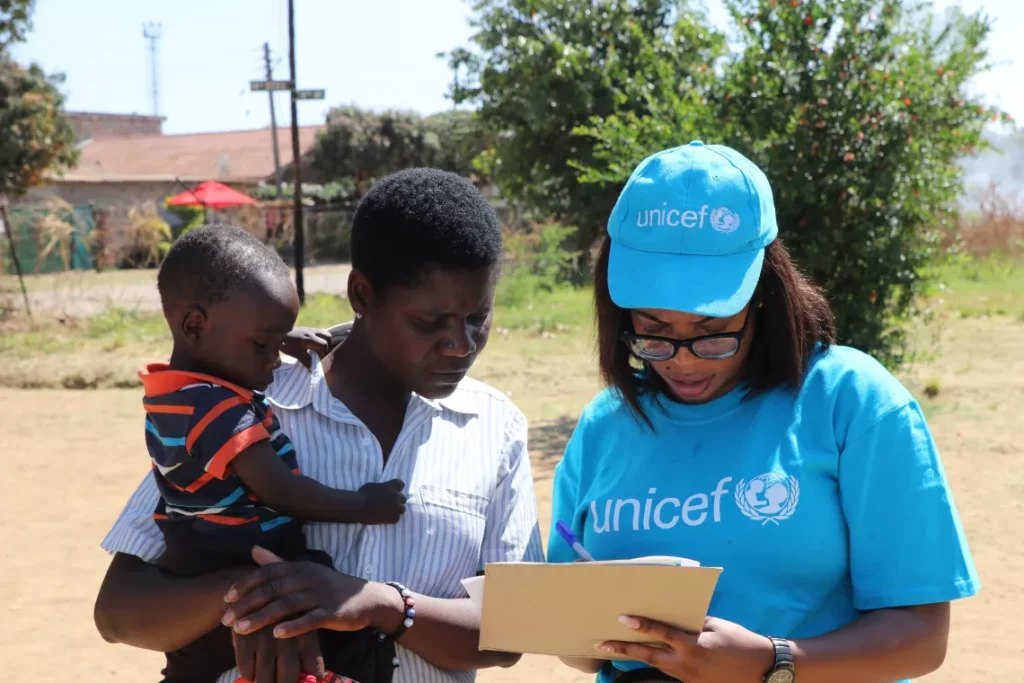
Photo Credit: UNICEF
In Zimbabwe, the High Court is the upper guardian of all minor children. The best interests of the child are a paramount consideration in all matters concerning the access, guardianship or custody of all minor children. Custody in Zimbabwe is regulated through the Guardianship and Minors Act (Chapter 5:08). Onita Sibanda (OS) hosts Joylyn Change (JC), a legal practioners on the Besana Weekly Guest Show.
O S: Today’s discussion is on Children’s Custody and Access in Zimbabwean Law. As we explore this critical topic, we will delve into the legal frameworks, principles, and procedures that govern custody and access of a child in Zimbabwe. I’m joined by Joylyn Change. Welcome Joylyn. May you kindly introduce yourself
J C: Good evening ladies and gentlemen I am so honoured to be a part of tonight’s discussion. I’m Joylyn Change, a mother of a 16-year-old boy. I m currently practising law within the jurisdiction of Hwange.
OS: Thank you Joyleen for the introduction. What are the key considerations for parents/guardians seeking custody or access in Zimbabwe?
J C: Custody and access are legally granted by the courts upon application by the interested party. So, what the courts mainly consider is the best interests of the child. The best interests of the child’s welfare are of paramount importance and nothing more.
O S: That’s a crucial point. How does Zimbabwean law define “best interests of the child” in custody disputes?
J C: Custody of minor children in Zimbabwe is mainly governed by the Guardianship of Minors Act Chapter 5:08. The best interests of the child are defined as actions or orders that best serve a child and who is best suited to take care of them. It’s important to go through the above mentioned statute read together with the Children’s Act Chapter 5:06.
O S: That’s a clear explanation. Thanks Joyleen. What are the main differences between custody and access in the Zimbabwean law?
J C: Custody is the legal right of a parent to make all major decisions that affect the child which mainly relates to education, health and a right to maintain them financially. It’s governed by section 5 of Act number 5:08. On the other hand, access to a minor child is the right awarded to a parent who does not live with the child to make contact with the child or see the child. The parent with access has no right to make major decisions affecting the child. Usually there is an agreed time for the latter parent to see the child for example to see the child every weekend or to have the child over at their house during the school holidays period.
O S: Thank you, for breaking down the differences between custody and access. It’s essential to understand these distinctions, especially for parents navigating these complex issues.
J C: True. Also take note that the custodial parent is the one that lives with the child.
O S: What common challenges do parents/guardians face when navigating custody/access in Zimbabwe?
J C: What I have noted from my practice experience: 1. Lack of knowledge of their rights and the children’s’ rights. 2. Lack of knowledge of court procedures. 3. Family interference. 4. Affordability. Some parents face challenges of compiling court applications for custody and omit to include the information that is needed by the court in order to determine the best interests of the child. You find that an application can fail solely because of committing the important information which the court needs.
O S: True! The consequences of omitting essential information can be severe.
J C: There are instances whereby an applicant or should I say a parent seeking custody is not represented by a lawyer yet he or she has good grounds for seeking custody. Then they lose mainly because the other parent is represented. In these cases, it will mostly be because of technicalities. So the affording parent wins just because they can afford to pay a lawyer.
OS: That’s a concerning issue, it highlights the need for access to justice and legal representation.
J C: In addition to the above, there is family interference. You find that one has good grounds for seeking custody but the family especially grandparents and aunties interfere and cause problems for the parent seeking custody, maybe because they are bitter or they want to keep the child so that they benefit from the maintenance being paid.
O S: That’s a sad reality, Joyleen. It’s unfortunate that financial means can sometimes tip the scales in favour of one parent over the other. Ideally, the courts should prioritize the best interests of the child, regardless of the parent’s financial situation.
J C: Sad indeed!
O S: What support systems are available for parents/guardians struggling with custody issues.
J C: The obvious being the children’s’ courts, legal firms, organisations that deal with the welfare of the child like BEAM, UNICEF, JUSTICE FOR CHILREN etc.
O S: That’s a great list. Those organizations play a vital role in supporting children’s welfare and providing resources for parents navigating custody disputes. How does domestic violence or abuse impact custody/access decisions?
J C: Let’s say a woman is awarded custody after a divorce them she remarried. If she is abused by the current husband she can be forced by circumstances to give away her child to the father of the child out of fear for the wellbeing of the child.
Alternatively, the current husband may refuse to take the woman’s child after marriage thereby forcing the grandparents to raise the poor child. The poor woman will have no choice but to prevent the child from being exposed to domestic violence.
O S: That’s a heart-breaking scenario, Joy! The fear of abuse and the desire to protect the child’s well being can lead to difficult decisions. How do cultural or religious factors influence custody/access decisions in Zimbabwe?
J C: Some cultures believe that the child belongs to the paternal family because the man paid “lobola”. It is believed that ‘kulotsholwa umntwana’. So, it is not easy for the woman to remove a child from the parental family is such cases. Some religions believe that when a woman decides to divorce she should simply leave with her bag and leave the children behind. Then, also some people in general believe that a man cannot have custody of a child/ren just because he is a man especially if he has not remarried. Especially if the child is below the age of 5 years.
OS: Those are concerning beliefs. It’s alarming that some religions and societal norms prioritise outdated gender roles over the well being and best interests of the child.
J C: You can say that again!
OS: Will move on to my next question. What are the consequences of non compliance with custody/access orders?
J C: Arrest by the police. Once a parent fails to abide by the court order the aggrieved parent can approach the police to report them. The police will then arrest and charge the parent with the offence of contempt of court. He or she will then appear before the criminal court to answer to the charges or allegations. The penalty can be payment of a fine. And once one is found guilty of the offence it then follows that the parent will have a criminal record
O S: That’s a serious consequence, Joy. Having a criminal record can have long term effects on a person’s life, including their ability to find employment. What advice would you give to parents/guardians navigating custody/access in Zimbabwe to ensure the best interests of the child?
J C: Read and acquire knowledge about all issues pertaining to the rights of the child. Do a thorough research before filing your applications and above all put your feelings aside and put the child first.
O S: Thank you for sharing your advice Joy. My final question is: What are your last words?
J C: In all we do we should bear in mind that when you are a parent all decisions that you make affect your child somehow. So let’s be wise.
O S: Well said. Your words are truly profound. Thank you so much, Joylyn, for taking the time to share your valuable insights and expertise with us today. Your contributions to our discussion have been truly enlightening.
J C: You re welcome.





Good afternoon its Mr Nyathi speaking lam a father of a 8 year old son from Gwanda l need help since my son was born l was not been given access to my child but l support so l would like to know how can l have access
Greetings! Kindly get in touch with this lawyer – Pamellah Musimwa 0777000542
Greetings! Kindly get in touch with this lawyer – Pamellah Musimwa 0777000542