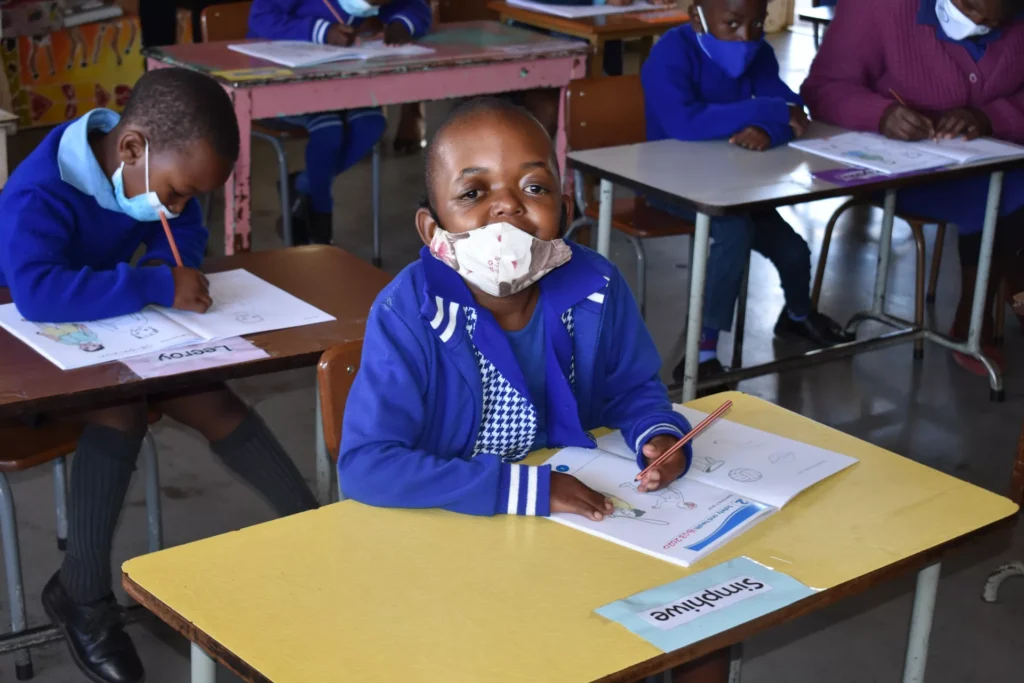
Credit - UNICEF
In this week’s Weekly Guest Show, Onita Sibanda (OS) speaks to Samantha Sibanda (SS) a renowned Zimbabwe’s champion of inclusion and rights of people with disabilities. The conversation delves deeper into challenges and opportunities at the intersection of advocacy work and community education.
O S: Welcome to the Weekly Guest Show where we will be shining a spotlight on a crucial aspect of education: inclusivity and accessibility for children with disabilities. Joining me today is Samantha Sibanda, a passionate disability advocate dedicated to promoting equal opportunities and inclusive practices. Welcome to the show Samantha, may you kindly introduce yourself?
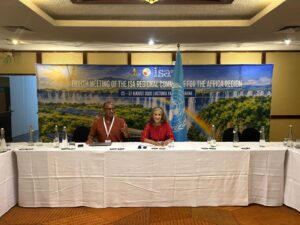
S S: Thank you for the opportunity to be on the platform to share my work. I also want to recognise fellow activists and colleagues in the group. Samantha Sibanda is a civic leader and champion of disability rights and inclusion. For the past decade, she has been instrumental in raising awareness and breaking down barriers faced by people with disabilities in Zimbabwe. She is the founder of Signs of Hope Trust, which is one of the organizations at the forefront of advocating for the realization of the Rights of Persons with Disabilities. Samantha currently serves as a Board Member at Deaf Women Included, and she chairs the Mandela Washington Fellowship Disability Inclusion Knowledge Network, where she plays a key role in the developing collaborative strategies to enhance disability rights advocacy across Africa through network members. Guided by the principle of ubuntu, Samantha is dedicated to learning, teaching, and practicing this principle in promoting human rights.
O S: Thank you for sharing your impressive bio with us. What inspired you to become a disability advocate?
S S: My work in disability rights is due to many experiences but a huge contributor is my teaching experience. I am a teacher by calling. At A’ Level, I thank my teacher for mentoring me to teach some principles to my juniors and I have never stopped. I have taught remedial lessons and now doing Special Education at university while I also run a disability rights organization. I was brought up in an environment that upholds Ubuntu and my work is centred on empowering others.

O S: Thank you for sharing the personal experiences that have shaped your passion for disability rights. What are some common challenges faced by children with disabilities in educational settings?
S S: It’s a broad question but let me try to summarize a few points. Firstly, late identification, we have a lot of disabilities but especially most invisible disabilities like autism, there are delays in identification. This results in late intervention – there are many reasons for late identification including lack of knowledge (both parents and teachers) about disabilities. When there’s no knowledge of the disability, the child faces challenges in their education.
Also the high teacher – pupil ratio is a cause for late identification. One teacher has 40 students in class. I remember being engaged to teach an 11-year-old. We had to start with reading. I took grade one materials and had to start teaching the alphabet, vowels, and consonants.
We have more challenges like bullying, a curriculum and assessment method which is uniform. Children with disabilities may fail to cope. While we commend the government for putting in place things like video assessments which can be used by deaf learners, we have called on the government to think of abolishing standardized assessments altogether and rather look into teaching children the skills that are required for them on a day to day basis like collaboration etc. Standardized testing has been abolished in some countries and it’s worth considering.
O S: Thank you, Samantha, for highlighting these critical issues. The delayed identification of disabilities, especially invisible ones like autism, can indeed have a profound impact on a child’s education and future opportunities.
S S: You can check the section in a High Court Ruling and our advocacy for abolishing standardized testing. In the ruling, some children were denied entry for form one based on poor grade 7 results.
O S: That’s alarming. Denying children entry to Form One based on their Grade 7 results can have long lasting consequences on their educational journey and future prospects. How can parents and caregivers support the unique needs of children with disabilities?
S S: Parents provide emotional and general moral support – counselling for children, reassuring them and encouraging them. We have noted with concern, depression and anxiety etc. among children with disabilities the home has to be supportive. Secondly, parents are also a critical stakeholder in education, they need to attend school consultations, school general meetings and also public hearings to advocate for conducive legislation. There are organizations such as the Zimbabwe Parents of Handicapped Children and Safe Haven that parents can join so that they also receive support. It’s not easy to raise a child with a disability.
O S: Thank you for emphasizing the vital role parents play in supporting children with disabilities. Emotional and moral support are crucial in helping these children navigate the challenges they face. And thank you for providing resources and support groups for parents. What role do you think early intervention and therapy play in supporting children with disabilities?
S S: Early intervention is very critical. But, it will also depend on disabilities again. I will just give an example. As already mentioned above I am into Special Education and mostly interested in Deaf Education. I will give just an example of early intervention for Deaf Children I observed during my fellowship in the United States, I had the opportunity to tour Deaf Schools. There are various things done 1. There is hearing screening at birth 2. When a child is born Deaf, they immediately send a teacher to teach the family Sign Language. 80-90% of children who are born Deaf are born to hearing parents. If the language is not taught it will mean there will be delay in language acquisition 3. In the school, they are taught both Sign Language and the written English of that country. It makes it easier for them because the language of instruction across all subjects is English. So, imagine if all those are not done, they will lag behind. Now we use tools like ChatGPT and Meta – imagine for Deaf Children who have below average knowledge.
In Zimbabwe we also have some intervention strategies which are very good. Screening is done for free by the ministry of education – in Harare it’s at Mt. Pleasant. I have also seen various adverts of outreaches that are done countrywide and by the local education ministry in the district or province.
O S: I completely agree with you that, without these interventions, Deaf children can face significant challenges, including delayed language development. Your point about the potential of tools like ChatGPT and Meta to support Deaf children with below average knowledge is fascinating.
S S: Here I was talking about a certain level of literacy being needed to comprehend what is being said online. Discrimination in education practices results in persons with disabilities being left behind.
O S: It’s great to hear that Zimbabwe has implemented free screening programs through the Ministry of Education, making it more accessible to families across the country.
How can we promote inclusivity and accessibility in playgrounds, parks, and other public spaces for children?
S S: Promoting inclusion I think starts with a shift in attitude. How do we view disability and persons with disabilities? Below are 7 pillars of inclusion which we need to consider to be more inclusive
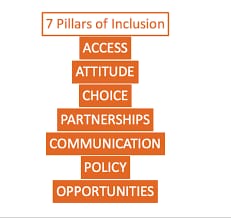
I will talk more about opportunities. People with disabilities should coexist in a community that gives opportunities for participating in various capacities. To do so reasonable accommodation like sign language and Braille should be provided.
O S: Thanks for sharing! What are some strategies for teaching children with disabilities social skills and promoting friendships?
S S: Strategies are many again – There’s a need for mainstream education for the children. We also don’t support institutionalization (putting children with disabilities in their own schools). But, there would be a need to educate the school teachers, admin staff and learners about disability in order to create a conducive environment.
Also, recreation – during my fellowship I also saw equine therapy. Because of lack of time I took this online (meta) but I have seen first hand how it works.
Equine therapy, also known as equine-assisted therapy (EAT) or equine-assisted learning (EAL), is a form of therapy that uses horses to help individuals with physical, emotional, or cognitive disabilities. It’s a wonderful way to support children with disabilities in developing their social skills. Benefits of Equine Therapy for Children with Disabilities
1. Improved social skills: Interacting with horses can help children with disabilities develop essential social skills, such as communication, empathy, and trust.
2. Increased confidence: Equine therapy can boost self-confidence and self-esteem in children with disabilities, helping them feel more comfortable in social situations.
3. Enhanced emotional regulation: Horses can provide a sense of calm and emotional stability, which can help children with disabilities manage their emotions and behaviors in social situations.
4. Developing relationships: Equine therapy can provide opportunities for children with disabilities to form relationships with the horses, therapists, and peers, helping to develop social bonds and connections.
5. Sensory integration: Horses can provide a calming and organizing influence on the sensory system, which can be particularly beneficial for children with sensory processing disorders.
In an equine therapy setting, a trained therapist, often in conjunction with a horse professional, works with the child to achieve specific goals. The therapy may involve: Grooming and caring for horses, developing responsibility and empathy; riding or driving horses; improving balance, coordination, and confidence; equine-assisted activities; participating in activities, such as horse-themed games or obstacle courses, to develop social skills and teamwork.
In Zimbabwe we have this as well. There are healing horses in Bulawayo and Harare. It works wonderfully for children especially with physical disabilities and autism. I had the opportunity of sending children for this therapy sometime in my work
O S: I completely agree with you, Samantha. Mainstream education is essential for promoting inclusivity and social integration.
Your personal experience with equine therapy, both online and in-person, adds depth to your insights. It is clear that this form of therapy has the potential to be a game changer for many children.
S S: We have this in Zimbabwe too. I have seen this first hand at healing horses in Harare it’s good
O S: It’s great to know that equine therapy programs like Healing Horses are available in Zimbabwe, specifically in Bulawayo and Harare.
What are some ways our community can get involved in supporting children with disabilities and their families?
S S: I have mentioned most things on pillars for inclusion. These are to be implemented in the community. (Giving opportunities, good policies that consider persons with disabilities. Etc.) There are also things like donations for example paying school fees, donating wheelchairs etc. But, I want to caution the community about taking people with disabilities as a charity case. Let’s uphold their human rights versus only viewing people with disabilities as charity cases
O S: Thank you, Samantha, for emphasizing the importance of upholding human rights for people with disabilities, rather than solely viewing them as charity cases. It’s crucial to recognize that individuals with disabilities have inherent dignity and worth, and should be treated with respect and dignity.
Your point about the need for inclusive policies and opportunities is well taken. By implementing these measures, we can work towards creating a more equitable society where people with disabilities can thrive
How can a media house like The Besana Mail work with organizations like yours to address disability issues and promote inclusion?
S S: Let me commend you for this platform. It’s an example of how the media can help promote inclusion – provision of information, linking people with organizations such as ours even in the community. They can also cover stories about disability. I must be quick to mention that the media should also promote rights instead of charity. It’s important to shift from just posting about aid but also other topics to harness inclusion
O S: Thank you Samantha for your kind words about this platform! We’re committed to promoting inclusion and amplifying the voices of marginalized communities including people with disabilities
Your last words?
S S: I think I have said a lot. Please follow us on social media
https://www.linkedin.com/company/signsofhopezim/ [1/25
https://x.com/signsofhopezim?t=FncvFSbsk-U_2_iT-eA5iA&s=09 [1/25
I have shared our social media pages for continued engagement. Thank you so much for listening and for inviting me.
O S: We’ll definitely follow your organization on social media to stay updated on your great work.
Thank you so much Samantha for taking the time to share your expertise and experiences with us today. We truly appreciate your insights and perspectives on promoting inclusion and supporting people with disabilities
I hope our community has gained some valuable takeaways from our conversation and will be inspired to promote greater inclusion and accessibility in their own lives and communities.