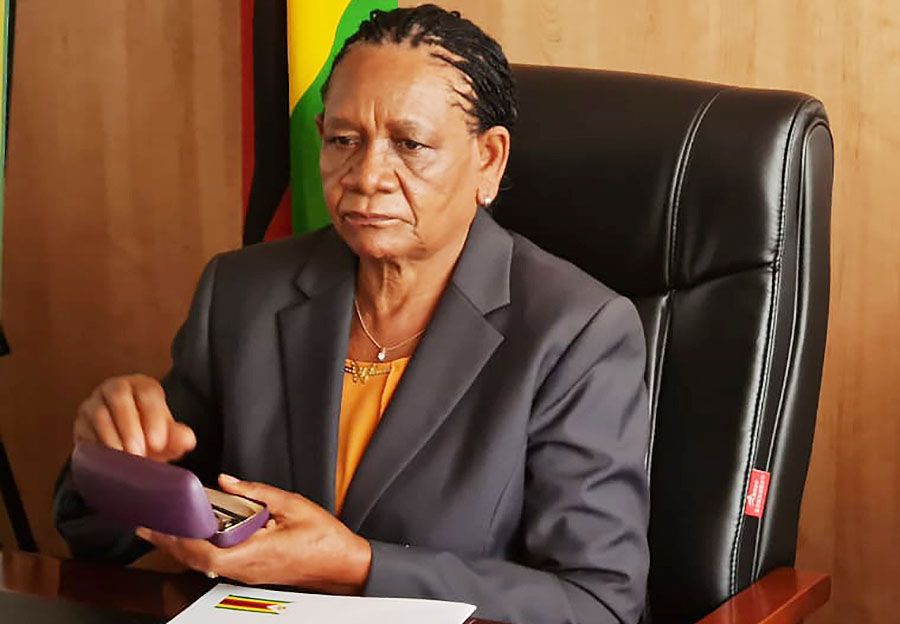
Evelyn Ndlovu - Minister of Primary and Secondary Education
“Parents’ Struggles, Selection Criteria, and the Need for Education”
In Zimbabwe, the dream of sending children to school has become a daunting challenge for many parents. Economic hardships have given rise to an informal economy, with the majority of people becoming self-employed in their pursuit of daily survival. This struggle to secure food and meet basic needs is endangering the education and well-being of countless children.
In its early post-independence years, Zimbabwe offered free primary education, resulting in a surge of children attending school. Teachers even visited homes to ensure no child was left behind. However, as the economic landscape evolved, the government could no longer sustain free education. In response, the Basic Education Assistance Module (BEAM) program was introduced to provide financial assistance to students from economically disadvantaged backgrounds.
Recently, during a Community Round Table Discussion organised by The Besana Mail, parents candidly shared their experiences and insights regarding BEAM. A parent from Hwange expressed how nearly everyone in their community rushed to register their children for the program. However, their disappointment was palpable, as assistance seemed to reach only a fraction of the school population, potentially leaving the most vulnerable behind.
The selection criteria for BEAM beneficiaries came under scrutiny. Parents decried what they perceived as a lack of transparency and fairness in the program’s administration. To address concerns about corruption, participants proposed the establishment of a committee comprising teachers and parents to oversee the selection process.
Opinions on the efficiency of BEAM were divided among parents. While some acknowledged its benefits, others pointed out the complexities they encountered. One parent highlighted the surprise of accumulating substantial debts with the school after being under the impression that BEAM covered all fees. Delays in government payments were also a source of frustration.
Tinashe Muchuri, who had a different experience with BEAM, mentioned the presence of a committee at his children’s school that assesses parents’ financial capabilities. He emphasized that BEAM covers fees but not tuition, leaving parents responsible for other expenses.
Several parents who had received exam results withheld due to unpaid fees admitted their lack of awareness about BEAM’s limitations.
The discussion revealed that one of the primary reasons parents expected comprehensive fee coverage from BEAM was the practice of some non-governmental organisations. These organisations funded all school expenses for children, contributing to misconceptions about BEAM’s scope. The consensus was that improved communication and engagement with school authorities could help address these misunderstandings.