

Gladys Mutsopotsi Shumbambiri - CEO of Intelligent Business Consultancy (Pvt) Ltd, (IBC)
The inclusion of Children in Financial Education
Earning an allowance through household chores or working at a part-time job can help kids build financial literacy. Opening a savings account, a kid-friendly debit card or a custodian brokerage account teaches kids the value of saving and introduces them to the banking system. The Besana Mail Community Round Table Discussion and Weekly Guest Host Onita Sibanda (OS) interviews Gladys Mutsopotsi Shumbambiri (GMS) on Financial Literacy in Children.
OS: Welcome to The Besana Mail Round Table Discussion, where we discuss issues affecting children in our communities. Today we are joined by Gladys Mutsopotsi Shumbambiri. Today’s topic is, The inclusion of Children in Financial Education.
Welcome Mrs Shumbambiri, it is an honour to have you. Kindly introduce yourself and the organization you come from.
GMS: Gladys Mutsopotsi Shumbambiri is the CEO of Intelligent Business Consultancy (Pvt) Ltd, (IBC), a business consultancy, coaching and financial advisory company which focuses on financial education, entrepreneurship development, microfinance management, personal and corporate development training. Gladys was a senior Economist at the Reserve Bank of Zimbabwe, where she came up with a Monetary Policy Implementation matrix for tracking policy implementation. She is a co-author of Economic Management in a Hyperinflationary Environment and her chapter on Monetary Policy Implementation will assist nations facing a similar crisis.
She has done Financial Literacy projects with United Nations Agencies, International Labour Organisation and mentorship programmes with International organisations.
OS: We have seen IBC training children. Why is financial education important to children?
GMS: Importance of Financial Education in the early lives of children: Children need to learn about money management at such a young age as early as 4years. The diversity of financial products and services is increasing by the day creating a greater need to increase financial literacy levels in children. Increasing the levels of financial literacy is a necessary factor for children to make right choices between financial products in financial services which are increasingly getting complex everyday.
According to reports on the current status of financial education, there is an urgent need for children to learn financial literacy early in life. One out of every five 15-year-old children lacked fundamental financial literacy abilities and understanding. Financial education is important to children because it brings awareness in children and it helps them understand the value of a dollar, budgeting and investing.
OS: Does your organization cover Matabeleland?
GMS: Our services are geared for the whole country. Yes! Matabeleland is covered. Whenever we get the opportunity, we can travel to Matabeleland or any other part of the country. We have done other Financial Education programs for small holder farmers that covered 8 districts in the country.
OS: Tell us more about the Bootcamps you do for children?
GMS: Our Financial Education Bootcamps offers a platform for children to self discover, share some experiences and synergize with other youths while boosting their financial education skills and Entrepreneurship skills.
OS: What are the opportunities and challenges children have in financial issues?
GMS: Opportunities range from starting businesses to investments. While challenges include overspending, abuse of resources and lack of knowledge about financial education.
There is high financial illiteracy among today’s youth. Most of them are making bad financial judgments because they do not know enough to avoid problems. The majority of today’s youth, according to the Intelligent Business Consultancy random surveys during its trainings in schools shows many children have very little understanding of money and economics.
OS: What impact or change have you made so far through these financial education trainings to children?
GMS: We have seen children start businesses. Parents seeing positive change in their children towards money and how they value the dollar. For example, some kids started small business selling sweets, ‘maputi’ and others. Some selling books they wrote. Some kids have learnt saving skills and are practicing with the use of piggy bank. One of the children that we trained called Quinton Dongo managed to publish a book, strive to do more which was one of his goals in the training we had. So, goal setting became alive as he managed to achieve his goal.
Another student at Watershed College testified about the savings lesson we did, that he managed to start saving his pocket money and managed to buy himself a mobile phone from his savings
OS: How is the response of parents in supporting their children?
GMS: The response from the parents is slow. Some of parents, a few of them see the need of it for their children.
OS: What do you think must be done to rural areas for children to have the same financial education?
GMS: Financial education is important for every child in Zimbabwe. Every child must have access to financial education training. It is very important. For the rural children in Zimbabwe it is critical and important that corporate sponsors, banks and microfinance institutions work hand in hand with organisations like ourselves to bring financial education to the rural community. Sponsorship is critical and partners that can work with us to deliver these financial education trainings in rural areas because we want every child to learn about financial education.
OS: How do you link children’s rights and financial education?
GMS: Financial Education is a very important life skill that must be taken seriously from ECD to University. So as the children have right to academic education. Financial education must be made a right for every child if we are to set a solid financial foundation for the children because children of today are growing up in a complex financial world.
OS: Kindly share with us successes and challenges you are facing on those activities?
GMS: Challenges are slow buy-in from parents, lack of funding for many of the programs to reach marginalised children and no sponsorship to enable us to impact more children. Successes include the holding of successful events that we have done so far. We have done 3 successful bootcamps and over 6 successful one day workshops. We have also trained regionally
OS: How can parents in Hwange send their children for these trainings in your Bootcamps?
GMS: We should have a buy-in from the parents who is the first stakeholder. If funding is available workshops and boot camps can be done for them. For the parents who are in Hwange who desires the bootcamps that we do. We will travel to Hwange for the bootcamps for them. We are flexible, we can have an event where the children are staying. We can travel to Hwange and deliver the financial education training. We are leaving no child behind in our financial programmes.
OS: Do you see media houses like The Besana Mail helping your organization to give an impact to children in financial education?
GMS: The Besana Mail can participate in advancing Financial Education by partnering with us in making awareness of the importance of Financial Education and also helping to promote the programs and activities that we do.
OS: Last words?
GMS: Thank you very much for the opportunity. I encourage parents to support their children and empower them through financial education trainings.
For more stories like this see below:



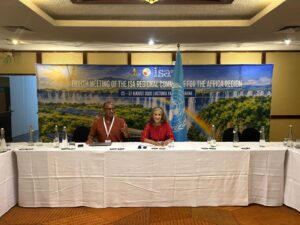


We need to support our young generation in every way possible. We’ll done Gladys. Quinton Dongo is a great inspiration to many people.