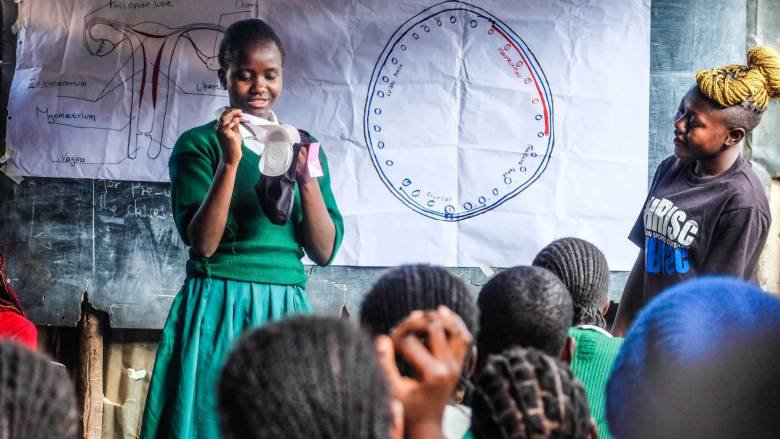
Menstrual Hygiene Class - Credit: World Bank
The unavailability of portable water in the coal mining town of Hwange is denying young girls their right to good health as long dry periods affect menstrual hygiene.
Hwange – A town known for its coal reserves, it is currently grappling with water challenges. Many girls are facing a silent struggle that affects their daily lives. The Hwange Colliery Company concession areas have been experiencing water shortages due to low water levels in supply dams, leaving residents to queue for the precious liquid at dawn and in the evening. Water is now being rationed.
In Lwendulu suburb, the 16-year-old Sandra Chuma and many other teens of her age, accessing water during their menstrual cycle is a daunting task. The water is available from 5am to 9am and from 5pm to 8 pm every day.
“It becomes very difficult when you are on your period and you get to the washroom and there is no water,” Sandra narrates, “then you have to go to Lwendulu clinic or the village office to queue for water, which can be humiliating and uncomfortable.”
The lack of access to clean water and sanitation facilities force girls to resort to improvised solutions, compromising their health and dignity. This include the use of rags and other improper clothes. The common ablution facilities, also does not offer privacy to young girls.
“It has taken a toll on us young girls, because we have to wake up at 4am in this cold weather, suffering from menstrual cramps to go and queue for water,” added Sandra.
Young girls are often affected by a range of issues, including period poverty, and lack of access to clean water, which have significant impacts on their health.
UNICEF says, the struggles associated with managing menstruation without proper resources can lead to anxiety, shame, and low self-esteem. It also noted that young girls facing water challenges are more likely to experience health issues like reproductive tract infections and embarrassment due to inadequate access to clean water and sanitation facilities.
Parents in Hwange are calling for the urgent attention to address the water crisis and ensure menstrual hygiene management facilities are available and accessible to all. For years now, Hwange community has been calling for improved access to clean water.
“When a girl is menstruating, she needs clean sanitary wear as well as clean running water for hygiene purposes to prevent infections. But the situation now is very difficult. How can one wash herself using a bucket when on her menses?” lamented Mercy Moyo, a parent.
This publication learnt that girls on their menstrual period around the concession area avoid social activities or public spaces due to fear of leakage or embarrassment, leading to social isolation and stigma.
“Sometimes during my period, I’m always absent from school because I have to queue for water, and the queues are long. This has impacted my education,” said Viola Ncube, a 15-year-old girl.
Viola’s experience underscores the far reaching consequences of water challenges on girls’ education, emphasizing the need for urgent action to address the crisis.
According to UNICEF, every month, 1.8 billion women and girls menstruate, but millions cannot manage their cycle in a healthy way as they cannot afford sanitary products or have no access to water to manage their menstrual health and hygiene. In Hwange urban, this harsh reality is all too familiar.
Water shortage in the coal mining town is due to low water levels in supply dams, over population and sometimes burst pipes, which are very old and have been not replaced for years. Efforts to contact the Hwange Colliery Company authorities for comment were unsuccessful.
The Greater Whange Residents Trust, the organisation representing the people of Hwange, lost the legal struggle for water in 2020. Residents of Hwange filed a lawsuit against the Zimbabwe National Water Authority (Zinwa), Hwange Colliery Company Limited (HCCL), and four Cabinet Ministers due to a strict water rationing schedule, but their plea was denied by the High Court.
“The case is not urgent because residents knew about the water woes as far back as 2017 and they didn’t take any action. No basis has been made at all for urgency in this case, and I accordingly decline to hear this matter on the basis of urgency and should therefore be dealt with as an ordinary case,” ruled the judge.
The association’s coordinator Fidelis Chima said the water situation in Hwange is a health hazard and a cause of concern among residents.
“Water rationing must be a thing of the past. Also, we condemn the use of archaic ablution facilities. They are breeding grounds for diseases. We need modern facilities and respect of people rights,” said Chima.