Sunrise in Lupane: The Besana Mail
Low water levels affect girls and women in the rural communities. But, those near the dam are living green.
Lupane, Zimbabwe: Gladys Ncube (16) after years of endurance, she now feels discouraged. Everyday she walks two kilometres to fetch water for use before going to school, before walk another 5 kilometres one way to school.
“By the time I arrive at school, I am already tired. I cannot fetch water in the evening because I arrive home late from school and also it’s not safe to walk in the night,” explained Ncube.
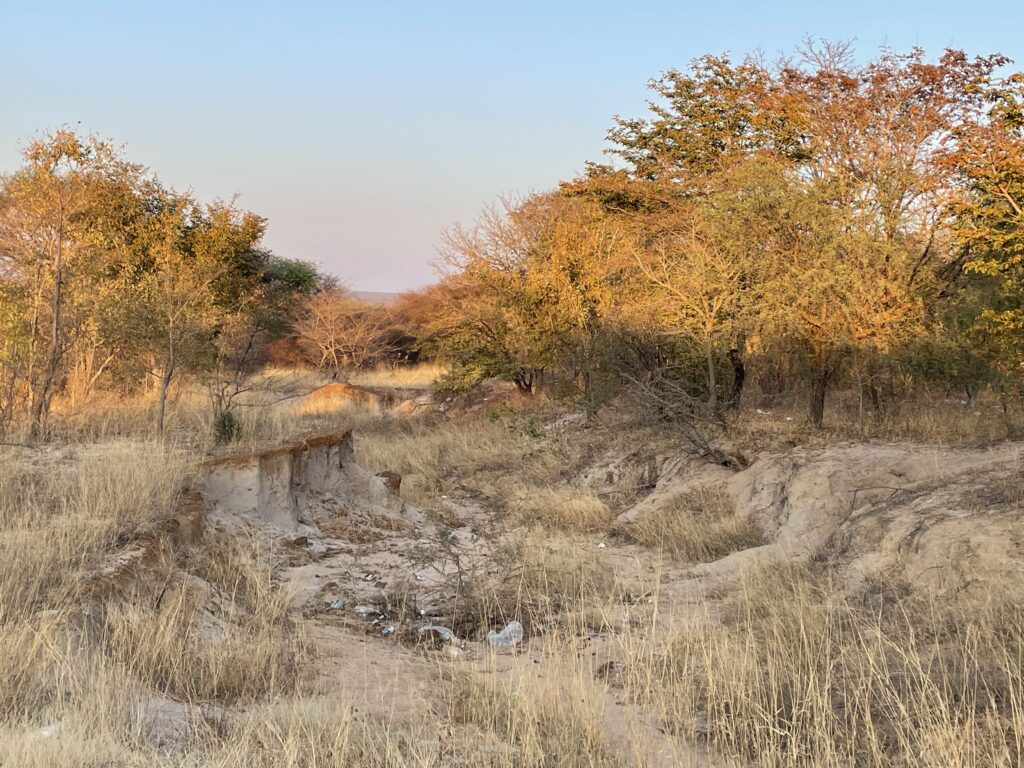
In the Northwest of Zimbabwe, in Masungamala area, Lupane district young girls have been impacted by climate change over the past decade. Like many African rural communities, things have changed sharply in the past two years as water levels are becoming critically low.
Girls in the area used to go to nearby streams and boreholes in neighbouring villages, fetch water for personal and home use. With low water levels girls are walking long distances. Ncube said this has severely affected them.
“Most of us we live with grandparents as our parents and elderly siblings are in town looking for opportunities, so the burden is on us.” She added, “travelling long distances impacts our health and emotions.”
Climate change induced stress
The majority of girls on their periods cannot manage to walk for the water and the the school again, resulting in missing classes.
“Most of the times when I am in my periods I have to miss classes as much water will be needed and feel uncomfortable to attend classes. I don’t want to be embarrassed in case I mess up,” said Nokhutula Moyo, a 17-year-old student.
Speaking to this publication, Onita Sibanda, a Children’s rights and environmental advocate said young women faces a myriad of climate change related challenges.
“As the world ends 16 days of activism Gender Based Violence, we remain concerned about the impact of climate change to women and girls, especially within Matabeleland North province.” She said girls have to walk long distances to school, “under hot conditions, and sometimes there is no enough water, especially when one is on their period. It can also increase the risk of child marriages, as families may seek to secure their daughter’s futures, increasing their vulnerability to exploitation.”
According to UNICEF, the most recent data suggests that Zimbabwe will continue to warm through 2080, and the country is placed very high (in the top three in Southern Africa) in the 2021 Global Climate Risk Index.
Much has been made about the effects of the climate catastrophe, from food and water shortages to economic upheaval, according to Tjedu Moyo, director of the Lunia Centre for Youths. However, she says, the challenging circumstances that the crisis is putting women and girls in on a daily basis are not receiving nearly enough attention.
“Teenage girls and young women should be able to concentrate on their education and make plans for the future. Rather, as climate change exacerbates already-existing disparities, they are frequently denied those rights and opportunities.”
Not all is gloomy
With some girls and young women migrating from the villages, not all is gloomy in the district. A few kilometres from Masungamala village some women have created an oasis for a living amidst the dry region.
At Lupane women centre, women in fight against climate change induced droughts and arid conditions are embarking in income generating projects. They bought a lodge, other properties and land for farming to intensify, diversify and de-risk maize-mixed farming.

“I had planned to migrate to the city running away from the village due to drought but when I came to the growth point, there was life, sustained by women from neighbouring villages. I changed my mind. Instead of migrating faraway I am now nearby, a few kilometres from my village,” said Sihle Moyo.
In order to address their social and economic disparities, the local rural women established the Lupane Women’s Development Trust, also known as the Lupane Centre, in 2004.
Lupane Women Centre Hildigard Mufukare said, while the enterprise is involved in basketry, horticulture and small livestock production, basketry stood out.
“Of all the products, baskets have successfully made it into the international market with wholesale customers in places such as USA, Germany, Holland, Spain, Sweden, Denmark, UK, South Africa and Turkey, giving women a steady income,” said Mufukare.
The women centre use of unique sought after traditional weaving skills in basketry and innovative agricultural technologies in horticulture has made it standout in one of the driest district in the country.
Is the future bright?
According to the UNFCCC, science research indicates that marginalization and inequality, particularly those related to gender, ethnicity, age, disability, and past and present patterns of inequality, increase vulnerability to climate change.
November 21 was designated as “Gender Day” at the recently concluded COP 29. Among the outcomes are heightened awareness and shared understanding among policymakers regarding the significance of incorporating gender considerations in climate action plans, NDCs, and UNFCCC reporting.
In October 2024, CGIAR participated at the 2nd Climate Change and Development Conference in Zimbabwe, facilitating panels, on climate, gender, and inclusivity and another on climate, peace, and security in Zimbabwe.
CGIAR has supported some initiatives in Zimbabwe. One of them is Ukama Ustawi. Through a climate-resilient, water-secure, and socially inclusive approach, Ukama Ustawi seeks to address the dangers to food and nutrition security in the South and Eastern Africa region brought on by an over reliance on maize.
Young women in Lupane say there is hope to overcome climate crisis if such initiatives come in their district.
“We need support in our villages and be able to support our economies. As men run away to neighbouring countries, the future of our communities lie in our hands,” said Tembilihle Gumpo, a young woman in Madojwa village.
Villagers in Lupane hope the rains will come and change the situation, but to some it is already late for farming and the prospects of improving the water levels is not guaranted.
This story was produced with the support from CGIAR and MESHA
Also read: https://thebesanamail.com/2024/11/25/cop29-highlights-health-as-a-climate-priority-but-is-it-enough-for-zimbabwes-children/