Yollander Millin
In a candid conversation and to unpack social and economic justice at the intersection of young people involvement and survival, Onita Sibanda (OS) speaks to Yollander Millin (YM).
OS: Welcome to the Weekly Guest @Besana, where we engage in meaningful conversations that center our children, young people, and the communities they live in.
Tonight we are diving into an important and timely topic: Beyond Survival – Young People on Social and Economic Justice. Joining me is a passionate change maker, Yollander Millin, who will be sharing her insights and experiences.
Welcome Yollander! May you kindly introduce yourself?
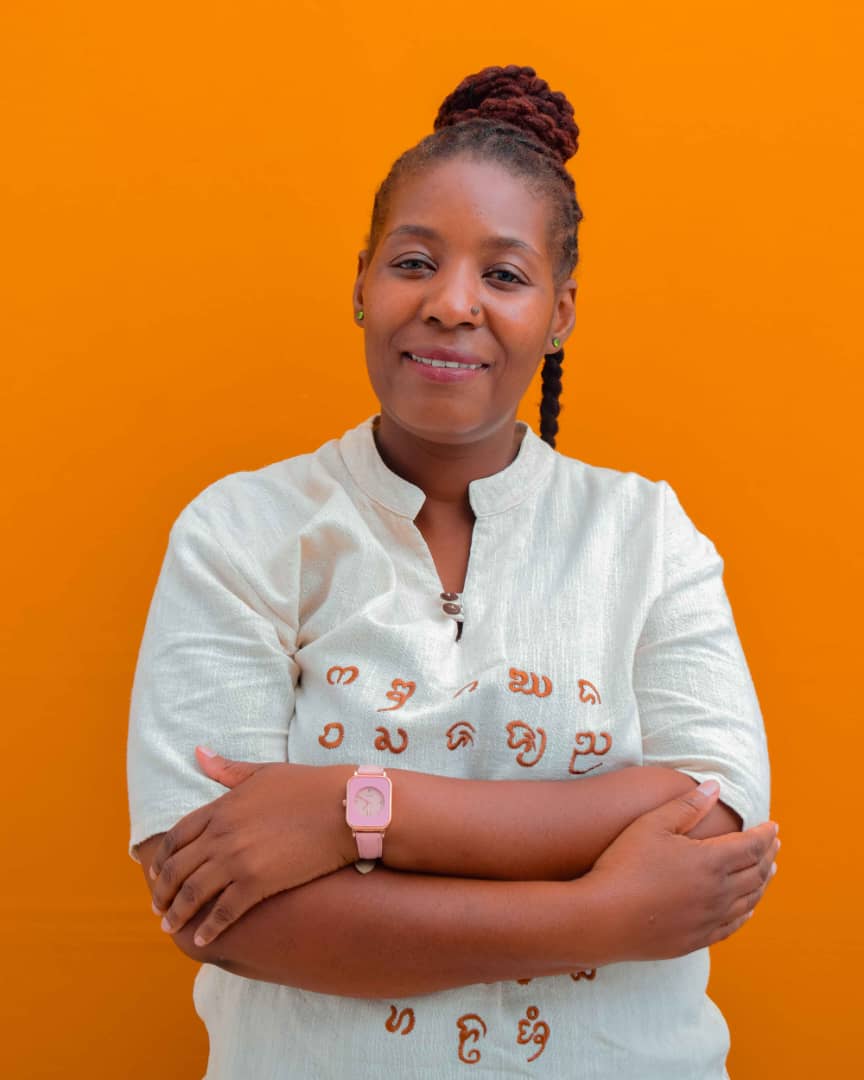
YM: Good evening Onita! My name is Yollander Millin, l am a Social and Economic Justice Ambassador. l am an alumina of the Accountability Lab (2022), a teacher and a volunteer with organizations that work with marginalized communities.
OS: Thank you so much, Yollander, for that introduction. It’s an honor to have you tonight.
Many young people feel excluded from economic opportunities. How does social and economic justice directly affect their everyday lives?
YM: Social and economic justice aren’t abstract political concepts for young people; they are the daily reality of their struggle to build a life. This exclusion directly impacts them in several tangible ways. I will speak to some in brief.
It manifests in the proliferation of unemployment, which is now at high levels in Zimbabwe. When they do find jobs, they are low-paid, insecure “gig economy” jobs without benefits or stability. This makes it impossible to plan for the future, whether that’s renting a stable home, getting a loan, or starting a family. The stress of not knowing if you can cover next month’s rent is a direct consequence of economic injustice.
OS: That’s a powerful insight, Yollander! The reality of unstable, low-paying jobs really highlights how economic injustice affects young people’s ability to build a secure future.
YM: The other factor is the Mental Health Toll. I am sure we have seen the effects, especially on some of our youthful celebrities. Constant financial anxiety, coupled with the pressure to succeed in a system that feels rigged, creates a mental health crisis. Feelings of hopelessness, anxiety, and depression are not just personal struggles; they are symptoms of a system that fails to offer a dignified pathway for its youth. Drug and substance abuse are on the rise as well.
OS: Absolutely, Yollander! When young people face constant pressure and limited opportunities, it takes a heavy toll on their well-being.
YM: The Ambition Gap is also an effect. When young people see that hard work and education don’t necessarily lead to security or prosperity, ambition can curdle into cynicism. Why invest in years of university if it leads to crushing debt and underemployment? This isn’t a lack of drive; it’s a rational response to a broken social contract. Most have the why bother mentality emanating from this.
OS: That’s a powerful point
YM: This comes with inequalities as well where the rich vs poor divide is visibly loud. Lastly, Delayed Milestones. The traditional markers of adulthood independence, homeownership, having children are being pushed further and further out of reach. This delay isn’t a matter of choice but of necessity, fundamentally altering the trajectory of their lives and creating a generational rift in experience.
OS: It’s heartbreaking to see talented young people lose faith in their future because the system fails to reward their efforts.
YM: We have people who never move out of their parents’ houses because of the status quo.
OS: That’s a critical insight!
Moving on. Do you think our current systems, education (curriculum – Uni courses), health policies and natural resource governance are designed to empower young people, or to keep them on the margins?
YM: Well, while not necessarily designed with malicious intent, our current systems overwhelmingly function to marginalize young people, often by inheriting and perpetuating the biases and short-sightedness of past generations.
The curriculum in many countries is outdated. It over-emphasizes rote learning and it is under-prioritizing critical thinking, digital literacy, and emotional intelligence. University courses are often misaligned with the modern economy, leaving graduates with immense debt and skills that the market no longer highly values. This system filters young people into pathways designed for a world that no longer exists, rather than empowering them to build the new one.
Most of the Tertiary students are now opting to go to the University of Zambia because local qualifications are not recognized in some jurisdictions.
Secondly, we have poor health policies. Remember, l raised the issue of mental health before. These mental health services are critically underfunded and stigmatized, failing to address the epidemic of anxiety and depression among youth. Furthermore, health policies often neglect proactive and preventative care, focusing on treatment rather than fostering the lifelong well-being of the next generation.
OS: Thank you, Yollander! This highlights the urgent need to reform our education system to ensure it meets international standards and truly prepares young people for today’s global opportunities.
YM: Then, dear to my heart as a debt activist is the issue of resource governance. This is perhaps the most glaring failure. Decisions about public debt, fossil fuel extraction, mining, deforestation, and pollution are made by older generations, but the catastrophic consequences of climate change and environmental degradation will be borne almost exclusively by the youth. They are systematically excluded from the decision-making table on the single issue that will most define their futures.
This is a result of systemic disenfranchisement. Systems were or are largely built for young people, but not with them. True empowerment requires a fundamental redesign that includes youth voices at the core of policy and curriculum development.
OS: Absolutely, Yollander! Underfunded mental health services and reactive health policies leave young people vulnerable.
Some youths think activism is just protesting and politics. How would you define activism in 2025, and what forms can it take in many facets where children and youths are part of?
YM: Back in 2019 when l got exposed to activism, my idea and definition was your Ndlozi and Malema.
OS: Many of us started with that fiery, revolutionary image too! It’s powerful watching how your own definition evolves with experience.
YM: In 2025, activism has evolved far beyond marches and petitions. It is any deliberate action aimed at creating, resisting, or undoing social, economic, or political change. For young people today, it is multifaceted and integrated into daily life. There is digital advocacy, community building, artistic and cultural expression through music, poems, drama, opinion newspaper articles, e.t.c. Activism doesn’t always have to be radical; it’s strategic and contextual.
OS: That’s such a powerful way to frame it. Activism today really meets young people where they are, online, in creative spaces, and in their communities.
YM: Given our operating environment, if activism is toyi toying you get arrested in the morning, no matter how noble the cause is.
OS: True!
YM: Social media is an unprecedented megaphone/loudspeaker, but a megaphone alone cannot build a house. Online activism is a crucial and powerful first step, but it is rarely, if ever, enough to create lasting change. There needs to be groundwork.
OS: Do you think it’s enough to tweet and post, or does change require more than online activism?
YM: Its power is in its ability to raise awareness instantly. It can bring a hidden issue to global attention in hours. It connects isolated individuals into powerful movements with shared purpose. It can organize protests, fundraisers, and boycotts with incredible speed. But there is a need for organizing and building formal structures with clear goals and strategies. This includes lobbying politicians, drafting legislation, and engaging in the slow, hard work of governance. Knocking on doors, volunteering in communities, and showing up in person. Movements that last are built on sustained pressure, not just trending hashtags that fade in a week.
‘Online activism is the spark; offline action is the fuel. We need both to sustain the fire of change!’
OS: Absolutely! The key is bridging the online momentum with offline action, that’s where true transformation takes root.
YM: While digital activism has an international reach, it often becomes elitist. For example, how many really have access to X space, or my favourite LinkedIn? Let alone using it effectively.
OS: So true! How can a media house like The Besana Mail be part of social and economic justice efforts?
YM: As a media house, The Besana Mail has a profound responsibility and a powerful platform to be a catalyst for social and economic justice. This goes beyond just reporting the news; it’s about shaping the conversation and holding power to account. they can be:
- Center Lived Experiences – Move beyond just quoting statistics on youth unemployment. Tell the human stories behind the numbers. Platform the voices of young entrepreneurs, gig workers, and students struggling with debt, allowing them to define their own narratives.
- Investigate the Systems, Not Just the Symptoms – Don’t just report on poverty; investigate the policies, corporate practices, and historical inequities that cause and perpetuate it. Become a watchdog for natural resource governance and environmental justice.
- Create Youth-Led Content – Establish dedicated sections or programs that are co-created and even led by young journalists and contributors. Let them decide what issues are important and how to frame them. This could be a podcast, a column, or a video series.
- Promote Solutions Journalism – It’s not enough to only highlight problems. Actively seek out and report on innovative, evidence-based solutions, whether it’s a new educational model, a successful cooperative business, or a community-led health initiative. Show what is possible.
- Facilitate Dialogue – Use your platform to convene conversations between youth, policymakers, business leaders, and elders. Host town halls, debates, and forums that bridge the generational divide and foster mutual understanding.
- Commit to Ethical Reporting – Ensure your own house is in order. Pay interns fairly, promote diverse voices within your newsroom, and critically examine the language and framing used in your reporting to avoid perpetuating stereotypes.
OS: Powerful and practical points! These aren’t just ideas they are a blueprint for impactful, community rooted journalism. Thank you Yollander!
What are your last words?
YM: Activism is not for weak people. As in you need to read, and always be updated in your information. Be humble in your approach to get the answers you seek. And always have a digital footprint so you can be remembered for the change you would have made, no matter how small it is.
Personally, I am a published writer under the Zimbabwe Independent newspaper as a community journalist.
OS: Impressive!
YM: And you need patience as well. It’s a torrid process, not an event.
OS: A heartfelt thank you, Yollander, for the rich insights and thought-provoking contributions tonight. Your passion for social and economic justice truly shone through. We are grateful for your time and the work you continue to do for our communities.