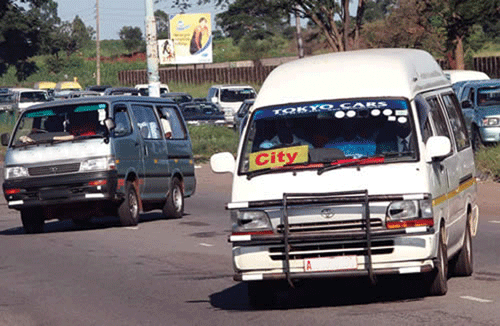
HARARE — Every weekday morning across Zimbabwe’s urban cities and towns, thousands of schoolchildren begin their day packed into commuter vehicles never designed to carry them. For many parents, it is a daily gamble between affordability and safety. Transportation of school children has increasingly raised alarm among communities and authorities.
Concerns about the safety of student transportation intensified this week after Youth Empowerment, Development and Vocational Training Minister Tinoda Machakaire revealed he had stopped a school transport kombi carrying 42 learners in a vehicle licensed for just 13 passengers.
“Yesterday I stopped a kombi that ferries school children and what I saw honestly unsettled me. It was carrying 42 learners in a vehicle meant for 13 passengers. Forty-two children, someone’s whole world, squeezed into one small kombi,’ Machakaire said in a statement shared on his Facebook page.
He added that the vehicle had nearly passed through a police roadblock despite appearing visibly unroadworthy.
“What disturbed me even more was that the vehicle was almost allowed to leave a manned roadblock without consequence. From the outside, it already looked unroadworthy. You did not need to be an expert to see that something was not right,”he said.
Machakaire linked the incident to recent deadly school transport accidents in neighbouring South Africa that killed more than 20 learners, warning Zimbabwe could face similar tragedies if the situation is ignored.
“As parents, we trust that when our children leave home for school, they will return safely. As school authorities and law enforcement, there is a duty of care that cannot be taken lightly,”he said.“I do not have all the solutions, but I know we cannot normalize this. We cannot look away. These are our children. Their safety is not negotiable.”
Many Zimbabwean families, are financially out of reach to private school buses, often considered safer. Government schools rarely provide transport, leaving parents dependent on privately operated kombis or informal transport arrangements.
Each morning when children leave home, families place their trust not only in drivers, but in a system they hope will keep their children safe.
In high-density suburbs such as Kuwadzana, Glen View and Chitungwiza, parents told The Besana Mail that overcrowding is common and largely accepted because there are few alternatives.
“We know it is dangerous, but what can we do?”said Chipo Masiya, a vegetable vendor whose daughter travels to school by kombi.“If I refuse, my child will not get to school. School buses are too expensive.”
Parents said they often pay monthly transport fees upfront, making it difficult to withdraw their children even when safety concerns arise.
Some vehicles transport children seated on laps, crouched on floors, or squeezed four to a seat designed for three.
Transport operators say the problem is driven by Zimbabwe’s economic realities. Fuel costs, vehicle maintenance and other miscellaneous expenses push some drivers to overload vehicles to remain profitable.
A kombi driver who requested anonymity said school contracts provide stable income compared to unpredictable commuter routes.
“Parents want cheaper prices, but fuel is expensive. If you carry fewer children, you make a loss,” he said.
Transport experts, however, warn that overloading significantly increases accident risk by affecting vehicle stability, braking distance and tyre pressure.
Machakaire’s revelation that the overloaded kombi nearly passed a police roadblock has also raised questions about enforcement gaps.
Road safety advocates Zimbabwe has regulations governing passenger limits and vehicle roadworthiness, but enforcement is inconsistent.
“There are laws, but compliance is weak,”said Tinashe Rinoona. “Until enforcement becomes strict and consistent, operators will continue taking risks.”
Parents interviewed by The Besana Mail echoed similar concerns, alleging that some vehicles operate without proper inspection certificates or insurance.
Recent fatal school transport accidents in South Africa have intensified anxiety among Zimbabwean parents, many of whom see parallels with local conditions.
“All I could think about were those children who died,”said one parent outside a Harare primary school.“It can happen here any day.”
Twelve schoolchildren died in South Africa after the minibus they were travelling in collided with a lorry south of Johannesburg.
Officials confirmed that 12 pupils died at the scene, revising the initial death toll from 13. Three other students remain in intensive care, with one reported to be in a critically unstable condition.
Police said the crash happened when the minibus driver attempted to overtake two vehicles and collided with the lorry.
On overloading kombis, teachers in Zimbabwe also expressed concern, noting that fatigue and stress from long, unsafe commutes affect learners’well-being and concentration in class.
In some schools, parents have begun discussing collective solutions such as pooling funds to hire safer buses, creating transport committees, or monitoring vehicles used by children.
Rinoona said, these initiatives face financial and logistical challenges, particularly in low-income communities.
“Addressing the issue requires coordinated action involving government ministries, schools, law enforcement and transport associations.”
Machakaire emphasised that protecting children on their journey to school is a shared responsibility.
“This is not about blame. It is about responsibility,” he said.