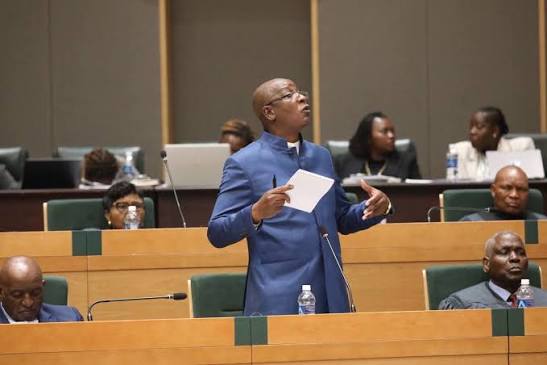
Minister of Justice, Legal and Parliamentary Affairs - Ziyambi Ziyambi
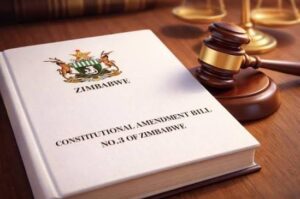
Zimbabwe’s Senate has approved the Constitution of Zimbabwe Amendment (No. 3) Bill (CAB 3) with amendments, marking another major step in the legislative process before the proposed constitutional changes can become law.
The Upper House passed the Bill on Wednesday, June 24, 2026, after it had earlier received the constitutionally required two-thirds majority in the National Assembly on June 18, 2026. Because senators introduced amendments, the Bill will return to the National Assembly, which has been recalled for an extraordinary sitting on June 30, 2026, to consider the changes before the legislation can be sent to President Emmerson Mnangagwa for assent.
Speaking after the Senate’s approval, Justice, Legal and Parliamentary Affairs Minister Ziyambi Ziyambi said the amendments were largely technical and intended to correct issues identified during debate.
“By and large, this Bill is one of the most debated, I think, in the history of our Parliament,” Ziyambi said.
He explained that the Senate had identified provisions requiring refinement before the Bill could proceed.
“The Senate managed to pick up a few issues that were left out by the National Assembly,” he said.
Among the amendments is a provision clarifying the process of convening Parliament following a general election.
“We then amended that part when Senators highlighted it, so that we would then have a provision for the Clerk of Parliament to call Parliament to its first sitting where it would elect the Speaker, the Senate President and then ultimately the President,” Ziyambi said.
The minister also outlined the next constitutional step, saying the Bill must return to the National Assembly because of the Senate’s amendments.
“Once there are variations, you have to transmit it back to the National Assembly for the National Assembly to vote and endorse or reject,” he said.
Parliament has already been recalled to deal with the amendments.
“We have advised the Chief Secretary so that the necessary General Notice is issued calling back Parliament. Once the National Assembly endorses the Senate amendments, the Bill will be transmitted to the President for assent,” Ziyambi added.
The proposed constitutional amendments have generated widespread public and political debate, with supporters arguing they will improve governance and institutional efficiency, while critics contend that some provisions would significantly alter Zimbabwe’s constitutional order.
Among the proposals contained in CAB 3 are extending the terms of office for the President, Parliament and local authorities from five years to seven years, replacing direct presidential elections with election by a joint sitting of Parliament, restructuring several constitutional commissions and altering provisions relating to the judiciary and electoral administration.
Government has rejected claims that the Bill is intended to extend President Mnangagwa’s stay in office.During debate on the legislation, Ziyambi dismissed allegations that the amendments would create a third presidential term.
“It is said that this Bill earns the President an additional term, a third term or an extension of his tenure. It does not,” he said.
He maintained that the Bill changes the electoral cycle rather than the constitutional term limit.
“This Bill lengthens the term of office, namely the electoral cycle. It does not amend the rule that caps every occupant at two terms,” the minister said.
However, opposition parties and civil society organisations remain unconvinced. Makomborero Haruzivishe, spokesperson for the Constitutional Defenders Forum, criticised the legislation, arguing that it weakens democratic participation.
“It is a calculated constitutional coup against the people. It strips citizens of the fundamental right to directly elect their president,” Haruzivishe said.
The Bill has become one of Zimbabwe’s most debated constitutional reform proposals since the adoption of the 2013 Constitution, attracting strong views from lawmakers, legal experts, political parties and civic organisations. If the National Assembly adopts the Senate’s amendments on June 30, the Bill will be transmitted to President Mnangagwa for assent. Once signed into law, it is expected to face continued legal and political scrutiny as stakeholders debate its implications for Zimbabwe’s constitutional and democratic framework.