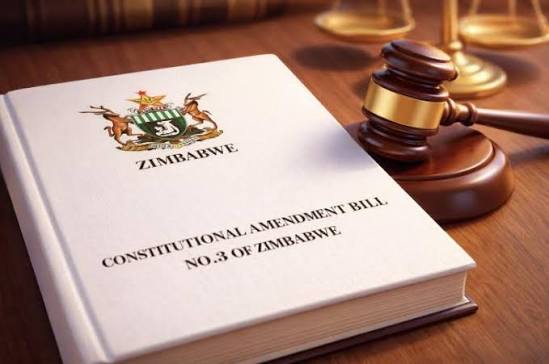
Zimbabwe’s President Emmerson Mnangagwa has signed the Constitution of Zimbabwe Amendment (No. 3) Act, 2026, into law, bringing into effect sweeping changes to the country’s constitutional framework, including a new presidential election system, longer terms of office for key elected officials and restructuring of several state institutions.
The legislation, commonly referred to as Constitutional Amendment Bill No. 3 (CAB 3), became law after presidential assent and publication in an Extraordinary Government Gazette, completing a legislative process that had generated intense political, legal and public debate.
Among the most significant changes introduced by the amendment is a shift in the way Zimbabwe’s president will be elected in future. The new law provides for Parliament to elect the president after a general election, replacing the previous system where citizens directly voted for a presidential candidate through a national ballot.
The amendment also extends the terms of office for the president, members of Parliament and local authority representatives from five years to seven years. The changes mean that the current electoral cycle will be affected, with the next general election framework altered by the new constitutional provisions.
Government has defended the reforms, arguing that the constitutional changes are aimed at improving governance coordination, strengthening institutions and aligning election cycles. Supporters of CAB 3 have maintained that the amendments are within Zimbabwe’s constitutional procedures and were passed through Parliament as required by law.
However, opposition parties, constitutional lawyers and civil society groups have criticised the legislation, arguing that it weakens democratic accountability by removing citizens’ direct role in choosing the country’s president. Critics have also questioned the process through which the amendments were adopted and called for greater public participation, including a referendum.
The Bill passed through both houses of Parliament before being sent to the President for assent. The National Assembly approved the Senate amendments on 30 June 2026, clearing the final parliamentary hurdle before the legislation became law.
Beyond electoral changes, CAB 3 introduces reforms affecting state institutions. The Act establishes a separate Delimitation Commission responsible for constituency and ward boundary reviews, transferring this responsibility from the Zimbabwe Electoral Commission (ZEC). It also extends the timeframe for completing delimitation exercises from six months to 18 months.
The amendment further restructures aspects of the judiciary by creating the office of Judge President of the Supreme Court and separating the administrative functions of the Supreme Court and Constitutional Court.
Other provisions include changes to the composition of the Senate, with the upper chamber expanded from 80 to 90 members, and reforms affecting voter registration and electoral administration.
The signing of CAB 3 marks one of the most consequential constitutional changes since Zimbabwe adopted its current Constitution in 2013 following a referendum that replaced the previous Lancaster House constitutional framework. The 2013 Constitution introduced presidential term limits, strengthened institutional independence and expanded citizens’ constitutional rights.
Legal challenges and political disagreements over the amendments have continued, with critics arguing that some provisions fundamentally alter the relationship between citizens and the state. Supporters, however, insist that the reforms represent a constitutional exercise conducted through Parliament’s legislative mandate.
As the new law takes effect, attention now turns to how the amended constitutional provisions will be implemented and their implications for Zimbabwe’s governance, electoral system and democratic institutions ahead of future elections.