Photo Credit - KSL NewsRadio
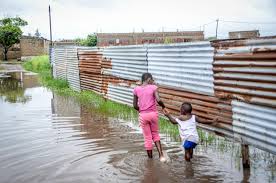
In the low-lying streets of Xai Xai, southern Mozambique, floodwater still laps against doorways where families once gathered for evening meals. Schools stand silent. Health centres are partially submerged. Makeshift shelters stretch across open fields, packed with families who fled rising rivers with little more than the clothes on their backs.
According to UNICEF, Mozambique’s latest wave of flooding is rapidly transforming unsafe water, disease outbreaks, and chronic malnutrition into a deadly threat for children in a country where nearly half the population is under the age of 18.
Speaking at a press briefing in Geneva on Tuesday, UNICEF Mozambique’s Chief of Communication, Guy Taylor, warned that exceptionally heavy rains in early January have triggered a nationwide humanitarian crisis, affecting more than 513,000 people, over half of them children.
More than 50,000 residents have been forced from their homes and are now crowded into 62 temporary shelters, many lacking adequate sanitation, clean water or healthcare.
“This is not just about flooded houses,” Taylor said. “Flooding is destroying homes, schools, health centres, and roads. It is turning unsafe water, disease outbreaks, and malnutrition into a deadly threat for children.”
Mozambique is now entering its annual cyclone season, raising fears of a second shock layered onto an already fragile emergency. River basins remain above alert levels, heavy rains continue in several regions, and damaged infrastructure is making access to affected communities increasingly difficult.
Humanitarian agencies warn that the coming weeks could see the number of displaced families rise sharply.
In the hardest-hit areas, access to basic services, including clean water, healthcare, nutrition, and education, is either unsafe or completely disrupted. For children, this means heightened exposure to waterborne diseases, interrupted schooling, and increased protection risks, particularly for girls and adolescents living in overcrowded shelters.
Even before the floods, Mozambique faced one of Southern Africa’s most severe child nutrition crises. Nearly four in every ten children were already experiencing chronic malnutrition.
Now, with food supplies interrupted and health services strained, aid agencies fear a dangerous escalation into acute and severe malnutrition, the deadliest form, especially for children under five.
“Waterborne diseases and malnutrition are a lethal combination,” Taylor said. “Renewed disruption to food systems, care practices, and healthcare threatens to push the most vulnerable into a dangerous spiral.”
Mozambique is a country of youth. More than 17 million people are under 18, and the national average age is just 17. When disasters strike, it is children who bear the heaviest burden immediately and in the months and years that follow.
In Gaza Province, Mozambique, the epicentre of the current floods, UNICEF is working alongside government authorities and humanitarian partners to assess urgent needs and distribute essential supplies to families. Efforts are underway to restore critical services.
Further north in Sofala Province, UNICEF has already delivered water, sanitation, and hygiene supplies to four severely affected districts, enabling communities to treat contaminated water at the household level. These interventions have reached at least 13,000 households so far, a vital lifeline in areas where cholera and diarrhoeal diseases pose immediate risks.
Yet officials stress that current assistance remains only a fraction of what is required.
Across affected regions, washed-out roads and damaged bridges are slowing relief efforts. Entire communities remain cut off, accessible only by boat or helicopter. Health centres lack electricity. Schools that once provided structure and safety for children now serve as evacuation shelters. The floods have wiped out crops, livestock and small businesses, removing the very foundations of survival.
Aid agencies fear that prolonged displacement will deepen inequality, pushing vulnerable households further into debt and forcing children out of classrooms and into labour or early marriage.
“Timely support allows UNICEF and partners to scale up safe water, nutrition, health, education and child protection services before conditions deteriorate further,” Taylor said. “We can prevent disease, deaths and irreversible losses to scores of children. But we need to act fast.”
Mozambique’s repeated exposure to extreme weather, from Cyclones Idai and Kenneth in 2019 to subsequent floods and storms reflects a broader climate reality confronting southern Africa. Each year, communities rebuild only to be struck again, often with diminishing resources and resilience.
While Mozambique contributes little to global carbon emissions, it remains among the countries most vulnerable to climate-related disasters. Humanitarian agencies warn that decisions made in the coming days will shape not only survival rates but also long-term outcomes for an entire generation.
“For children in Mozambique, what happens now will determine not only how many survive this emergency,” Taylor said, “but how many can recover, return to school, and rebuild their futures.”
As floodwaters slowly recede in some areas, the true scale of destruction is only beginning to emerge.