On a humid afternoon in Kashika, Hwange rural, 28-year-old Ruth Dube walks barefoot along a narrow dirt path that winds through the fields. She’s seven months pregnant and heading to the nearest clinic, a journey of nearly 8 kilometres on foot. She has missed the only commuter omnibus and few cars which plies the route. The clinic has one midwife, no ambulance, and an erratic supply of electricity.
“I start walking before sunrise. Sometimes I don’t make it in time for check-ups because my legs swell and I get dizzy. The nurses tell me to come more often, but how can I when the road is this long and transport is not reliable and costs are high?”
Ruth’s story is painfully common in rural Zimbabwe, where thousands of women face a perilous journey to motherhood. Despite decades of policy promises and donor-funded health programmes, maternal healthcare in the countryside remains a fragile thread stretched between resilience and neglect.
According to the Zimbabwe National Statistics Agency (ZIMSTAT), the country’s maternal mortality ratio stands at 462 deaths per 100,000 live births, among the highest in southern Africa. This is a significant decline from previous years, but the rate remains higher than the 2030 Sustainable Development Goal target of 140 deaths per 100,000 live births. While urban hospitals see modest improvements in outcomes, rural women, particularly those in provinces like Mashonaland Central, and Matabeleland North, bear the brunt of the crisis.
Insiders say, the root of the problem is layered, a collapsing rural health infrastructure, chronic underfunding, poor road networks, and a shortage of trained healthcare workers.
Many rural clinics operate without resident doctors. In some areas, nurses act as both midwives and emergency responders.
“We have had cases where a single nurse must handle three deliveries at the same time, by candlelight,” says Mucheche* a nurse at Lupane Clinic, a small health facility.
Essential supplies like gauze, oxytocin, and blood are often in short supply. When complications arise, such as prolonged labour or postpartum hemorrhage, women must be referred to district hospitals that can be up to 80 kilometres away. Without ambulances, families resort to donkey carts or scotch carts.
“By the time they arrive,” Mucheche* says, “it’s sometimes too late. From here its 30 kilometres to St Luke Mission hospital which is equipped for such cases, but remember these mothers would have initially travelled 30 to 40 kilometres from their rural areas to here before the transfer”
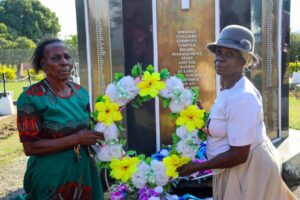
Behind each statistic is a story of endurance and grief. In Nkayi District, villagers still remember Patricia Nyoni, 35 who died on the way to hospital in 2022 on her way to Bulawayo after being referred from Nkayi District Hospital after developed complications.A wheel came off from the ambulance in a bad road before it overturned.
The 150-kilometre road has been under construction for over two decades, a project marked by years of halting progress, with work advancing just a few kilometres at a time.
The crash has also left Nkayi without a functioning ambulance. The only one at the district hospital, a donation from the European Union, has been grounded by a faulty gearbox and worn-out tyres.
Such deaths are preventable, and yet, they persist. Health experts say the majority of maternal deaths in rural Zimbabwe stem from delays. The delay in deciding to seek care, the delay in reaching a health facility, and the delay in receiving adequate treatment upon arrival.
“The three-delay model still defines maternal mortality here,” says Lethiwe Moyo, a public health advocate based in Bulawayo. “Even when women reach a clinic, they may find no skilled midwife, no blood, and no functional operating theatre.”
Beyond infrastructure, cultural practices also shape maternal health outcomes. In many rural communities, women still rely on traditional midwives, elderly women who have assisted in childbirth for generations but lack formal medical training.
“They trust us because we are part of them,” says Eunice Nyoni, a 70-year-old traditional midwife from Lupane.
“We help women who can’t reach the hospital. Sometimes the baby comes too fast. We just do what our mothers taught us.”
Government policy discourages home births, urging expectant mothers to deliver at health facilities. Yet, for many women, traditional midwives offer compassion and immediacy that the formal system cannot.
“It’s not that rural women don’t want to go to hospitals,” Moyo says “It’s that hospitals often feel far away, physically and emotionally.”
Still, the Ministry of Health and Child Care does not encourage traditional midwives to deliver babies.
The collapse of rural transport systems deepens the crisis. Bus services to remote areas are irregular, and private transport costs are prohibitive. A single trip to the nearest clinic can cost between US$5 and US$10, a significant sum for subsistence farmers.
“When you’re choosing between buying mealie meal and paying for a trip to the clinic, you choose food,” says Thabiso Mhlanga, a 29-year-old mother in Kashika ward “You just pray everything will be okay.”
Even maternity waiting homes, which are facilities built near clinics where expectant mothers can stay in their final weeks, not all are well furnished. Some lack running water, sanitation, or beds. “We tell women to come early and wait near the clinic,” says *Mucheche.
In the past years, the United Nations Population Fund (UNFPA) and UNICEF have partnered with Zimbabwe’s government to rehabilitate rural maternity wards, train midwives, and provide solar power to clinics.
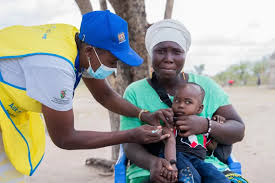
Community health workers, mostly women, have also become critical messengers, going door-to-door to educate families about antenatal care, nutrition, and family planning.
Experts say improving maternal health requires not just medical interventions but a national reawakening, a commitment to equity and dignity.
“Maternal health is a mirror of a country’s soul,” says Moyo. “When rural mothers die giving life, it tells you something about what we value as a society.”