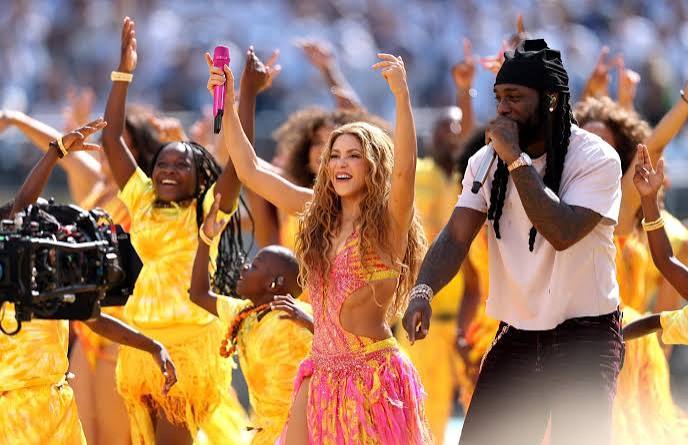
A group of young dancers who rose from one of Uganda’s poorest neighborhoods captivated millions of football fans around the world after performing alongside global music stars Shakira and Burna Boy during the first-ever FIFA World Cup final halftime show.
The Triplets Ghetto Kids, a dance troupe from Kampala’s Katwe community, took to the stage at MetLife Stadium during halftime of the 2026 FIFA World Cup final between Spain and Argentina, marking one of the biggest international moments for Ugandan performers.
Dressed in bright orange costumes, the children performed energetic choreography as Colombian superstar Shakira and Nigerian Grammy Award winner Burna Boy sang “Dai Dai,“ the official song of the 2026 FIFA World Cup. The performance formed part of FIFA’s first Super Bowl-style halftime entertainment during a World Cup final.
For the Ghetto Kids, the appearance represented the latest chapter in an extraordinary journey that has taken them from the streets of Kampala to some of the world’s biggest entertainment stages.
The invitation came after Shakira noticed the group’s viral dance videos featuring choreography to “Dai Dai.” In May, the singer personally announced that she wanted the Ugandan dancers to join her performance at the World Cup final, describing their energy and talent as the perfect addition to the global spectacle.
Ahead of the tournament, the children openly campaigned for the opportunity, posting dance routines on social media and appealing directly to the Colombian singer.
Their dream soon became reality.
In the days leading up to the final, the dancers rehearsed alongside Shakira and Burna Boy before stepping onto one of the world’s most watched sporting stages. Behind-the-scenes videos shared online showed the performers practicing together as excitement built ahead of the final.
The halftime performance unfolded before a packed stadium and a global television audience watching the World Cup final, widely regarded as one of the most-viewed sporting events worldwide.
Although Spain defeated defending champions Argentina 1-0 after extra time to lift the World Cup trophy, many viewers turned to social media to celebrate the Ugandan dancers, with clips of their performance spreading rapidly across digital platforms. For Uganda, the performance was widely viewed as a moment of national pride.
The Ghetto Kids were founded by Dauda Kavuma in Kampala’s Katwe settlement, using dance, music and drama to support orphaned, abandoned and disadvantaged children. Beyond entertainment, the initiative provides education, accommodation, food and healthcare to vulnerable children while using the performing arts to offer them opportunities beyond the streets.
What began as a small community project evolved into one of Africa’s best-known children’s dance groups.
The troupe first gained international recognition in 2014 after dance videos to Ugandan musician Eddy Kenzo’s hit song “Sitya Loss“ went viral online, introducing audiences around the world to their high-energy performances.
Their popularity continued to grow with appearances in French Montana and Swae Lee’s hit music video “Unforgettable,“ which has amassed billions of views online, before another breakthrough came in 2023 when the dancers reached the finals of Britain’s Got Talent after receiving the competition’s coveted Golden Buzzer. Their latest appearance at the World Cup has further cemented their status as one of Uganda’s biggest cultural exports.
Before traveling to the United States, uncertainty briefly surrounded the group’s participation after health-related travel restrictions raised concerns they might miss the event. Those concerns were eventually resolved, allowing the children to complete rehearsals and perform as planned. The performance also highlighted Africa’s growing presence in global entertainment.
While Burna Boy represented Nigeria and Shakira brought decades of football anthem experience, having previously performed “Waka Waka (This Time for Africa)” during the 2010 FIFA World Cup, the inclusion of the Ugandan dancers added another African dimension to the show’s celebration of music and culture.
For many observers, the children’s appearance carried symbolism beyond dance. Their journey from Katwe, a neighborhood often associated with poverty and limited opportunity, to the World Cup final illustrated how talent and social investment can transform lives.
The organization behind the dancers has long argued that dance can become a pathway to education, confidence and international opportunity for vulnerable children. That message resonated with fans around the world as millions watched the group perform with confidence before one of football’s largest audiences.
As the music ended and players returned to the field, the children received applause from spectators inside the stadium, while online reactions praised both their choreography and the opportunity afforded to young African performers.
For the Ghetto Kids, the World Cup performance may have lasted only a few minutes, but its significance is likely to endure.