Credit: International Fund for Animals Welfare
Wildlife Conservation Amidst Climate Change
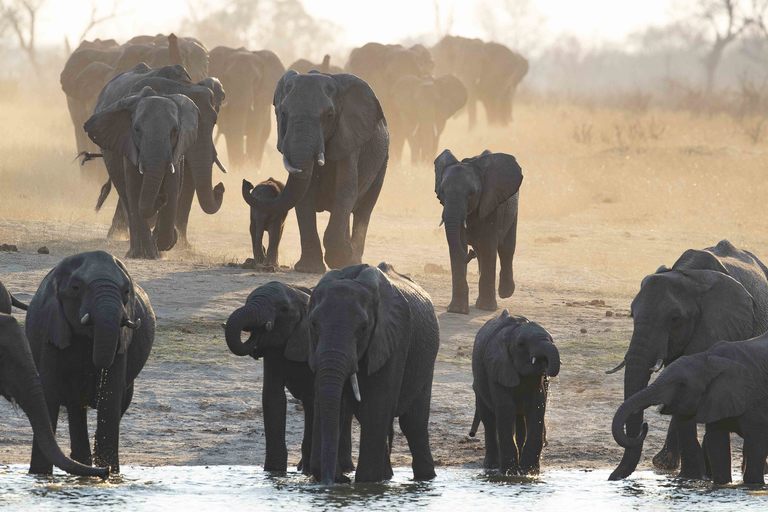
Villagers in Dete, Hwange district, have encountered hyenas, elephants, and other creatures on several occasions close to the boundary of Hwange National Park. In many parts of Africa, especially Zimbabwe, wild animals are stranded while searching for water. Currently, the valuable liquid that is encroaching on human settlements is being chased by animals.
While other moles employed by organized crime groups may shoot elephants as they mingle with villagers outside the protected area boundaries, wildlife conservationists are concerned that nomadic animals like buffaloes and kudus may encourage residents to engage in pot poaching. The effects of climate change on wildlife have prompted calls for increased volunteer programs and strategic patrols, which will aid communities in protecting wild creatures
“We need proactive strategies to curb poaching for pot or commercial. Communities are the first line of defense in curbing poaching and protection of biodiversity. So, engaging and recruiting them in volunteer programmes is the best way. They must see themselves benefiting from the wildlife not other way around,” said Ananias Makore, a conservationist.
Because addressing the climate problem and the biodiversity catastrophe are intertwined, wildlife specialists argue that protecting animals can help slow down climate change.
“Every year, billions of tons of carbon dioxide are eliminated by animals. According to current research, restoring species will help slow down global warming,” Makore continued.
Climate change has created many threats to animals in national parks. Rising temperatures lower many species’ survival rates because of changes that lead to less food, less successful reproduction, and disruption of the local wildlife’s ecosystem. The capacity of the ecosystem to sustain species and preserve its balance is threatened by climate change. When plants shift their blooming seasons or relocate to cooler climates, the fauna that has evolved to the shifting heat trends will need to adapt to new conditions.
“We are the first to be impacted as they adjust to new surroundings.” According to Pauline Ncube, a villager in Dete, “human/wildlife conflict is now rampant and we are the major victims because national park authorities are reactive instead of being proactive.”
Last year, Zimbabwe moved more than 2,500 wild animals from a southern reserve to a northern one in order to protect them from drought brought on by climate change. Poaching has been surpassed by climate change as the greatest threat to wildlife. Three northern conservancies, Sapi, Matusadonha, and Chizarira, received animals from Zimbabwe’s Save Valley Conservancy as part of the biggest live animal capture and relocation operations in southern Africa.
According to Tinashe Farawo, a spokesman for the Zimbabwe National Parks and Wildlife Management Authority, “this time it’s the lack of water that has made it necessary to move wildlife as their habitat has become parched by prolonged drought.”
“This is what we’re doing to relieve pressure. We have been fighting poaching for years, and as we are winning that battle, the greatest threat to our species is climate change,” Farawo continued.
The consequences of climate change on animals are not limited to Zimbabwe. Africa’s national parks, which are home to a wide range of wildlife species, such as buffaloes, lions, and elephants, are increasingly in danger due to new infrastructure projects and below-normal rainfall. According to scientists and authorities, species like antelope, giraffes, and rhinos are now seriously threatened since drought has decreased the amount of food available.
In Southern Africa, where rainfall is also extremely variable, irregular, and unpredictable, climate-related catastrophic events including heat waves, cyclones, and recurrent droughts are becoming more common. Some wildlife species have died, especially as a result of the drought. Large herbivores, such as hippopotamuses and elephants, are particularly sensitive to climate change because of their ecology. The long-term survival of the species may be impacted, according to conservationists. Changes in rainfall and temperature patterns affect the habitat’s quality and, consequently, the number and distribution of wildlife species.
The research – Impacts of Climate Change and Climate Variability on Wildlife Resources in Southern Africa: Experience from Selected Protected Areas in Zimbabwe noted that climate change and variability pose a threat to wildlife resources in semi-arid savannahs.
“Climate-related extreme events, coupled with other anthropogenic stressors, interact to influence changes in abundance and distribution of wildlife resources. Understanding the influence of these climatic factors on wildlife resources is vital for adaptive management and protection of biodiversity,” noted the research.
Seasonal variations in temperature and precipitation, as well as other disturbances like fire and drought, are two ways that climate change directly impacts ecosystems. There is generally high confidence that a number of terrestrial, freshwater, and marine species have changed their geographic ranges, seasonal activities, migration patterns, abundances, and species interactions in response to climate change, according to the Intergovernmental Panel on Climate Change (IPCC). The IPCC Fourth Assessment Report (AR4) also states that there is a medium level of confidence that terrestrial ecosystems in Africa may have seen some effects from climate change in recent decades, based on the scientific literature currently available.
“Understanding the effects of climate change and variability on wildlife species is vital in conservation biology and wildlife management, especially proactive management and formulation of conservation status decisions. Large mammalian herbivores are key drivers of rangeland dynamics hence assessing the effects of climate change and variability on these populations is essential for the stewardship of ecosystems and biodiversity,” notes the report.
Conservation biology and wildlife management, particularly proactive management and the creation of conservation status judgments, depend heavily on an understanding of how climate change and variability affect animal species. The research states that since large mammalian herbivores play a major role in rangeland dynamics, it is crucial to evaluate how climate change and variability affect these populations in order to properly manage ecosystems and biodiversity.
The effects of climate change on biodiversity worldwide and the potential (or potential) adaptation of biological species have not yet been measured, according to the World Wide Foundation (WWF). Few studies have evaluated the effects of climate variability and change on Southern African wildlife-supporting resources to date.
“Climate change disturbs the dynamic condition by biomass production, trophic interaction, and hydrological balance. Change climate regimes directly affect the wildlife their behavior, reproduction, migration, and foraging. Drivers of phenology such as mating, breeding, hibernation, and post-hibernation activities will benefit some species and disadvantage others this will cause a new ecosystem,” said Makore.
A research titled – Trophic rewilding can expand natural climate solutions published on 27 March 2023 points that natural climate solutions are being advanced to arrest climate warming by protecting and enhancing carbon capture and storage in plants, soils and sediments in ecosystems.
These solutions are thought to have the added advantage of preserving landscapes and habitats, which helps to preserve the diversity of animal species. This logic, however, downplays the part animals play in regulating the carbon cycle. We provide scientific proof that natural carbon capture and storage can be improved by preserving and rehabilitating wild animals and their ecological functions. “As a crucial part of natural climate solutions that can improve the ability to prevent climate warming beyond 1.5 °C, we call for new thinking that includes the restoration and conservation of wild animals and their ecosystem roles,” the report states.
For more stories like this see below: