
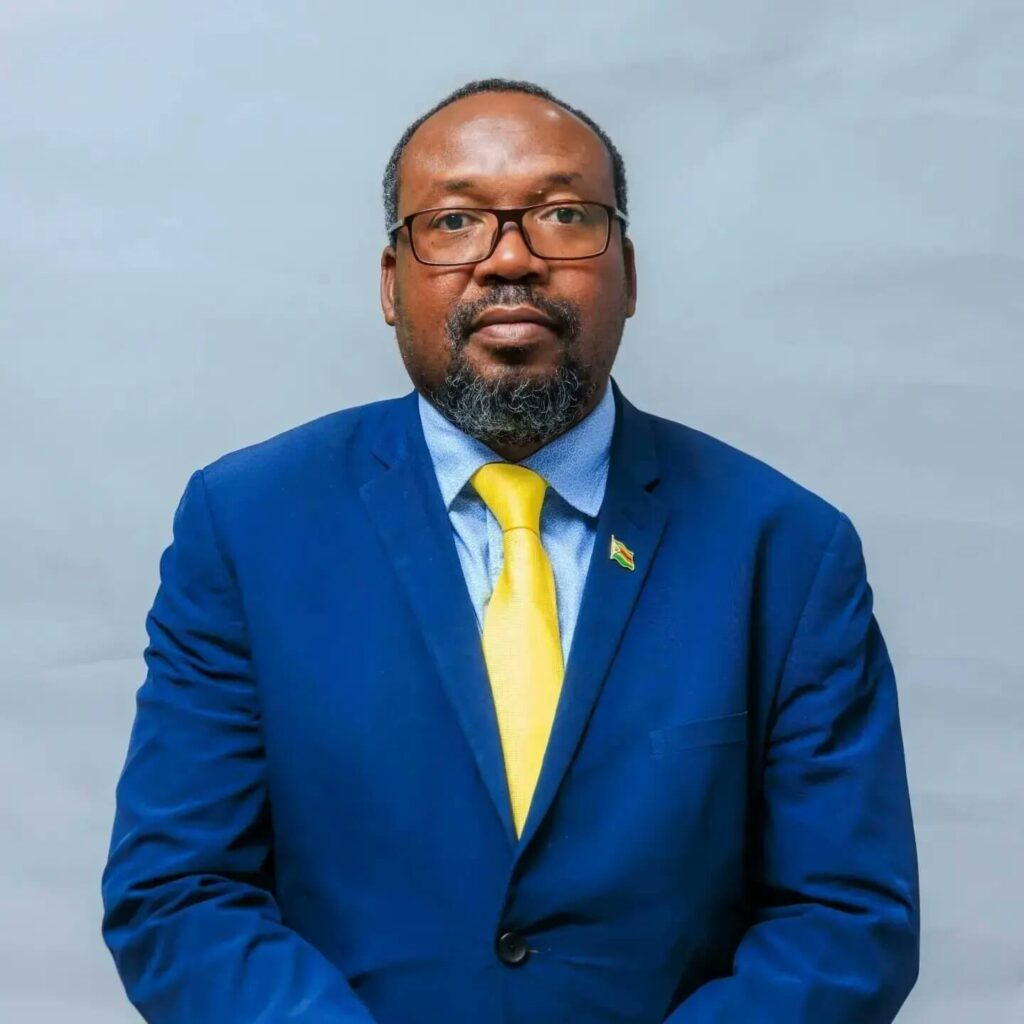
Hon. Fortune Daniel Molokele
In another exciting episode of the Weekly Guest Show, Onita Sibanda (OS) speaks to Member of Parliament for Hwange Central Daniel Molokele (FDM) on social issues affecting young people.
OS: Good evening Makamu and welcome to our Weekly Guest Show! Tonight, we are tackling social issues affecting our young people. Joining us is the MP for Hwange Central, Honourable Daniel Molokele.
Welcome to the show Honourable! May you kindly introduce yourself!
FDM: A very good evening to you too, Onita. Fortune Daniel Molokele is a human rights lawyer who is based at Whange in Zimbabwe. He is the founder and managing partner of the Molokele Law Chambers that is located at Whange. Prior to that, he also practiced with Mavhunga and Associates and also with Ben Baron and Partners. He graduated with an LLB Honours degree from the University of Zimbabwe in 1999. During 2008, he also obtained an LLM degree specialising in Fundamental Rights Litigation from the University of South Africa. Then in 2020 he graduated with a Masters of Business Administration (MBA) degree with the African Leadership University in Kigali, Rwanda. In February 2024, he enrolled for a Doctor of Philosophy in Leadership studies (PhD) with International Leadership University in Kenya
Over the years, Molokele has worked for several NGOs both in Zimbabwe and South Africa. These include the National Constitutional Assembly (NCA), Transparency International Zimbabwe (TIZ), Peace and Democracy Project (PDP), Zimonline Trust, Southern Africa Editors Forum (SAEF), Global Zimbabwe Forum (GZF), World AIDS Campaign (WACI Health), Medecins sans Frontieres (MSF), Southern Africa Regional Programme on Access to Medicines and Diagnostics (SAPAM) and AIDS Accountability International (AAI). In June 2001 at Bulawayo, Molokele founded the Christian Legal Society of Zimbabwe (CLS).
He also helped to set up other organizations such as the Christian Leadership Forum (CLF), Gospel Music Association (GMA), Bulawayo Agenda, Highlanders FC Bosso South Africa chapter, Victory Fellowship Church in South Africa and the Global Zimbabwe Forum (GZF). Molokele is also a long standing politician who started his career at the University of Zimbabwe in 1995.
He is a former Secretary General of the UZ SRC (1995-96), Vice President (1996-97) and President (1998-99). He was also the founding Vice President of the revived Zimbabwe National Students Union (ZINASU) between 1997 and 1999. In July 2018, he was elected as the Member of Parliament for the Whange Central Constituency. In June 2019, he was appointed by President Nelson Chamisa as the national Spokesperson for the MDC Alliance. Then in October 2021, President Chamisa reappointed him as the national Deputy Treasurer General of the MDC Alliance. During 2022, he was appointed as the Whange Cluster Chairperson for the Citizens Coalition for Change (CCC). In August 2023, he was elected to serve for his second term as the Member of Parliament for Whange Central constituency
In October 2023, he was appointed as the Chairperson for the portfolio Committee on Health and Childcare under the Parliament of Zimbabwe. He served in this role until May 2024. Molokele also has several other parliamentary positions including being elected as the Secretary General of the Parliament of Zimbabwe Caucus on Disability Affairs. He also serves as the Co-Chairperson of the Pan African Parliamentary Taskforce on Domestic Financing for Health.
OS: Thank you for sharing Honourable! It’s impressive to know your extensive background. Let’s move on! Many children in Zimbabwe walk long distances to school or sit on the floor because of overcrowded classrooms, especially in high density areas and rural communities. How have you dealt with this in your constituency?
FDM: My constituency is the only urban constituency in a largely rural Mat North province. Whange has a dual education system. The first aspect falls under the concession areas where some companies administer the schools. The second component falls under the Whange Local Board. Schools under the local board are more public in nature, and of late a major concern has been raised around the Nechibondo primary school under ward 4. It is currently overwhelmed. I recently joined efforts to build another public primary school in the Empumalanga area.
OS: I’m pleased to hear about your efforts to build another public primary school in Empumalanga. Overcrowding is a significant challenge in many schools and addressing this issue will surely benefit the community.
My next question; some children are dropping out of school because their families can’t afford fees. Do you support free basic education and what form of support have you been helping with the community?
FDM: Indeed! I support free primary education. Basic education must be a right for every citizen of Zimbabwe. Due to limited personal funds l normally assist in the payment of fees for a specific number of children at a time. I target mostly children who are orphaned or vulnerable who would have got awarded at a prize giving day ceremony.
I am also concerned that the government has in recent years failed to adequately fund the BEAM initiative.
OS: Thank you Honorable! Free primary education ensures that every child in Zimbabwe has access to quality learning and equal opportunities.
FDM: Oh absolutely.
OS: Drug and substance abuse is destroying young lives in Zimbabwe. What are you doing as an MP, to fight this problem in your constituency?
FDM: I am a very active and passionate parliamentary champion against drug abuse. Over the years, l have been actively involved in various initiatives against drug abuse working mostly with various civil society organizations. I am also an active member of the UNITE global parliamentary network that has very robust programs against drug abuse and promotes harm reduction strategies. During 2022, UNITE funded me to attend a special course in Geneva in Switzerland that focused on policy making around harm reduction and anti drug abuse initiatives.
OS: Thank you Honourable for sharing your commitment to tackling drug abuse.
FDM: I also think there is a need for the government to start allocating a bigger budget towards local communities-led initiatives against drug abuse.
OS: Collaboration and networking are essential in addressing complex issues like drug abuse.
FDM: Indeed! You can say that again. We need a united and coordinated all stakeholders approach to win the war against drug abuse.
OS: I completely agree. Community driven solutions are often more effective and sustainable by investing in these initiatives, the government can empower communities to take ownership of the issue and develop targeted solutions that work. Moving on; access to clean water, especially in townships and rural areas, is still a problem, Hwange included. How is Parliament solving these basic but serious issues that affect children’s health and dignity?
FDM: Access to clean water has become a real challenge especially in Whange. I grew up at the No.1 Colliery and during my childhood years we had easy access to clean water that was directly from the Kasambabezi river at the Deka river mouth. Today the situation is totally opposite, especially in the concession areas. There is too much water rationing. Parliament has contributed to the fight for easy access to clean water mostly through the constituency development fund (CDF). In most CDF projects, the focus has been on the drilling of boreholes and installation of water retention tanks (Jojo tanks).
OS: Thank you for highlighting the pressing issue of access to clean water in Hwange. The efforts made by Parliament through the CDF to drill boreholes and install water retention tanks is impressive.
My next question is; many children with disabilities struggle to go to school or be included in community life. What is being done to support inclusive education and accessibility?
FDM: You are welcome! As the Secretary General of the Parliament of Zimbabwe Caucus on Disability Affairs, l am a well known champion on Disability issues. So when it comes to access to education for children with disabilities l have a great interest. Unfortunately at the moment most children with disabilities are struggling to access education
Both BEAM and the Social Welfare department who are supposed to intervene are also struggling due to heavy under funding by the government. Efforts must be stepped up in the next budget process to increase funding for these two critical support mechanisms.
As the office of the MP we also support the Whange Disability Forum and are currently working to train local ward coordinators on Disability Affairs to help improve support for all local residents with disabilities including school going children.
OS: Thank you Honourable for sharing your expertise and passion for disability issues. It’s heartening to see your office actively supporting the Hwange Disability Forum.
Some young people say they feel ignored by politicians — that they only matter during elections. What would you say to them, and how do you include youth voices in your decisions?
FDM: Indeed, many thanks! As a former prominent student leader in the country, l will always have a special interest in youth and student related issues.
I also now chair the Learnmore Jongwe Memorial Trust that plans to launch programmes to promote the Youths and Students development agenda. As the office of the MP we also have a strong partnership with the Hwange Youth Empowerment initiative (HYEI). We encourage all local youths to join the HYEI and start to benefit from all its various initiatives.
OS: Some young people want to be involved in solving problems in their communities — but don’t know how. What other platforms exist for youth to be heard and make a difference?
FDM: We do have various youth led and youth focused organizations such as HYEI. HYEI also works in partnership with various youths organizations all across Zimbabwe. So l encourages all local youths to start by joining HYEI.
OS: Thank you! How do you see a media house like The Besana Mail helping young people in your constituency? And your last words?
FDM: You are welcome! I think you should train more youths with citizen journalism skills. I am available to support you and host a training workshop for at least 2 youths per ward. Once these youths are successfully trained they will then play the role of local wards news correspondence for you. This will then make you much more effective and relevant in your work.
OS: I appreciate your willingness to support a training workshop on citizen journalism skills for youths. Points well noted. Thank you so much Honorable Molokele for sharing your valuable insights and expertise with us today. It was a packed conversation. We appreciate the time you took to share your thoughts and experiences with us.
FDM: You are welcome. It’s my pleasure
OS: We appreciate your interest and look forward to engaging with you again. Have a blessed evening.


This is a very inspirational story for and about one of our own. How I wish the article can be distributed widely to reach as many young people as possible. Maybe we can inspire the youth of today to emulate the the illustrious life for one of our own. As I read through I also got challenged by his achievements.