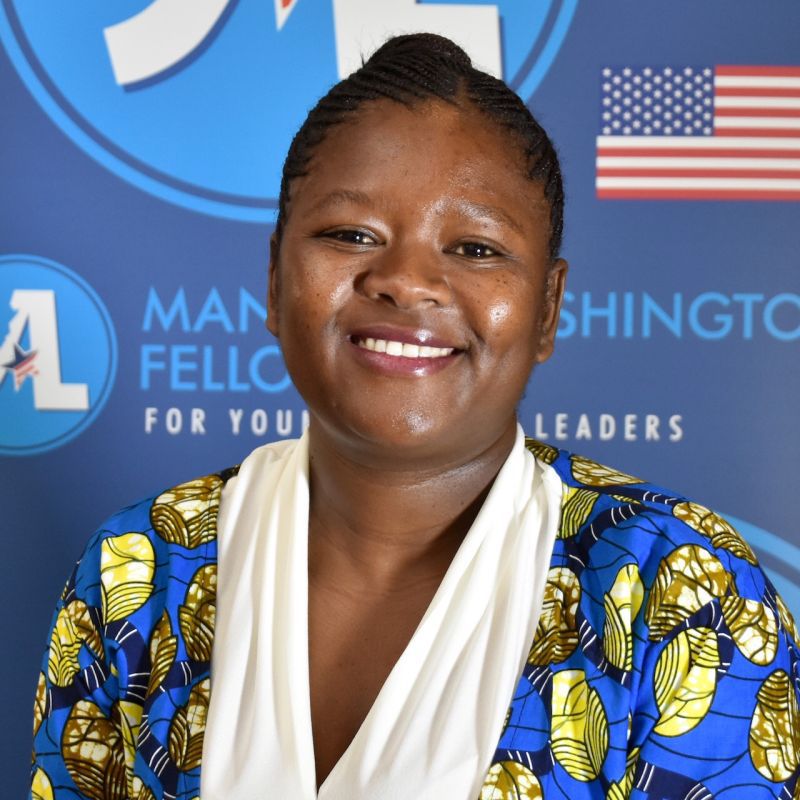
Theresa Takafuma - Co-Founder at The Usawa Institute
Girls still struggle to access quality education in African communities, and to understand more on the solutions being proffered to close the gap, Onita Sibanda (OS) speaks to Theresa Takafuma (TT) from the Usawa Institute.
OS: Welcome to tonight’s show Theresa. May you kindly introduce yourself?
TT: My name is Theresa Takafuma. I am the co-founder of The Usawa Institute, a non-profit that assists girls and young women in finding their voices in ICT, education, communication, advocacy, among other things.
I am also a communicator, storyteller, journalist with a strong bias towards girls and women education.
OS: Thank you Theresa! I am happy to have you tonight. What is The Usawa Institute, and what inspired its founding?
TT: So, in 2016, three friends consisting of Anoziva Marindire, Kelvin Tinashe Mutize and Theresa Takafuma, all working in the media sector started having discussions about how girls and young women were being left behind in terms of digital advancement. We decided to start a non-profit that then equips girls with skills like coding, communication, advocacy, among other digital skills. We also saw the gap that was there in girls’ education, and decided to find allies in that area, because to us, we believe the future is “Usawa”, a Swahili word for equality.
OS: That is amazing. I’m impressed by your vision and commitment to creating a more equal future. Keep up the good work.
TT: Thank you!
OS: Your work often intersects with Girls Inclusion, after school programs and economic inclusion. What are the most urgent issues you’re seeing right now in those areas?
TT: Thank you for the question! In Sub-Saharan Africa especially, a lot of girls did not go back to school after Covid-19, which further exacerbated issues like child marriages on the continent. Girls then find themselves without too many options in terms of economic opportunities. It exposes them to exploitation, with climate change not making it easier for them as well.
The other growing concern is in digital inclusion, where technology facilitated gender based violence (TFGBV) is rife. While girls also want their voices to be heard online, lack of proper policy addressing this issue hinders them. Among others, these are the issues we find urgent.
OS: Thank you for highlighting these critical issues Theresa! The Usawa Institute’s work is crucial in addressing the challenges faced by girls and young women in Sub-Saharan Africa.
Can you share a specific project or campaign that had a significant impact on local communities or policy? What made it successful?
TT: Thank you! The Girls Speak Out project is what comes to mind when I speak (brag) about our work. Girls from low income communities are often excluded from pursuing careers in fields like ICT, but through the GSO project, we managed to have a three pronged skills base that is digital media, coding and advocacy. We had participants from Zimbabwe and Lesotho in the project, and some of our alumni have gone on to pursue careers in these fields. We have one girl who is now working as a communications officer for a multinational, and another who is now a junior parliamentarian.
Through this project, we aim to dismantle the systemic barriers to girls and women inclusion.
OS: Wow! Theresa this is wonderful It’s amazing to see the tangible impact you have had on the lives of girls and young women from low income communities.
TT: On what made it successful, I will give the credit to the girls in the programme; they were hungry for these skills. They diligently followed through the programme and continue to add their voices to the programme through our Ruhusiwa platforms, which consist of a quarterly magazine and online dialogues.
OS: The achievements of your alumni are a testament to the project’s effectiveness. Keep up the good work.
What are some of the most powerful or surprising things you’ve heard directly from girls during the project? How are their voices shaping your work?
TT: Thank you! One thing we have realized with our girls is that there is a lot of talent and potential trapped in poverty. Access to opportunities is very tied to economic status, hence we intend to bridge that gap through offering these skills. What we do is to open the window for these girls to see that there are endless opportunities even in male dominated fields like ICT, also encouraging them to take on STEM subjects.
Each and everyone of us has a story to tell, and so do they. They have really amazing stories of resilience to tell, and that continuously makes us believe that where they come from does not define where they end up. They all have dreams, and those dreams are valid and possible to achieve.
OS: That is a vital point, Theresa. Poverty should not limit potential. Your work in providing skills and opportunities is truly empowering these girls to reach their full potential.
Your initiative, ‘Girls Speak Out,’ was recently recognised as the winner in the WSIS prizes 2025 category 16 in Geneva. Congratulations! What was category 16 about?
TT: Yes! We are still in celebration mode.
OS: I’m loving the vibes.
TT: So, our project was the winner in Category 9, Action Line: Media at the WSIS Prizes in Geneva. The projects in that category were basically media and ICT projects, and ours was chosen the winner, I guess because of the impact. We were once selected as a nominee in the same awards, and did not win, but this time we are very happy our name was called on that podium.
The projects in the same category basically addressed the core tenets of media plurality, balanced representation, and skills development in the digital age.
OS: Huge congratulations Theresa! Winning the WSIS Prize in Geneva is an incredible achievement.
What does this international recognition mean to you as an organisation?
TT: This recognition means so much to us as The Usawa Institute (TUI) for two reasons: one of our co-founders, Kelvin Mutize passed on in 2023, which was a big blow to us and our community of friends. He was very passionate about what we were doing at TUI, curating programmes that ensured maximum impact even when we didn’t have a budget. This award was like reassurance to us that the work goes on, even when we are still grieving.
Secondly, we have a big community of volunteers who support our work across Sub-Saharan Africa and overseas, and this to us seemed like an affirmation to them that their hard work is not in vain. It also came as affirmation to our girls that we are doing good work, which can be recognized on global platforms like the WSIS.
OS: I’m glad this recognition means a lot to you and The Usawa Institute, Theresa. It’s wonderful that the award has brought a sense of reassurance and validation to your team, especially during a difficult time.
What are some of the systemic or cultural barriers that continue to hinder girls and women inclusion in African societies, and how do you confront them?
TT: At TUI we believe that no systemic barrier cannot be dismantled if we all put our mind to it. Gender stereotypes often become the culprit hindering civic participation in women. Recognizing, acknowledging and understanding these barriers is usually our first step, because we believe it’s better if we are more proactive than reactive in such scenarios. We do not take anything lightly when it comes to participation, because a simple social media comment can stop a girl from pursuing a career she wants. We have an upcoming TFGBV project we are working on, where we intend to confront the normalized online bullying women and girls face everyday.
OS: That’s a powerful approach. Thank you Theresa! I’m looking forward to seeing the impact of your upcoming project.
TT: We are excited about it as well.
OS: We live in a time of increasing global inequality. What unique role can African institutions like Usawa play in shaping a more just future, both on the continent and globally?
TT: Thanks! While global inequality is increasing, I think we already have low hanging fruits that we can reach. There is always something someone can do, for example policy advocacy itself. There are a number of international instruments that emancipate girls and women that need us to advocate for their ratification and adherence to. That is part of the reason why TUI is in existence, to advocate for these policies. I will give an example: It’s one thing having legal provisions allowing teen mothers to go back to school, but it’s a completely different thing actually seeing them in class. That is the gap that needs to be bridged. Apart from equipping the girls with coding skills, what other conversations can we have to ensure a just future? That is a question we also want answered, reflecting in our work. Also, through our Ruhusiwa Dialogues, we bring diverse voices from across the continent where experiences are shared, which then helps us to connect and see areas of interest or improvement in our own context.
And this is also my call to the media to keep on covering these issues. How much of the national budget goes towards education? Are sanitary pads being accessed in a school in remote areas? etc.
OS: Thank you Theresa! Exploring new areas of conversation and collaboration can help ensure a just future. The dialogues are a great way to facilitate this discussion and identify key areas for improvement.
Tell us a bit about Ruhusiwa Magazine, how has it helped in achieving some of Usawa organisational goals?
TT: Thanks! So, the Ruhusiwa Magazine came up as a way of getting diverse voices in girls education in particular and gender equity in general. We get articles from across Sub-Saharan Africa, shedding light on what girls’ education looks like in those countries. This has helped us to identify areas of collaboration with other like-minded organizations in other countries, which we have done with the AU Cieffa YCBW alumni from Lesotho, Zambia, Kenya, The Gambia and other African countries. We have realized through this that as much as issues of girls’ education differ from country to country, the bigger picture kinda looks the same, which has been very eye opening.
OS: This is a great initiative. How can The Besana Mail, listeners, readers, or other organizations get involved in your work, and your last words?
TT: Thank you! First of all, thank you for this platform, which I see as a way of The Besana Mail supporting our own work. We host the Ruhusiwa Dialogues where we discuss girls education issues, and would like to invite others to join. We share the links to these on our social media platforms. We will soon make a call for articles for the Ruhusiwa magazine edition, which will have a theme, and we encourage those who can to write. Lastly, I just want to thank the TUI community for all the work they do in low income communities. Definitely, the future is “Usawa”.
OS: I’m looking forward to seeing the impact of the Ruhusiwa Dialogues and magazine and I appreciate the TUI community’s dedication to creating positive change. Thank you so much for Theresa for sharing your valuable insights and experiences with us today.
TT: Thanks to you too and the whole team at The Besana Mail for the great work you are doing. Thank you for having me.