Credit - BIO Ventures for Global Health
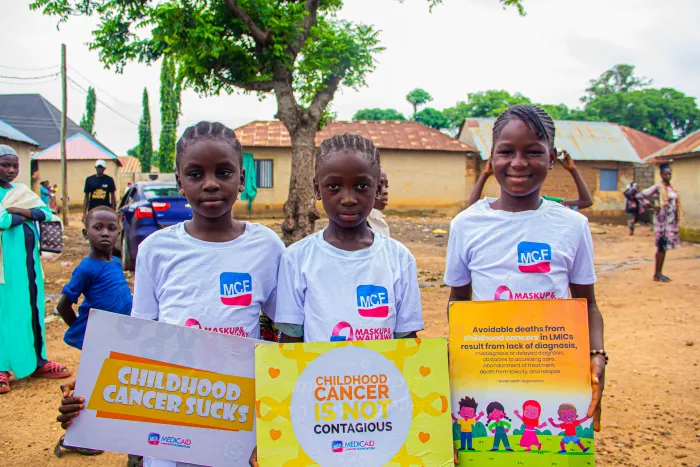
Onita Sibanda (OS) discusses raising awareness on paediatric cancer in communities. She speaks to Debby Olanrewaju (DO) to explore more on advocacy initiatives.
OS: Welcome to the Weekly Guest @Besana. I’m your host Onita Sibanda. Our topic is ‘Raising awareness and support for paediatric cancer through community driven education and advocacy initiatives’. I am joined by Debby Olanrewaju. Welcome Debby. May you kindly introduce yourself?
DO: My Name is Debby Olanrewaju, I am a Medical Physics student at Nottingham Trent University in the United Kingdom (UK). I specialise in creating awareness for cancer treatments and reducing stigmatisation around the illness.
OS: Thank you for the introduction Debby! It’s an honour to have you on the show. What inspired you to get involved in raising awareness about paediatric cancer?
DO: My first encounter with cancer was in 2020, during the COVID-19 pandemic. I was watching a news analysis on the cause of death and I realised that about 15% of death worldwide was caused by cancer. This inspired me to do some research into cancer and its treatment. During my time of research there has been little information about paediatric cancer and I have decided to help raise awareness on paediatric cancer.
OS: Your journey into cancer awareness is fascinating. Moving on, can you tell us about some of the awareness programs you have worked on and who they targeted?
DO: While volunteering at the NHS, I and my team collaborated with cancer research UK to inform patients on wards about cancer prevention and awareness. We targeted parents to bring awareness to symptoms that indicated cancer in children. We also spoke to women about breast cancer. Children with UK is a great website that offers advice to parents and the general public on, they educate the public on the causes of paediatric cancer and the advantages of early diagnosis.
OS: Impressive! Your team’s efforts to educate patients on cancer prevention and awareness are crucial in promoting early detection and prevention. Keep up the fantastic work Debby!
DO: Thanks Onita!
OS: Why is public awareness about childhood cancer so important in African communities?
DO: There is a rise in paediatric cancer in sub-Sahara Africa, this is as a result of the huge stigma around cancer caused by misinformation and lack of awareness. The late diagnosis or lack of diagnosis of cancer causes about 90% of more than 100,000 children to die yearly. So it is important to talk about this topic to create awareness and promote cancer research in Africa.
Additionally, most diagnosed cancer patients die in Africa as a result of lack of facilities and treatment. Promoting cancer treatment careers like radiotherapy and medical physicist among the youth would help improve cancer treatment in Africa.
OS: That’s an important point, Debby! Promoting careers in cancer treatment, can help address the shortage of skilled professionals and improve cancer care in Africa.
What are some common myths or misunderstandings about paediatric cancer that you aim to correct?
DO: A common myth about cancer diagnosis in African communities is that cancer is an untreatable or not manageable disease which is false. Cancer research has developed over the years and it has been proven that when diagnosed early cancer can be treated or managed. Another myth that is being spread nowadays is that cancer is caused by food or equipment that produces radiation like phones and microwaves. It has been debunked that radiation from this equipment is too weak to cause cancer.
OS: Thank you Debby! By promoting accurate information, fear and stigma around cancer can be reduced. It also encourages people to seek medical attention when needed.
How do your awareness campaigns help families, schools, and communities support affected children?
DO: These awareness campaigns help families and the community in debunking some of the preconceived notions about cancer treatments. Through this awareness program there have been reduction in stigmatisation and segregation of cancer patients which has proven to help improve patients’ mental health. It also provides carers and families with information that helps recognise cancer symptoms as early as possible. Schools have started to address the shortage of skilled professionals in this area and more courses and findings have been brought on board.
OS: The impact of this awareness program is significant. You are contributing to a more informed and supportive community, ultimately improving the lives of cancer patients and their families. Thumbs up Debby!
Have you seen any changes or progress as a result of your awareness work? Can you share an example?
DO: There have been changes in early diagnosis as a result of symptoms detection by parents. Like I mentioned, one of the progress I have made is the collaboration of the NHS and cancer research UK in making sure people in different wards are informed about cancer and most especially paediatric cancer.
OS: Thank you Debby, your work is truly commendable. Let’s move on!
How do you make the topic of paediatric cancer understandable and engaging for young people?
DO: Engaging young people can be quite difficult. So creating awareness by promoting inclusivity using social media. Including cancer patients in children commercials and advertisements I believe would create more awareness for younger people. Creating a children’s game where the main focus would be caring for a cancer patient. Having cancer survivors share their stories on social media platforms I believe are the ways to include younger people in this awareness process.
OS: True! What challenges do you face in trying to reach more people with your messages—and how do you overcome them?
DO: The most challenging part in creating awareness is that there is not much platform like this that is available for me to share my experience and create awareness on cancer research. Especially in African communities most people already have preconceived notions about cancer and are not willing to educate themselves on it. I believe if there are more people in the African communities that can volunteer to create social media awareness or even go into the public spaces like the churches and health care centres there would be more awareness on cancer. To overcome this, I am planning to collaborate with communities like yours and people in Africa to spread awareness.
OS: Thank you Debby! Looking forward to working with you. What role can a media house like The Besana Mail can play in paediatric cancer campaigns?
DO: Like I said earlier I would like to collaborate with the media house. Members of the team that live in Africa can do some more research through platforms like Cancer research UK and children with cancer UK and help to engage communities in Africa most especially sub Sahara Africa about the symptoms of cancer and how to reduce its stigmatisation in their communities.
OS: Thank you, this can also help reach wider audiences. Your last words.
DO: Thanks for the opportunity. I hope the members have learnt a few things about cancer and its treatment.
OS: Thank you so much Debby, for sharing your valuable insights and expertise with us today. Your contributions to this important conversation has been truly enlightening. It was an honour to have you tonight.
DO: You are welcome!