Precilla Gavaza
Communities today face a range of issues, including technology adaptation, climate change, and societal challenges such as masculinity, poverty, and youth participation in decision-making. Onita Sibanda (OS) hosts Precilla Gavaza (PG) to unpack these pertinent issues and explore the role of education and inclusion in development.
OS: Our topic is Rethinking Education – Tech, Climate and Societal Issues.
Welcome to The Weekly Guest Show Precilla. Can you tell us a bit about yourself and your background?
PG: Thank you for having me, and the warm welcome, Onita.
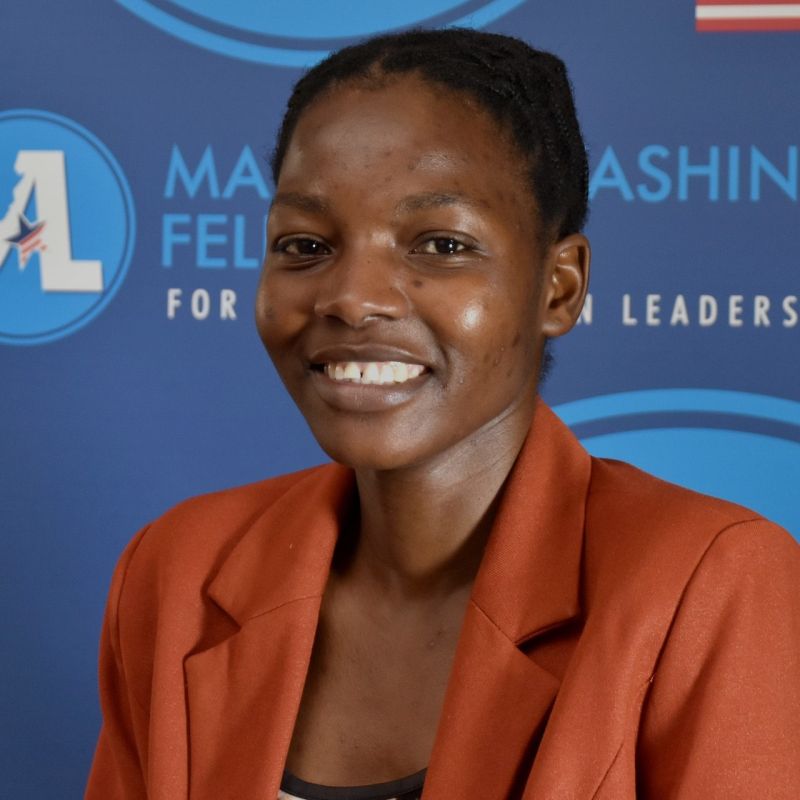
I’m Precilla Gavaza, born and raised in a small village in Zaka, Masvingo. I am a Farmer’s daughter, the reason why I am passionate about the intersection of technology, climate action, and social development, particularly as it relates to empowering young people and women in Zimbabwe.
My professional background is quite diverse, with a lot of it spent as a Monitoring and Evaluation (M&E) professional for various development projects in the non-profit sector. This gave me a deep understanding of what truly works on the ground.
I am currently with Uncommon.org, where we focus on bridging the tech skills and employment gap for young people. I am also an alumna of the Mandela Washington Fellowship and the UNITAR Green Livelihoods Programme, which really shaped my perspective on community-driven sustainable development.
OS: Thank you Precilla! It’s great to hear from you
PG: The pleasure is all mine.
OS: You’re an alumna of the UNITAR Green Livelihoods Programme. From your experience, how are such initiatives empowering women and youth in Zimbabwe to embrace green livelihoods?
PG: Great question! The UNITAR Green Livelihoods Programme was a transformative experience that I wish every youth could participate in. Such initiatives equip women and youth with tangible, practical skills not only to understand climate change, but to proactively come up with sustainable solutions that balance out the social, economic, and environmental aspects of life. We learnt about investing in sustainable agriculture, renewable energy, and waste management whether as producers, retailers, or consumers or end users.
As a Street Business School (SBS) Lead Coach back then, I used the skills and knowledge gained from this course to help rural women entrepreneurs rethink their business models and processes, shifting their mindset from just profitability to environmentally friendly and resilient ventures. I have seen some women rise above economic struggles as waste vendors, others selling organic manure and other non-timber forest products. They could generate income and invest in children’s education, better housing, and healthcare, while protecting the environment.
Personally, I have learnt to watch my own carbon footprint by putting much thought into what I consume. I interrogate where, how, and by who aspects of its production, ensuring that I rule out products that are not environmentally friendly or that have been produced under conditions of child labour or exploitation. It was indeed a wake up call to say climate action starts small – by planting a tree here and there, adopting the 3Rs (Reduce, Re-use, Recycle) of managing waste. Simple acts like avoiding purchasing single-use plastics, going for products with biodegradable packaging, saving water & energy, and producing what we eat organically can go a long way in saving our planet.
OS: That’s a powerful story Priscilla. This is truly inspiring.
PG: Thank you! Grateful for the opportunity to share.
OS: That’s a great approach, Precilla! By being mindful of your own carbon footprint and making conscious choices about what you consume, you’re setting a powerful example.
Climate change is increasingly affecting young people in complex ways.
How do you see its impact on mental health among the youth, and what interventions do you think are most effective?
PG: It sure is, not very easy but one step at a time until we can be proud.
The nexus between climate change and mental health is a critical issue that is often overlooked among young people. It appears climate-related disasters, including droughts, floods, and food insecurity have become overly consistent, bringing along a sense of hopelessness and even depression among the youth. This especially affects those whose livelihoods and businesses are dependent on good climatic conditions such as farmers and food manufacturers. Then there are some like myself, having grown in a rural setup, too close to nature only to come to the city where trees keep disappearing.
The eco-anxiety-filled nostalgia can be a traumatic experience, especially when you have no idea how to alleviate the problem.
I believe the most effective interventions are those that don’t just acknowledge the problem but empower and incentivise young people to design and implement innovative solutions. Interventions that leverage young people’s voice, agency, intellect, and energy to lead climate adaptation efforts.
This can include integrating age-appropriate climate change education and projects into the school curriculum, instilling a sense of responsibility and agency at a young age.
Also, integrating indigenous knowledge systems with climate-smart technologies or processes across industries to foster intergenerational learning and resilience. If there are good old times where climate change was not a source of mental health issues, young people can learn from the past and proactively mitigate the climate challenge and preserve their mental health.
When young people become part of the solution, then they can heal!
OS: Profound! The connection between climate change and mental health is indeed a critical issue that deserves more attention especially among young people.
That’s a great approach Precilla! Empowering young people to take ownership of climate action can be a powerful way to build resilience and promote mental health.
PG: Definitely, one of the most silent demons!
OS: You currently work with Uncommon.org. In your view, what is the future of tech education in Zimbabwe’s primary and secondary schools?
PG: Thank you for the question, my favourite space. Working with Uncommon.org and tracking the progress and impact of the tech education programs has shown me the incredible potential of our youth as learners, employees, and innovators. The future of tech education in Zimbabwe isn’t just about exposing every child to a computer. It’s about transitioning from a traditional, theoretical curriculum to one that is practical and hands-on. Our focus is to teach the youth to code their way into the tech industry. This entails developing a curriculum that is not only relevant to the current needs of the tech industry but adapts to the rapid changes in the tech landscape globally.
By placing the youth at the centre of technology education, we have created a full cycle model where the youth who come through our Innovation Hubs don’t just master tech skills but can transfer these to the children in primary schools. To make sure the skill transfer is sustainable beyond the youth technology bootcamp, we also train the teachers and provide them with the resources to teach these skills until every child learns to code in the classroom.
I believe the future of tech education in Zimbabwe lies in ecosystem-wide partnerships to not only teach skills and provide tech-enabled jobs, but also build and democratise the technology infrastructure across all the ten provinces in the country. It lies in bridging the gaps in technology access, leaving no one and no place behind.
The Uncommon model has been working perfectly focusing on the computer engineering courses and I believe it can be replicated in every other technology field until we make Zimbabwe the tech capital of Africa.
OS: Thank you Precilla, that’s a fantastic approach. What has been your experience in improving tech education access in rural schools and working with school dropouts? What challenges and opportunities have you observed?
PG: Improving and expanding tech education in rural areas can be met with critical challenges including lack of reliable electricity, limited internet access, and a shortage of qualified tech educators.
Sometimes the challenges are cultural and behavioural, stemming from sheer ignorance to a culture of dependency on hand-outs, dissuading the rural youth from participating in tech education programs.
However, the opportunities are endless considering the government’s receptiveness to such programs through the relevant ministries. Working with Uncommon.org, I have seen that by providing targeted training programs and bootcamps, we can show young people, especially those who couldn’t sail through conventional education, that a different path is possible. We also use innovative and sustainable infrastructure including repurposing shipping containers into innovation hubs powered by solar (renewable energy) and reliable internet (Starlink).
At Uncommon, we are not ignorant to the non-tech aspects of youth life, we proactively and holistically develop the whole person through what we call Inner-Engineering (soft skills development) and mentorship. We make sure that the person who comes through our doors leaves a better person and a professional, as good as a college graduate or even better.
Through our alumni, we demonstrate that these skills can lead to immediate income-generating opportunities, whether through freelance work, full-time tech roles, or starting their own small tech-based businesses. The enthusiasm and talent in these communities are a huge, often untapped, resource that we can leverage for a tech-enabled future.
OS: Those are significant challenges indeed!
PG: True, the most cited when we engage youth on what has been keeping them from tech education.
OS: This is amazing, Precilla. Keep up the good work. You previously shared a powerful article from The Herald about 16 pregnant girls who were unable to sit for their Grade 7 exams. These are children in primary school. Are we, as a society, failing them? Why is this happening, and what can be done to change the narrative?
PG: Indeed, sad and while I don’t have all the answers I am going to share my thoughts.
I believe we, as a society, are absolutely failing the girl child. When the issue is not an isolated incident, it becomes an indicator of a larger, systemic problem rooted in harmful societal norms and a cycle of poverty in its multifaceted form. Society is quick to blame the victims or their guardians while ignoring the root causes. We are not interrogating the perpetrators of such a vicious act, who are not hesitant to destroy the girl child’s future. Some do it to compensate for their damaged masculinities while for others it’s a condoned behaviour in some religious sects.
To change this narrative, we need an intersectional and multi-stakeholder approach.
The first step was already taken, putting in place education policies that guarantee every girl the right to return to school after giving birth. What’s left is to educate our learners on how to embrace their peers to reduce shame and discrimination. We also need strong measures to prevent secondary cases.
Second, we need to invest in robust, age-appropriate sexual and reproductive health (SRH) education. We need to rethink the Guidance and Counselling programs in schools, ensuring they are well equipped with resources and qualified teachers/counsellors who can implement robust SRH education in schools.
Additionally, we need to create community support systems that empower girls and hold perpetrators accountable. In a world where every parent is probably concerned about bread and butter issues on top of sending their children to school, we need close-knit communities and systems that protect children in-between home and school.
OS: This is a critical issue that requires immediate attention and action. Thank you Precilla for outlining a comprehensive approach to addressing the systemic issues affecting the girl child.
PG: I also believe if there are more community-based schools and children can avoid long distances, these cases could be limited.
I remember walking 14+ kilometres to access secondary school, and even though I did not succumb to sexual violence and abuse, I witnessed a lot of bullying and harassment along the way. How I wished school was closer!
OS: Your personal experience emphasizes the need for policymakers and educators to prioritize accessibility and safety in education.
You have spent much of your professional career as a Monitoring and Evaluation Officer. From your observations, how are young people participating in community-centered projects, and how significant is their contribution to overall impact?
PG: In my experience as an M&E professional, I’ve seen first-hand that projects are most successful when young people are not just seen as beneficiaries but as active participants, from the design stage to managing impact. We have numerous youth-led and youth-serving organisations that are thriving at the grassroots level and driving change towards different sustainable goals. That is a testament to what young people can do given the opportunity and resources.
At Uncommon, the youth are at the core of our programs, from being participants to being instructors, and driving the narrative in the tech industry.
I believe young people are innovators and early adopters. When they are involved in project design, data collection, and feedback mechanisms, they bring fresh perspectives and a deeper understanding of what the community truly needs. They can do this with little to no incentives as long as their voices are heard and their contributions are acknowledged. This participation ensures that projects are relevant, sustainable, and have a lasting impact long after the funding ends.
OS: That’s a powerful perspective. Thank you! You often say, “No one is coming to save you.” What does this mean to young people out there?
PG: When your words are used against you, literally! “No one is coming to save you” is a phrase that I live by. Yet, it’s by no means a message of hopelessness; it’s a powerful call to action.
It means that we can not wait for a government, an NGO, or a single leader to solve our problems, without taking initiative. Our present and future is in our own hands.
It’s an empowering statement that encourages us to always be intentional in our actions, to start a business, to learn a new skill, to volunteer in our communities.
We got to “be the change we want to see!”
OS: I love that mindset! This can be a liberating realization, encouraging people to take ownership of their lives and communities.
PG: Thank you!
OS: From your perspective, how can a media house like The Besana Mail contribute meaningfully to the conversations and issues raised here?
PG: Interesting! I believe The Besana Mail is in the right direction, initiatives like these conversations.
More can be done in spotlighting youth-led community development initiatives across the country. Encouraging equal representation of females and males, rural and urban, and those with disabilities.
It is imperative for the media house to change the narrative of the youth demographic, from “unfocused youth” to youth driving change.
OS: Thank you Precilla!
PG: Media houses can also use platforms like this one for dialogue between the youth and policy makers across issues to ensure accountability.
OS: Finally, your last words
PG: My last words go to my fellow young people.
If you do not start caring, a whole awful lot, nothing is going to change. Between you and me, nobody is coming to save us!
Let’s be the change we want to see in every space that we find ourselves in.
OS: Powerful message. Thank you Precilla!
PG: With that, please accept my utmost gratitude for hosting me tonight for such critical conversations. Keep up the good work!
OS: Thank you so much Precilla for sharing your insights and perspectives with us today. Your passion and commitment to empowering young people and driving change are truly inspiring. We appreciate the time you took to join us and share your thoughts.