Lupane – Every season in Lupane District, a dozen families lose a family member to an elephant or suffer lifelong damage. Due to these regrettable events brought on by climate change, the number of orphans rises by at least five each year. The Hwange National Park is the source of the elephants. Bearing the impact of climate change elephants from the 14,600 square kilometres national park with no natural water sources have gone on ‘Great Trek’ for the past 5 years resulting in humans loosing lives.
According to the Kusile Rural District Council (KRDC), at least three households in their area are confronted with the startling reality of conflict between humans and wildlife as a result of climate change every single day.
Every night throughout the district, hyenas and occasionally lions prey on livestock, including cattle and goats. The people of Lupane are fighting desperately to keep wild animals away from hundreds of tons of crops.
In each of these cases, the government and the appropriate authorities have been blamed for a dismal failure to take measures to mitigate the effects of climate change.
According to an investigation supported by the Friedrich Naumann Foundation (FNF) and the Voluntary Media Council Zimbabwe (VMCZ), climate change is the primary cause of the deaths, injuries, and destruction of crops.
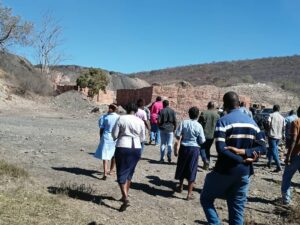
A trip to Lupane was an eye-opening to the terrible effects of climate change; the community there is deeply scarred by the battle between humans and wildlife. They graphically depict the negative consequences of these interactions, frequently turning autonomous residents into objects of philanthropic benevolence.
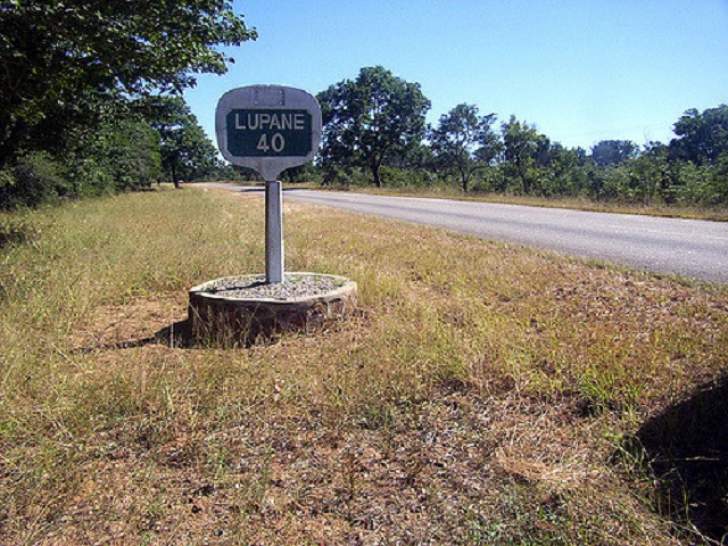
Situated in Zimbabwe’s Matabeleland North Province, and home to a steadily growing population of 198 600 people (according to the 2022 Census), Lupane is also the provincial capital. It is a semi-arid, rural area, characterised by a Savannah climate with four distinct seasons, encouraging a mix of woodlands and grasslands. This has made Lupane to be part of the wildlife corridor for the past decades with notable conflicts recorded annually.
This investigation reveals a significant fluctuation in the pattern of rainfall and temperature from 2016 to 2020 in Lupane. The disturbing trend extracted from the World Weather Online which is fed by countries meteorological departments showed average precipitation moving from 5.75mm (0.23 inches) in 2016, to 4.58mm (0.18in), then to 6.31mm (0.25 inches), eventually dropping to a scanty 0.36mm (0.01in) in 2019 and slightly improving to 3.67mm (0.14 inches) in 2020.
The Met Department states that the rainy season in Lupane normally lasts from November 8 to March 20. There is a 27% chance of having a rainy day during this time.With an average of 16.4 days with at least 0.04 inches of precipitation, January sets the record for the most rainy days.
Recurrent droughts have been a problem for Zimbabwe; during drought years, localities like Lupane and Hwange are particularly heavily struck. The climate has changed significantly over the past century, according to data from the Zimbabwe Meteorological Services Department, with daily minimum thresholds rising by 2.6°C and daily maximums rising by 2°C.
According to the MET department, rainfall has decreased by nearly 20% and, sadly, droughts have increased in frequency from once every 10 years to roughly once every three.
Livestock, agricultural sales, and beer sales are the three main sources of income for households in Lupane (from millet and sorghum). While cattle are sold to individual consumers and groups that support the meat industry, livestock like goats and chickens are primarily sold within the local community. Although most crops are grown for domestic use, they are sometimes sold locally or to private purchasers to cover urgent family needs.
These revenue-generating initiatives have been negatively impacted over the last five years by both human-wildlife conflict and climate change. Because of the extent of their devastation, elephants are mentioned as the main issue in the war.
Tales from the victims
Recollection Ndlovu, a 43-year-old from Lupanda village in Lupane, shares a terrifying story that seems to go on forever. She has to deal with the increasing risk of elephant attacks each year. In one instance, she barely survived, although she had to tend to multiple wounds after navigating prickly thorns.
Regretfully, Ndlovu’s experience is not unique.
The picturesque community of Lupanda, which lies in the Sipepa region between Lupane and Tsholotsho, is seeing an increasing number of attacks by local wildlife.
A tempting but dangerous patchwork of natural environments is created by the village’s proximity to Hwange National Park and the Ngamo Sikumi forest.
Hwange National Park is openly bordered by bushes near Lupanda. Elephants that migrate between the park, forest, and nearby human settlements use the region as a transit route.
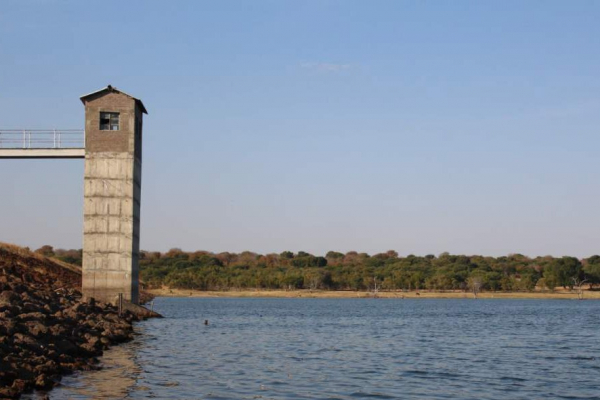
This pattern of wildlife migration has continued over time, but recent changes in the climate have brought forth a new dynamic: elephants traveling as far as Lupane Dam to drink water, which disturbs human areas along this wildlife corridor.
Elephant migration to Lupane Dam, which is many kilometers away, has risen as a result of climate change drying out numerous water sources in the vast national park.
“Since the start of the battle, we have been its victims. Every day, we live in constant terror for the safety of our kids and even ourselves,” Ndlovu says tearfully to The Besana Mail.
At the moment, Zimparks is making tremendous progress to improve the situation in collaboration with conservation partners. More than 2,500 wild animals are being moved from the country’s drought-stricken south to the friendlier north, according to Farawo.
“This extreme measure demonstrates how the destruction caused by climate change has surpassed poaching as the greatest threat to our beloved wildlife.”
Michael Nyoni, 18, of Gwaluba village, is dealing with a devastating turn of events, in contrast to Ndlovu, who survived to share her story. The already difficult life for this orphan took a more severe turn once his uncle died tragically in an elephant attack. After he and his wife had split up two years prior, the uncle was his only guardian.
Since Michael was ten years old, the two had been his caregivers.
“I had to leave school after losing my only source of support. I started fishing in order to survive, despite the fact that it is dangerous and can be done in areas where crocodiles are common. However, I have no other choice,” Nyoni speaks.
Our investigation brought us in contact with the grandchildren – aged 14 and 16 – of a tragic 81-year-old woman, whose life was abruptly ended by an elephant in Lake Alice village, Mthuphane area, South East of Lupane.
Since her passing, the grandchildren’s life have undergone significant adjustment as they were compelled to live with some family members.
Climate Change’s Effects on Wildlife
Our in-depth dive uncovers the fascinating story of how wildlife-human relationships are being impacted by climate change. It is a story that unravels annually, with every species leaving a unique imprint on the scenario.
The Intertropical Convergence Zone (ITCZ) influences the summertime peaks in Lupane District, which typically receives little rainfall. Winter is a dry season. Daily highs of 40 °C are caused by the intense summer heat, which is offset by colder winters with lows of 10 °C.
According to our research, baboons and a few scavengers were the only wildlife-related confrontations in the early 2000s.
However, over time, the food sources in forests—wild animals’ natural habitats—have dried up due to the ongoing lack of rain. As a result, there has been a noticeable movement of these creatures over time, moving from their natural habitats closer to human settlements in pursuit of food.
Farawo claims that Hwange National Park’s artificial water supplies are finding it difficult to meet demand. The majority of water supplies had run out by August, which is uncommon because typically, these kinds of shortages occur during the hottest months of October through November.
“Drilling some of these boreholes, as deep as 100-120 meters, is a huge financial undertaking on our part because our water table is dipping,” Farawo stated.
Village life has changed as a result of climate change, and now communities and wildlife depend on a single water supply.
Investigations reveal that increasing wildlife, motivated by a desperate need for food and water, has added a new dimension to the suffering of the residents.
The escalating conflict between humans and wildlife in Lupane District
Only three wards had human-wildlife conflict in 2009, according to Wellington Mthembo, Executive Officer of Natural Resources and Environment and the head of CAMPIRE at the Kusile Rural District Council (KRDC).
There are 28 wards on the Kusile Rural District Council body. A significant rise was noted between 2009 and 2012, even in wards that had not been impacted before. According to the council, the unrest has spread to every ward.
“All the wards are now affected. Most of the problem animals in our area are lions, crocodile, elephants and hyenas. The wildlife is attacking both humans and wildlife. This is necessitated due to our location. Our communal lands are bordered by forested areas which are dwelling areas for the wildlife. We have two wildlife conservancies in our area, the Gwayi and Kana Block,” said Mthembo.
The people of Lupane are in a difficult situation since they are unable to protect their crops from the attacks of elephants. Consequently, food security has been jeopardized. Hyenas mark out goats, cattle, and donkeys as their prey, demonstrating that the animosity extends beyond the fields to their animals.
“I’ve watched my crops destroyed by elephants, season after season, leaving behind nothing but bare ground. More tragically, villagers have even lost their lives to these creatures,” recounts Simelisiyo Ncube, a local resident.
Another villager, Ackim Ngwenya, who lost ten livestock to hyenas in 2019, expressed his dissatisfaction with the Kusile Rural District Council and Zimbabwe Parks and Wildlife Management Authority for not doing enough to help those in need.
“The pain deepens when we appeal for help to Zimparks and our district council, only to see our pleas falling on deaf ears,” laments Ngwenya.
However, Tinashe Farawo, a spokesman for Zimparks, defends the authority, stating that they react as quickly as possible to allegations of wild animals entering human communities. Farawo recognizes the regrettable fact that these occurrences cause communities to become impoverished.
“This human-wildlife conflict is a sad phenomenon that is prevalent in various parts of our country and extends beyond Lupane,” argues Farawo.
The European Union (EU) supported a comprehensive evaluation of the Communal Areas Management Programme for Indigenous Resources (CAMPFIRE) in 2017 and 2018.
Notwithstanding these initiatives, Mthembo, KRDC’s Head of Campfire Office, is worried about the lack of urgent resources required to address wildlife conflict.
“We are scrambling due to the lack of necessary equipment. Delayed responses result in significant damage to livestock because often, the conflict sites are located in remote regions. The dearth of manpower and complicated procedures to procure ammunition add to the woes. Currently, we are only able to address about 20% of the human-wildlife conflict situations due to these constraints,” Mthembo said.
Each year, wildlife claims both crops and people, which is a heavy burden for the local residents.
Clemence Nkata, a local villager is struggling to care for his six grandkids after losing his four goats to hyena raids in 2021. He had hoped to live a life independent of the money sent home by his children who were living abroad in South Africa.
An Appeal for Responsibility
Devastating wildlife encounters have increased in the Lupane area in recent years. A 28-year-old male and an 81-year-old woman were killed by elephant attacks at different occasions as recently as 2017 and 2020, respectively. The old woman met her unfortunate end while traveling to a local school, while the other victim was caring for his fields.
To lessen these tragedies, groups like the Rural Communities Empowerment Trust (RUCET) are working. They have been carrying out projects in the impacted areas, including as Sotami and Somwara, in conjunction with KRDC.
According to RUCET, the flourishing conditions at the Bubi-Lupane dam are the reason for the wildlife inflow in Lupane.
“Unfortunately, encounters with this wildlife, especially elephants, have often had fatal consequences for the locals. Lions and hyenas are also causing trouble in areas like Muzola and Dandanda,” said Casual Moyo, RUCET Programmes Officer.
In Lupane, cattle ownership encompasses more than just animals and subsistence cultivation. With animal-drawn ploughs, it marks the beginning of the crop-farming cycle and serves as a symbol of affluence and transportation.
A Parks and Wildlife Bill is currently under progress. The goal of the proposed legislation is to guarantee the sustainable development and use of wildlife resources. The measure will repeal the Trapping of Animals Act (Control) (Chapter 20:21) and the Quelea (Control) Act (Chapter 19:10) if it passes. In order to provide financial assistance to victims of human-wildlife conflict, it suggests establishing a Human-Wildlife Conflict Relief Fund.
When Nyasha Mutyambizi, the Director of Legal & Corporate Services at Zimparks, addressed the Zimbabwe Animal Law Conference on 13 September 2023, she highlighted the government’s efforts to address human-wildlife conflicts.
“With the proposed Human Wildlife Conflict Relief Fund, we are providing more than just financial assistance,” Mutyambizi clarified. “We want to help victims who have been hurt or who have lost a limb or a loved one to wildlife as part of the review process. Hunting, culling, sterilization, relocation, and the installation of barriers like plant and fence fences are some of the conflict prevention techniques we currently employ.”
The issue is becoming worse, according to statistics.
According to our investigation, ZW$514.2 million has been set aside in the 2023 National Budget to fence the remaining 42km of Gonarezhou National Park in an attempt to minimize conflicts between wildlife and humans and control disease outbreaks such as anthrax and foot and mouth. The cost of the harm caused by human-wildlife conflicts across the country, particularly in the Lupane region, is far more than this amount, though.
The Auditor-General’s report for the fiscal year that ended on December 31, 2020, highlights the regrettable condition of non-compliance and reveals alarming inconsistencies. This insightful report, which exposed the challenging conditions faced by local administrations, was presented to the Zimbabwean Parliament in 2022.
“I strongly urge Local Authorities to diligently update their financial statements,” the Auditor General warned. “We can increase accountability and transparency by doing this. Regretfully, a number of flaws were found throughout this audit, with governance, procurement, revenue collection, and debt management coming in first.’
Only 41 of the 92 local authorities were able to submit their current (2020) financial statements for audit, which is concerning. As of November 30, 2021, the remaining fifty-one have not submitted their accounts.
Amidst the investigation, it was discovered that the 2019 financial statements for Lupane local board were still in finalisation phase, and Kusile Rural District Council had not even dropped off their submission yet.
Related Stories
Authorities admit to Climate Change Driven animal migration in Lupane
If you want to keep yourself up-to date visit our Social Handles
Telegram