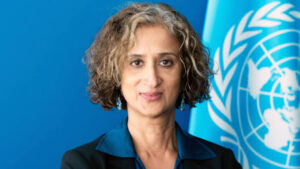
Sharon K Chitsinde - Former Child Minister of Health and Child Care
Health issues remain at the centre of every community development. According to the World Health Organisation (WHO), to grow and develop optimally, children need adequate nutrition, they need to be healthy, they must feel safe and secure, and have opportunities for learning starting from birth. Exclusive breastfeeding, immunization and timely care during illness all contribute to a child’s healthy growth and to a happy childhood experience that will allow them to develop to their full potential. UNICEF is on record that, protecting and improving the health of children is of fundamental importance. This week, the Besana Roundtable Discussion and Weekly Guest Show Host Onita Sibanda (OS) speaks to Honourable Sharon Kudakwashe Chitsinde (SKC), a former junior Minister of Ministry of Health and Child Chare in Zimbabwe’s Junior Parliament.
OS: Welcome Sharon and thank you for agreeing to be on the show with us today. We appreciate it. May you kindly introduce yourself!
SKS: My name is Sharon Kudakwashe Chitsinde. I am 17 years and I live in a small town in the Heart of Mashonaland West called Norton. Nothing more to be said, I believe in lowering myself so that the Lord can raise me.
OS: Thank you for the brief introduction. You are a former junior Minister of Health and Child Care. What was your role and responsibilities?
SKS: I reported to the senior Member of Parliament and helped in health campaigns. I organised fundraising initiatives in order to raise money for a pad drive in my constituency. Generally, I helped in all aspects of health including doing some short videos encouraging people to protect themselves from Sexually Transmitted Diseases by abstinence, etc. In terms of the Cabinet Minister of Health and Child Care, I did not work with his office, I was on my own.
OS: Great! Zimbabwe has few hospitals in the rural areas, the fortunate ones are also affected by distance. In mind of children, how best can we close the access gap?
SKS: The government should focus on important things. I think it is high time they give a look at the children especially in rural areas. Besides the distance, hospitals do not have enough resources. When it comes to the infrastructure, more hospitals should be constructed to avoid patient congestion and other problems faced by the children in terms of space.
OS: What are children’s rights in healthcare?
SKC: Children’s rights in healthcare are the rights and protections that children are entitled to when receiving medical care. These rights include: – The right to be free from discrimination: Children have the right to receive medical care regardless of their race, ethnicity, gender, religion, or any other factor. The right to privacy and confidentiality. Children have the right to keep their medical information private, and healthcare providers must obtain parental consent before sharing information. The right to informed consent – Children have the right to be informed about their medical condition and treatment options, and to give their consent for treatment.
OS: Thank you for the eye opening response. Let’s talk of the other component of your former ministry, ‘child care’. What is involved and tell us some of the success stories?
SKC: We have few success stories because that time I had limited time to advocate for the children. I was at a boarding school, so even on the campus they were too strict that, they did not allow me to take much action in protecting the children. Honestly, success stories are few.
OS: Share with us the few successes, we are eager to hear them!
SKC: Ok, we managed to donate pads to less privileged children and we managed to hold sessions educating the children about Sexual Health Rights and also partnering with other organisations in helping the child and minimising child pregnancy.
OS: I will move on to my next question. To what extent has the government taken into consideration your voices as Junior council, parliament and cabinet to improve the health sector?
SKC: To a lesser extent. We are just making noise in media but honestly there is no change.
OS: What do you think can be done so that young voices can be heard?
SKC: Nothing for us without us is against us. They should include us in everything that include us.
OS: The country is facing hunger due to the El Niño induced drought. What do you propose to alleviate hunger and malnutrition for children?
SKC: The government should import food from other countries and help the children that are dying of hunger. Look at COVID-19, it affected everyone and the government took the situation seriously. Because it affected both the poor and the rich. They should prioritise children’s health
OS: Thank you for that Sharon! Indeed, the poor suffer more and it is our hope that the government will take that into consideration. What’s your view on some sectors of our society who do not allow their children to get vaccinated?
SKC: My view is that vaccines are an important part of public health and should be encouraged. While I can understand the concerns of some parents, I believe that the benefits of vaccination far outweigh the risks. Getting vaccinated not only protects individuals, but also protects those around them. Of course, education and open dialogue are key to helping people make informed decisions about vaccines. It’s important to provide accurate information and address any misconceptions people may have about vaccines. That way, people can make the best choices for their own health and the health of their communities.
OS: How to you see a media house like The Besana Mail helping children in regards to health and child care?
SKC: The Besana Media outlet, can play a crucial role in raising awareness and educating the public about issues related to children’s health and childcare. Here are a few ways it can help: – Provide information on health and wellness topics, such as the importance of nutrition, exercise, and proper hygiene. Highlight the work of healthcare professionals and organisations that specialise in children’s health. – Publish stories that raise awareness about specific health issues affecting children, such as asthma or mental health, provide information on government policies and programs that affect children’s healthcare, such as Medicaid and the Children’s Health Insurance Program (CHIP). Highlight the work of community organisations and NGOs that provide healthcare services and support for children and families. Offer resources for parents, such as parenting advice and tips on how to communicate with their children about healthcare issues.
OS: Thank you and your last words?
SKC: The health and wellbeing of our children is of utmost importance. It’s crucial to provide them with the best possible care and support, including access to quality healthcare, nutritious foods, and safe living environments. Let’s continue to prioritise the health and wellbeing of our children, and work together to ensure they have the resources they need to thrive.