Credit - UNICEF
Being a parent is an amazing experience that provides happiness, challenges, and personal development to many families. Despite the numerous hardships and sacrifices parents make while raising their children, there is joy.
Gwanda – Tsitsi Chingoto (32) a mother of one in Gwanda was left with the child as her husband went abroad seeking greener pastures to fend for the family. Instead of being happy while waiting to relocate overseas, Chingoto has a different experience. Behavioral change in her child worries her.
With children exposed to harsh realities of life, managing challenges and emotions has become the norm for parents and their children. Dealing with tantrums and meltdowns has not been easy for most parents.
“Ever since her father went abroad, Kimberly has not been the same. She has had emotional breakdowns that are recurring at any time and I struggle to help her,” narrates Chingoto.
Zimbabwe is currently experiencing a mass exodus of people going overseas as people are looking for opportunities elsewhere. United Kingdom seems to be the favourite destination for many. Many of the migrants managed to go with their families. But, a recent ban on careers forbidden to bring dependents has left families spilt.
“It then becomes harder a child to wake up without her mother and father together at an age when she need them the most,” added Chingoto.
The most important job in the world is being a parent. A child’s brain develops at a never-before-seen rate of more than 1 million new synaptic connections every second during the first 1,000 days of life, according to UNICEF. This time gives a once-in-a-lifetime chance to mould a child’s capacity for learning, development, and full participation in society.
According to Cathrine Mukota, a professional tutor, in order to shape a child’s life, values, and future, parents are very important.
“Establishing a solid rapport between parents and children is the foundation for everything,” said Mukota, “Giving kids unconditional love, setting firm limits, being consistent, promoting honest communication, and developing their emotional intelligence.”
UNICEF launched the inaugural Parenting Month this year. David Beckham, a father of four and UNICEF Goodwill Ambassador, joined the campaign and declared that parenting is the most important profession in the world. His main point is that far too many parents find it difficult to manage their time between working and raising their kids. Additionally, child care is the cornerstone of good development.
Teaching emotional regulation and resilience has been the hardest for Chingoto as children express themselves through emotions.
According to Save the Children, the impact of parental migration is negatively affecting children’s well-being, education, and protection in Zimbabwe. Separating from their parents can leave children emotionally damaged, which can result in anxiety, melancholy, and behavioural abnormalities. Save the Children also brought attention to the caregiver load, warning family members or guardians who are left to look after the children that they might not be able to offer them the proper care because of their own emotional and financial constraints.
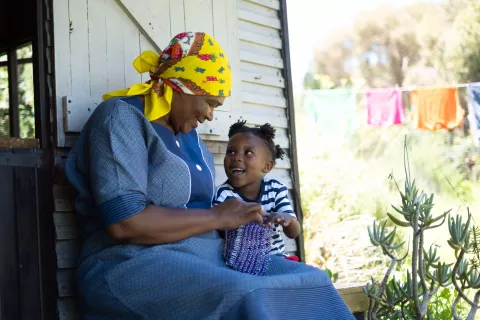
In different circumstances of parenting, Senzile Ncube (81) of Silalatshani village, Gwanda, takes care of her two orphaned grandchildren. She said sometimes they go to school on empty stomachs.
“Because at my age I can no longer work and it becomes hard to provide for them unless the community lends a helping hand. This has been the norm ever since their mother died and their father left for South Africa for greener pastures. He has been quite for long,” lamented Ncube.
Ncube is stressed as she continually worry that in case of her demise the children will be left alone and become vagabonds unless someone intervenes.
UNICEF has expressed concern about the increasing number of child-headed households in Zimbabwe due to parental migration. Naturally parenting is a journey that requires all the family members’ hands on. However, most families have lost such privileges because of the economic difficulties that have plagued Zimbabwe.
The Convention on the Rights of the Child Article 18 states that governments have a responsibility to provide support to parents in bringing up their children. UNICEF calls on businesses and governments to invest in family-friendly policies, to build more prosperous and fair societies.