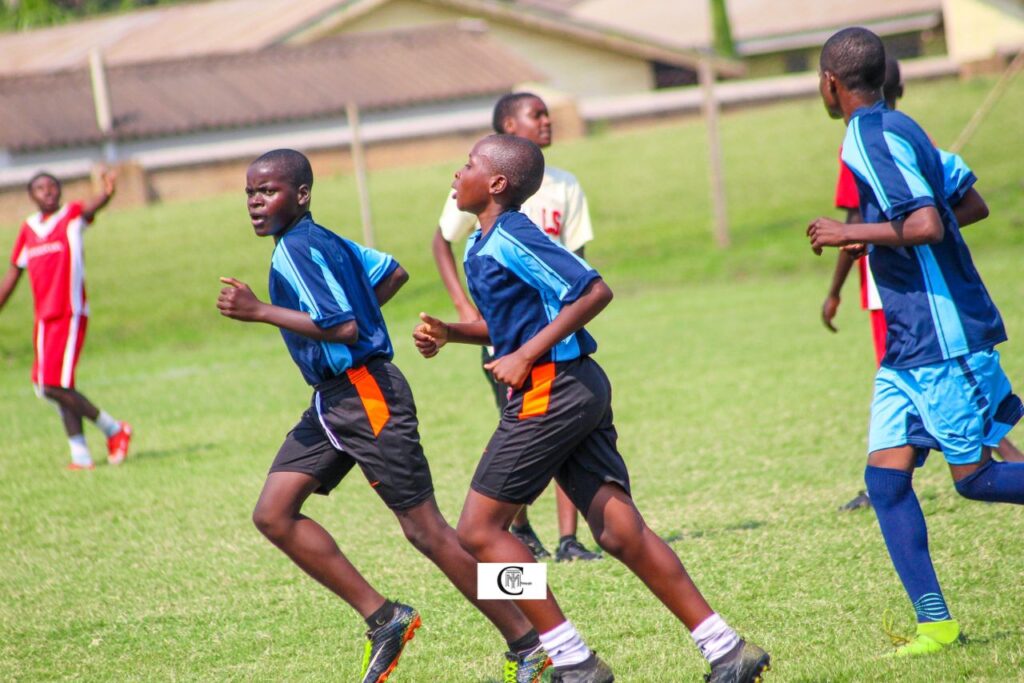
Young Soccer Players at a Football Academy. Photo Credit - Southern African TImes
In an effort to explore the state of sports and the role of academies in Zimbabwe, Onita Sibanda (OS) speaks with Buhlebenkosi Ncube (BN) for an in-depth discussion on the issue.
OS: Welcome to the Weekly Guest Show. Welcome Buhle, I’m happy to have you on the show. May you kindly introduce yourself!
BN: Thank you Onita! I am Buhlebenkosi Ncube, founder and Editor of Sports Grind Zw, a platform that aims to amplify voices of African Sports. I have worked with different institutions, in and outside Zimbabwe, currently serving as Administrator for Zebra Revolution FC a Southern Region Division One team based in Bulawayo Siziba.
OS: Thank you Buhle! How would you describe the current state of sports academies in Zimbabwe, particularly in terms of youth development?
BN: We do have academies in Zimbabwe though mainly in urban areas, that becomes a challenge to those in rural areas. They only get the opportunity to be scouted during NASH, NAPH games. So I wouldn’t say youth sports development is inclusive.
OS: That’s a valid point, Buhle, limited access to academies in rural areas can hinder talent development.
BN: Yes!
OS: How early should young people start formal training, and are Zimbabwean academies aligned with global best practices in that regard?
BN: As early as 6-8 years old but unfortunately in Zimbabwe we have a challenge as most parents are not in support of their kids’ talent. They believe it won’t grant them success. They believe only academics can lead one to success, not believing that sport is a career that one can actually survive with hence, you find kids being taken to academies at 13 some at 16 after writing their ordinary level examinations.
On the second part, yes, some align with global best practices but they are very few and it’s those that charge fees to teach your kids these sports. Of which majority of the population in Zimbabwe can’t afford. Other academies challenge is infrastructure to meet global standards.
OS: That’s a crucial insight, I think raising awareness about the benefits and opportunities in sports can help shift mindsets. Moving on, what role do sports academies play in identifying and nurturing talent at a young age?
BN: True our communities in Zimbabwe should understand that sport is a career, a good one for that matter. It is actually one of the most paying careers. We have examples of Tiger Woods, Christiano Ronaldo, Lionel Messi just to name a few.
OS: Absolutely!
BN: Talent identification is mostly done by teachers and parents as they are the ones who spend more time with kids, so if a parent or teacher identifies the talent, they then take it to academies for nurturing and grooming.

OS: Thank you! Any success stories that you can share?
BN: Stories are plenty. We have the likes of Marvelous Nakamba, Teenage Hadebe, Peter Ndlovu, Benjani Maruwari, who came out from Highlanders junior development
We have the likes of Khama Billiat, Knowledge Musona talent that was groomed at Aces Youth Academy. Just naming a few.
OS: Thank you Buhle! My next question: Are there specific sports that are prioritized in these academies, and if so, why?
BN: Academies don’t mix sporting disciplines in Zimbabwe. If it’s a cricket academy, it’s a cricket academy, you won’t find rugby in that Academy.
But there are institutions like Highlanders. Highlanders have different sporting disciplines though some are no longer functional. It has Rugby, Volleyball, Athletics etc. but their main focus and speciality is football, these other disciplines are franchises.
However, we have a challenge in sport disciplines like Rugby, Cricket, Tennis, it’s only accessible to A schools in urban areas. In rural areas you only find Netball and Football pitches only.
OS: Interesting! Accessibility remains a challenge, especially in rural areas where sports like rugby, cricket and tennis are overlooked.
BN: True and it starts with the government to bring those things, and who is the government? It’s me and you.
OS: Yes, addressing this disparity could help promote diverse sporting talent across different regions. How do Zimbabwean sports academies compare with those in neighbouring countries like South Africa or Zambia in terms of quality and output?
BN: South Africa they are far ahead of us. Zambia we are in the same boat.
OS: Interesting! How are sports academies collaborating with schools or education ministries to ensure a balanced development of both academics and athletics?
BN: The collaboration is growing now, we have Highlanders often working with Mzilikazi High School. Mpopoma High School now has an academy for both girls and boys. We have Prince Edward, who also has an academy. We see the collaborations they are working on.
OS: That’s great to hear. Thank you Buhle!
BN: My pleasure
OS: My next question – What policy reforms or partnerships do you believe could improve the effectiveness of sports academies in Zimbabwe?
BN: I strongly believe if the government comes on board in terms of infrastructure it will help our academies a lot because the most challenging thing is infrastructure. Even the business community helping build stadiums, courts in areas their businesses operate will make a huge difference.
OS: So true Buhle. Infrastructure development would definitely be a game changer. In your opinion, what does the future look like for youth in Zimbabwe who dream of making it big through sport, locally or internationally?
BN: It’s bright, if they put in the work on their talent, as well there is an easy way to break through international studying, it’s easy to get a sports scholarship to Europe if you are a footy with brains. Currently at Zebra Revolution we are sending 3 of our talented boys on sports scholarships, so balancing these two makes your life easier.
OS: Fantastic Buhle! How can a media house like the Besana Mail be a stakeholder in these conservations?
BN: Being a media house, you are already a stakeholder of the game, get to tell the untold stories of those talents that aren’t covered by mainstream media, unearth that remote areas talent and bring it to light.
OS: Point well taken, Thank you! What are your last words?
BN: If you are talented it’s your responsibility to water and nature it, don’t wait for someone to come and give you an opportunity but rather go chase that opportunity.
I will leave you guys with this quote “Chop your own wood and it will warm you twice”
OS: Powerful, Thanks Buhle for the inspiring words! Your contributions to this important conversation have been truly enlightening. It was an honour to have you tonight.
BN: Ngiyabonga lami ithuba (Thank you for giving me this opportunity)
https://whatsapp.com/channel/0029VaANhKb59PwWSgOmiI2Y
https://x.com/SportsGrindzw?t=IEpOKIDanjHUS-kL3cz3aQ&s=09
You can follow my social media platforms.
OS: Thanks for sharing. Looking forward to engaging with your content.