Illegal Drug Market
Victoria Falls– In the resort City of Victoria Falls, North West of Zimbabwe, as the sun paints the sky in hues of orange and the ‘Falls’ roar in the distance, lives intertwine in a tale of struggle, resilience, and the unyielding human spirit.
Melody, a woman from the town of Hwange in her early fifties, is in the city as the majority of the working class retires for the day. Melody wants to save her husband since he is ill and the local pharmacies don’t have the medication she needs. She has a plan: she will cross the border at night, go to Lusaka, get medication early the next day, and then make it back home on time.
Over the past thirty years, things have changed. Melody sets off on a quest through her history. She used to work for a pharmaceutical company. In sharp contrast to the current shortage that has left her husband without the medicine he sorely needs, she remembers a period when the shelves were stocked with reasonably priced and potent medications.
Melody finds former coworkers who have resorted to the illegal drug trade due to financial hardship as she makes her way through the maze of shuttered pharmaceutical enterprises. Their tales flow like a sorrowful ballad, reflecting the plight of a once-thriving but now-dormant business.

Zimbabweans are searching for the once-effective and reasonably priced treatments of the past due to a severe lack of necessary medications and the closure of pharmaceutical enterprises. But now that former business insiders are negotiating the murky realm of smuggling and distribution, this quest has taken a sinister turn. An illegal trade network has developed as a result of the spike in demand for these narcotics, snaking its way through Malawi and Zambia and leaving a path of desperation, corruption, and collusion in its wake.
Transactions in Twilight
Melody unpacks some things from her traveller’s luggage while sitting on a balcony in Empumalanga, Hwange, two days later at around seven o’clock in the evening. In addition to saving her sick spouse, she is also a businesswoman. To alert any unwanted guests, one of the hosts’ children is on duty. Melody distributes her belongings quickly, packs, and leaves for the next customer.
There are others in the industry besides Melody. A network of pharmaceutical drug lords, runners, distributors, and vendors is revealed by a Besana Mail investigation. With the help of unscrupulous officials and distributors who illegally smuggle pharmaceuticals into Zimbabwe through porous borders, the runners have created a vibrant market that includes individuals, pharmacies, tuck-shop operators, and vendors.
For three months, The Besana Mail saw that the dealers were selling drugs that were no longer available on the shelves of the majority of pharmacies in Zimbabwe, but at a lower cost. The investigation team met Lois, another dragnet lady in Hwange, who has years of experience and connections in the drug underworld. Having never crossed the border, Lois is a runner, but she believes the moment is right because she now has the contacts and expertise from dealing with distributors.
“I get medications, syrups, and other treats from vendors, some of whom are well-known businesspeople. Although I’ve always been hesitant to approach border post officials, I want to start importing and selling to other people after consulting with industry professionals. That way, it’s profitable,” Lois added.
The Origins of a Black Market in Former Employees
Back in the drug-dealing underworld, the majority of runners write prescriptions for their customers. People who used to work for the closed pharmaceutical corporations are now on the other side of the law.
The investigation shows that, economic challenges and a failing healthcare system are the main causes of the shift from legal employment to the underground realm of drug trafficking.
One such former employee is Michael, a pharmacist who lost his job when the company shuttered its doors. Faced with mounting debts and a family to feed, he reluctantly delves into the illicit world of drug trafficking. Michael’s story turns into a microcosm of the greater social issues, as people in once respectable occupations are forced to rely on breaking the law in order to survive.
“I had no option but to find a source of livelihood. With my experience in the pharmaceutical industry I knew products on demand and where to get them. It is not easy as money has to exchange a lot of hands. That’s is the way to evade arrests,” said Michael.
Musawenkosi Ncube, a local anti-corruption activist, claimed that the illegal drug trade, which is fueled by corruption and shortages, is a sign of a larger problem that has to be addressed both domestically and internationally.
Ncube described it as a depressing examination of a society dealing with the fallout from a dysfunctional healthcare system and the extent people will go to in order to obtain the medications they require to survive.
The Smuggler’s Route
As Melody and Michael’s paths intertwine, the story shifts to the intricate network that connects Zimbabwe to Zambia and Malawi. Smugglers travel dangerous routes, avoiding both legal and physical risks, motivated by desperation and the need for reasonably priced drugs. Their covert activities are a reflection of the gloom that has descended upon Zimbabwe’s medical system.
Although the underbelly of this illegal enterprise is not strictly regulated, officials, especially law enforcement agents, have been readily entangled in corruption. At Zimbabwe’s borders, government personnel get caught up in the corruption and ignore the illegal drug influx.
The investigation at the Victoria Falls border between Zimbabwe and Zambia reveals the cooperation of smugglers and security guards, illuminating the widespread corruption that makes it easier for illegal drugs to flow.
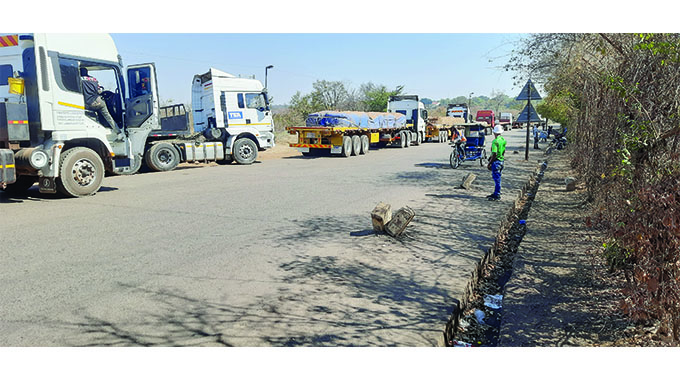
Drivers of haulage trucks were observed interacting with the officials at the Kazungula border crossing while their passengers stayed in the vehicle and the freight was not examined. This is referred to as “greasing.” In order to allay suspicions, drugs that are smuggled using haulage trucks are typically packed and mixed with the truck shipment.
With a border pass, residents of Zimbabwe are allowed to stay in Zambia for a whole day. This promotes travel and commerce between the two nations. Some people without passports may use that window opportunity to travel as far as Lusaka and ultimately surpass the allotted period in quest of medications.
Many such incidents were witnessed without arrest as offenders bribed officials.
“You have to make sure Zambian security doesn’t catch you in those inner cities, but if you’re in places like Livingstone and around the border, it makes sense, but you have to pay the authorities to get out,” Michael added.
Malawian smugglers collaborate with cross-border truck drivers who have developed networks with border and security officials over the years. According to an investigation, the Malawi route was profitable and mostly utilized by businesspeople, particularly Indians in Harare, where locals purchase goods to distribute throughout the nation.
Sleeping on duty?
The investigation saw the lax at Zimbabwe’s border posts in the wake of an under performing economy which has forced government employees in the ports to resort to bribes.
The Zimbabwe Revenue Authority (ZIMRA), with support from the Central Intelligence Organization, the Immigration Department, the Zimbabwe Republic Police, and the Zimbabwe National Army, is in charge of Zimbabwe’s border ports. Nevertheless, illegal drugs are entering the nation on a daily basis.
No one is allowed to import or export any registered medication from Zimbabwe unless they are in compliance with the terms and conditions of a permit issued by the Medicines Control Authority of Zimbabwe (MCAZ), as per the Medicines and Allied Substances Control (Import and Export of Medicines) (Amendment) Regulations, 2017 (SI No 99 of 2017).
According to Davidson Kaiyo, public relations officer for MCAZ, his organization collaborates with other law enforcement organizations to prevent the smuggling of medications into and out of the nation.
Kaiyo stated, “The authority regularly travels the nation conducting training sessions with these stakeholders to increase awareness on issues related to medicine laws and regulations as well as their implementation.”
ZIMRA has recently boasted about using certain surveillance drones to bolster border security. Nevertheless, worried residents continue to accept bribes from traffickers, which undermines the security procedures in place.