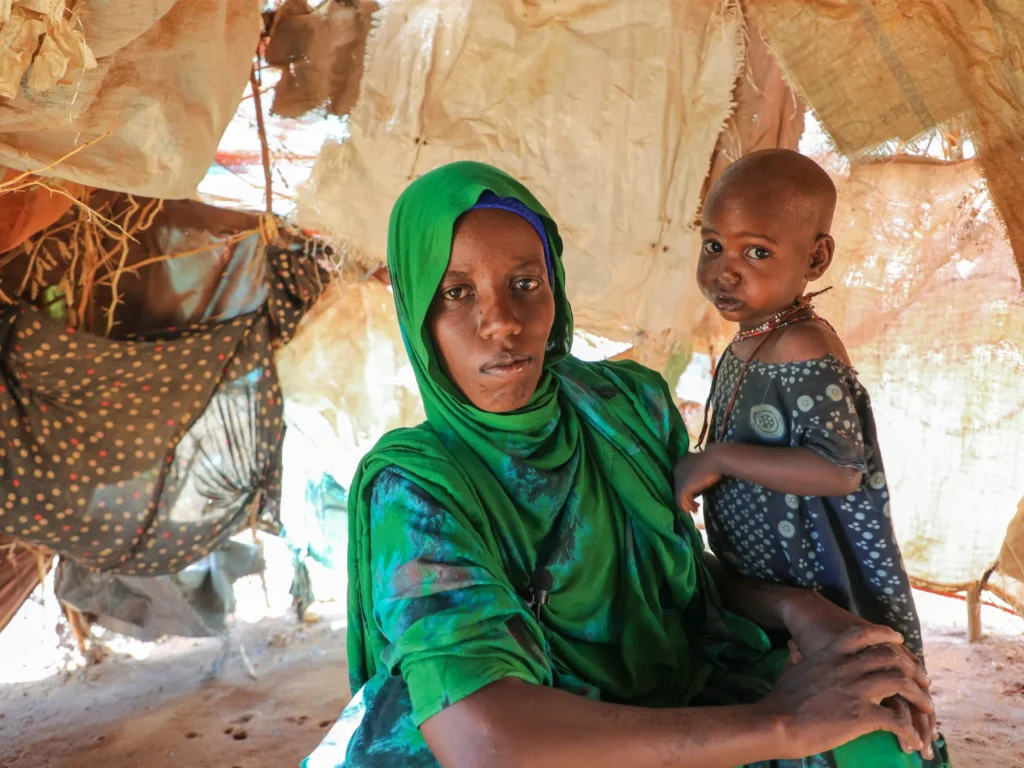
Photo Credit -ASSOCIATED PRESS / Mohamed Sheikh Nor
MOGADISHU: Nearly two million children across Somalia are at risk of acute malnutrition, as a convergence of drought, conflict, displacement, and funding shortages pushes the country toward a deepening humanitarian crisis, global agencies have warned.
The alarming figures were highlighted by Catherine Russell, Executive Director of UNICEF, at the conclusion of her recent mission to the country, where she witnessed first-hand the worsening conditions facing children and families.
Somalia is grappling with one of its most severe humanitarian emergencies in recent years, driven by a complex interplay of climate shocks, prolonged instability, and economic pressures that continue to erode already fragile systems. The situation has been further compounded by global disruptions, including the ripple effects of escalating tensions in the Middle East, which are tightening supply chains and driving up the cost of essential goods.
Humanitarian agencies say these global shocks are having direct consequences on the ground. The cost of transporting food, medicines, fuel, and water has surged, placing an additional burden on families already struggling to survive. Somalia’s heavy reliance on imports has made it particularly vulnerable, with prices rising sharply across the country.
In drought-affected regions, the situation is especially dire. The cost of water has more than doubled in some areas as sources dry up and fuel needed for water delivery becomes increasingly unaffordable. Communities that once relied on rivers, boreholes, and seasonal water sources are now facing acute shortages, forcing many to travel long distances in search of necessities.
Water scarcity has emerged as one of the most severe drivers of the crisis. With rivers drying and boreholes failing, entire communities are being uprooted at an alarming rate. Displacement is increasing as families abandon their homes in search of water, food, and assistance, often ending up in overcrowded settlements with limited access to services.
At the same time, disease outbreaks, loss of livelihoods, and rising food insecurity are tightening their grip on vulnerable populations. Humanitarian actors warn that the crisis is being exacerbated by shrinking resources, with funding cuts forcing the closure of critical services at a time when they are needed most.
“One of the most haunting things to see is bed after bed with malnourished children and anxious mothers just hoping that their children will survive,” said Russell after visiting families in Dollow, a town in southern Somalia heavily affected by drought. “The people are incredibly resilient but they need more support right now as all warning signs are flashing red, including the ripple effect from the war in the Middle East.”
The scale of the crisis is reflected in the growing strain on health and nutrition services. Over the past year alone, more than 400 health and nutrition facilities have been forced to close due to insufficient funding. Among these are over 125 sites that provided essential nutrition services for children suffering from severe acute malnutrition.
The closure of these facilities has had devastating consequences. Mothers are left without access to antenatal care, children are missing out on routine vaccinations, and severely malnourished children are being deprived of life-saving treatment. Humanitarian agencies warn that without immediate financial support, more facilities could shut down in the coming months, particularly in areas with the highest levels of need.
Even before the latest shocks, nearly three million children in Somalia required urgent humanitarian assistance. Recent assessments by UN agencies and the government indicate that worsening drought conditions following consecutive failed rainy seasons have severely depleted crops and livestock, pushing millions closer to crisis levels of food insecurity.
Projections suggest that up to 6.5 million people could face crisis or emergency levels of hunger, underscoring the scale of the challenge facing both national authorities and international partners. Children under the age of five remain among the most vulnerable, with more than 1.8 million at risk of acute malnutrition by the end of the year.
During her visit, Russell met families directly affected by the crisis, including a mother named Habiba, who had lost her livestock and crops due to prolonged drought. In a desperate effort to save her children, she walked for seven days to reach Dollow, where she could access treatment for malnutrition.
Such stories are becoming increasingly common across Somalia, where climate shocks are erasing livelihoods and forcing families into extreme survival strategies. For many, the journey to seek assistance is long, dangerous, and uncertain, yet it remains their only hope.
Despite the mounting challenges, humanitarian agencies are continuing efforts to respond to the crisis. UNICEF has mobilised significant supplies, including nutritional treatments for malnourished children, vaccines, and insecticide-treated bed nets aimed at protecting children from malaria.
Currently, supplies worth approximately US$15.7 million are either in transit or being prepared for dispatch to Somalia. However, ongoing global disruptions, particularly those linked to instability in the Middle East, threaten to delay shipments or increase operational costs, further complicating response efforts.
Beyond immediate relief, there is growing recognition of the need for long-term solutions that address the root causes of vulnerability. UNICEF said, it is working with its partners to scale up integrated programmes that combine emergency assistance with investments in water systems, nutrition, social protection, and community resilience.
“For the children of Somalia, every dollar and every minute counts in getting life-saving aid to them,” Russell said. “What children in Somalia – like everywhere else – need the most is peace, protection and safe access to essential services. With that, today’s children can become the doctors, nurses and teachers needed to empower their communities and the country.”
To meet the urgent needs of children and families, UNICEF has launched an appeal for US$121 million in 2026. However, as of now, less than US$20 million has been received, leaving a significant funding gap that threatens to undermine response efforts.
Humanitarian experts warn that without immediate and increased support, the situation could deteriorate further, with potentially catastrophic consequences for millions of children. The convergence of climate shocks, economic pressures, and reduced humanitarian funding presents a perfect storm that could reverse years of progress.
As Somalia stands at a critical juncture, the message from global leaders is clear: urgent, coordinated action is needed to prevent a worsening crisis and to protect the lives of the country’s most vulnerable children.