Photo credit - UNICEF
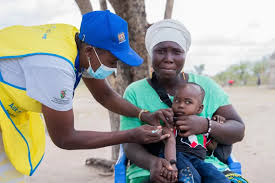
Global childhood immunisation coverage has recorded modest gains after years of disruption caused by the COVID-19 pandemic, but millions of children remain without life-saving vaccines as conflict, displacement, poverty and vaccine hesitancy continue to undermine progress, according to new data from the World Health Organization (WHO) and UNICEF.
The latest WHO-UNICEF Estimates of National Immunization Coverage (WUENIC), released on 15 July 2026, show that in 2025, 90 percent of infants worldwide, approximately 116 million children, received at least one dose of the diphtheria, tetanus and pertussis (DTP) vaccine.
The data also shows that 85 percent of infants, or about 110 million children, completed the recommended three-dose DTP vaccination schedule.
Although both indicators increased by one percentage point from the previous year, global vaccination coverage remains below pre-pandemic levels, with rates still one percentage point lower than in 2019.
The agencies warned that progress has remained largely stagnant for more than a decade, with global DTP coverage hovering within a narrow range since 2009.
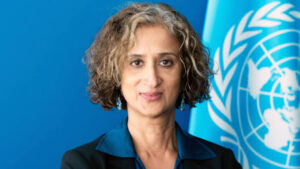
“The progress we are seeing shows what is possible when governments, communities and health workers work together,” said UNICEF Executive Director Catherine Russell.
“But millions of vulnerable children are still being left unprotected due to conflict, displacement, and poverty. We must reach every child, and we must rebuild trust where it is fraying. No child should suffer from a disease that a simple vaccine can prevent.”
Despite improvements, an estimated 13.5 million children received no vaccines during their first year of life in 2025. These children, known as “zero-dose” children, represent nearly 750,000 fewer children than the previous year.
However, WHO and UNICEF warned that the reduction in zero-dose children is being offset by another major challenge, children who begin vaccination schedules but fail to complete them.
The agencies estimate that 7.3 million infants received their first DTP vaccine but did not complete their vaccination journey before receiving their first measles-containing vaccine dose.
This decline in follow-up vaccinations is contributing to stalled measles protection globally. Only 84 percent of children received the first measles vaccine dose (MCV1), while 77 percent received the second dose (MCV2).
Both figures remain significantly below the 95 percent coverage level required to prevent outbreaks of measles, one of the world’s most contagious diseases.
The consequences are already being seen. Fifty-seven countries reported large or disruptive measles outbreaks in 2025.
“Every child, whether born into wealth or poverty, peace or conflict, deserves the life-giving protection that vaccines provide,” said WHO Director-General Dr Tedros Adhanom Ghebreyesus.
“Immunization is one of the most cost-effective, most equitable, and most reliable interventions for protecting children’s health and well-being.”
The data, collected from 195 countries, shows significant differences between nations and regions.
One hundred countries have maintained at least 90 percent coverage with three doses of the DTP vaccine since 2019, but expanding that group has proved difficult.
Among countries that had vaccination coverage below 90 percent in 2019, 30 have improved their performance over the past six years. However, 65 countries are either stagnating or falling behind, including 13 fragile, conflict-affected or vulnerable countries.
Conflict remains one of the biggest barriers to reaching children.
More than half of all zero-dose children live in fragile and conflict-affected settings, despite these countries accounting for only about one-third of the world’s child population.
In such environments, immunisation programmes are often disrupted by insecurity, damaged health systems, displacement and limited funding.
Syria, for example, experienced a six percentage point decline in DTP1 coverage and a 12 percentage point decline in first-dose measles coverage in a single year.
However, the agencies also highlighted examples of progress despite difficult circumstances.
Sudan recorded the largest single-country improvement globally in 2025, increasing DTP1 coverage by 35 percentage points and raising measles vaccine coverage by 22 percentage points.
The improvement demonstrates that vaccination gains are possible even in countries affected by conflict when access to health services improves.
Regional trends also show uneven recovery following the COVID-19 pandemic.
The Americas and South-East Asia have fully recovered and surpassed their 2019 vaccination performance, with South-East Asia becoming the highest-performing region.
Africa, the Eastern Mediterranean and Europe recorded improvements in 2025 but remain below pre-pandemic coverage levels.
The Western Pacific region experienced a decline and remains the region furthest below its 2019 vaccination baseline.
In middle- and high-income countries, WHO and UNICEF warned that vaccine coverage is also declining due to factors including weakening political commitment, structural barriers and increasing vaccine hesitancy.
South Africa, for example, has experienced a 20 percentage point decline in DTP1 coverage since 2019, with coverage continuing to fall in 2025.
Bosnia and Herzegovina also recorded a sharp decline, dropping 23 percentage points in measles vaccine coverage after making significant gains in 2024.
Over the past 25 years, global vaccination efforts have significantly reduced the number of children missing vaccines.
Sustained investment from governments, international partners and communities has reduced the annual number of zero-dose children by 40 percent.
Countries supported by Gavi, the Vaccine Alliance, have expanded access to vaccines, with children now protected against more diseases than ever before. Average coverage across a full course of WHO-recommended vaccines in these countries stands at 74 percent.
Gavi CEO Dr Sania Nishtar said the progress achieved in lower-income countries demonstrates the impact of international cooperation but warned that future gains are at risk.
“As Gavi heads into a new five-year period, our great challenge now will be to maintain this momentum in the face of funding constraints, geopolitical uncertainty, and increasing outbreaks,” she said.
WHO and UNICEF also warned that declining investments in health systems and data collection could make it harder to identify children missing vaccinations.
The agencies said only 18 national immunisation surveys were completed and submitted for the latest estimates, compared with 50 in 2024 and an average of 33 annually between 2015 and 2019.
They cautioned that weaker data systems could prevent countries from identifying vulnerable children early, increasing the likelihood of preventable disease outbreaks.
To reverse the trend, WHO and UNICEF are calling on governments and partners to strengthen immunisation services in conflict and fragile settings, address misinformation about vaccines, increase domestic and international funding, and invest in stronger disease surveillance systems.
The agencies said achieving the goals of the Immunization Agenda 2030 will require reaching children wherever they live, including those affected by conflict, poverty and displacement.