Uganda Minister of Health, Dr. Jane Ruth Aceng
COLLABO…
Experts at the ASLM 6th Biennial Conference in Cape Town, South Africa, have determined that developing capacity and forming strategic alliances between the public and commercial sectors are essential components of bolstering diagnostic services and laboratory systems in Africa.
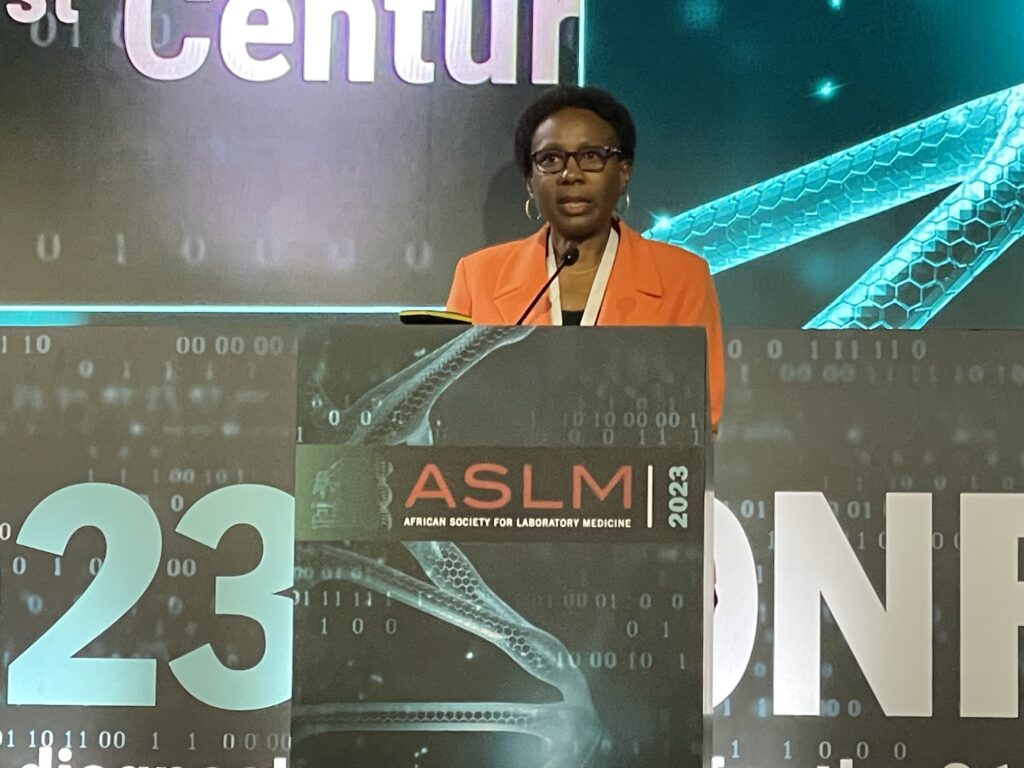
During the conference, Uganda’s Minister of Health, Dr. Jane Ruth Aceng, highlighted the country’s accomplishments in increasing the ability of medical professionals, especially in the area of diagnostic labs.
Uganda has implemented comprehensive training programs for laboratory professionals, ranging from certificate to PhD levels. There is a service plan for laboratory workers, according to Dr. Susan Nabaddo, Commissioner in Charge of Laboratory Service at Uganda’s Ministry of Health. By supporting their professional development, this program makes sure that these professionals are prepared to make valuable contributions to the nation’s healthcare system.
“But, also we restructured the health facilities, giving them a structure that can absorb laboratory professionals. Those are the ones that are joining service, but in-service we have a lot of trainings that we do depending on the need,” she remarked.
The Ugandan government responded proactively to the surge in demand for molecular testing during the COVID-19 pandemic. They created a training program to teach people how to collect samples in response to the increase in testing requirements. The training session also included aspects of quality assurance and emphasized the significance of upholding high standards in the testing methods.
“We have trained a number of people on genomics, bioinformatics, tailoring it to the need that we have,” added Nabbado.
Early warning systems
The discussions at the conference highlighted the significance of investing in early warning systems to enable countries to conduct both active and passive surveillance effectively. This approach ensures the timely detection of potential pandemics or emerging health threats.
When discussing Uganda’s approach, Dr. Nabbado brought up the creation of sentinel surveillance locations throughout the nation. These locations are essential for testing since they make it possible to continuously monitor samples from various locations.
Genomic sequencing is a crucial element in Uganda’s strategy after the testing stage. This cutting-edge molecular method is used to examine the samples’ genetic composition. Finding any new variants of concern, determining whether the nation is still dealing with old variants, or spotting the advent of new diseases are the goals. Uganda hopes to improve its early warning capacities and react quickly to changing health concerns by combining genome sequencing with active and passive surveillance.
“We’ve also embraced the issue of wastewater based surveillance. We all know that wastewater based surveillance is a tool that can help us detect early epidemics. We piloted it using COVID which showed us that most times when we had high positivity in this wastewater, you would see that in the next two, three weeks, getting to get an epidemic,” explained Nabbado.
Village Health Workers
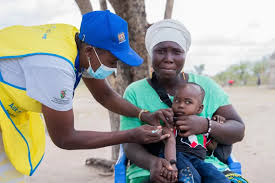
The deployment of Village Health Workers, who actively travel around villages, is one noteworthy use of RDTs. Experts say this method works especially well for testing for illnesses like malaria. According to Dr. Nabbado, RDTs help provide more rapid and targeted healthcare treatments by bringing diagnostics into the community and out of typical laboratory settings. This approach has been praised for increasing patient convenience and enabling healthcare professionals to make decisions more quickly, which will ultimately boost the efficacy of diagnostic services as a whole.
Point-of-care testing, also known as Rapid Diagnostic testing (RDTs), are a revolutionary way to improve access to diagnostic services. This approach removes the need for patients to go to centralized facilities by delivering diagnostic testing closer to them. The main benefit is that tests are carried out quickly and effectively, yielding results that are easily accessed.
NCDs lagging on diagnostics
Cancer poses a significant burden in Africa, and delegates at the conference have highlighted a concerning performance gap in the realm of diagnostics on the continent. According to Dr. Nabbado, the general tendency is that most funding is allocated to infectious diseases including malaria, TB, and HIV. Regretfully, cancer and other non-communicable diseases do not receive the same level of funding and attention.
With an emphasis on women living with AIDS, Uganda is aggressively carrying out a PEPFAR global fund program to perform HPV (Human Papillomavirus) testing for cancer diagnosis. About 160 HPV testing locations have been set up, and one creative strategy encourages women to provide their own samples for analysis.
“In Uganda, what we’ve done and cancer diagnosis is mainly a specialised test that is done at high level by pathologists. Cytotechnologists are very few and only found in high level centres, so we still have that big challenge of access to cancer diagnostics. Better case in point for cancer cervix,” said Nabbado.
Home Ground Interventions
Minister Aceng asked the Roche Executive Vice President about the company’s intentions to launch diagnostic tests in Africa as part of a conversation on building robust healthcare systems in the continent.
Roche’s Executive Vice President Diagnostics, Africa, Dr. Allan Pamba, revealed the company’s substantial multi-million-dollar manufacturing investment at a Cape Town, South Africa, facility. The manufacturing of DNA test kits is the focus of this facility. About 90% of the goods produced at this factory are shipped outside of Africa, according to Dr. Pamba.

The reason behind this high export percentage is attributed to the advanced technology employed in the manufacturing process, surpassing the capabilities of many countries on the continent.
“If you look at the manufacturer of diagnostics, especially the space where Roche has the most strength, which is, you know, the centralised laboratory high throughput systems, big machines churn out 1000s of tests. In a centralised model. We have a global centre of excellence model that optimises our manufacturing across the globe,” said Pamba.
Roche uses a worldwide optimized manufacturing model to prevent a single nation from controlling all aspects of a product’s production, including the machinery and reagents.
Even though Roche has invested heavily in South Africa to produce DNA test kits, Dr. Pamba recognized that the continent’s manufacturing industry still has issues that need to be addressed.
“We have way too many borders that are not porous, 54 borders too many. How can we turn Kenya from being 55 million population market to the East African Community which is 300 plus billion population that makes sense, with a single harmonised regulatory system? Free movement of goods and people,” said Pamba.
Expanding access to sequencing technology
A Memorandum of Understanding (MoU) was signed by ASLM and Illumina during the current 6th Biennial Conference with the goal of expanding access to genomics to fight infectious illnesses in Africa. In order to strengthen Africa’s resistance to future pandemics, this cooperative project aims to use genetics to improve disease surveillance, outbreak response, and public health treatments throughout the continent.

Plans to extend access to sequencing technology and local genomics training are also part of the agreement. The ASLM Academy, ASLM’s training platform, will offer a specialized genomics curriculum. ASLM will contribute to expanding access to pathogen genome sequencing for public health in low- and middle-income nations as part of the Illumina Global Health Access Initiative. This project has the potential to greatly improve Africa’s capacity for reaction and readiness to infectious disease outbreaks.
“Creating opportunities for genomics training within Africa is vital for building local capacities. Genomic sequencing is crucial for identifying and managing pathogens, and through this collaboration with Illumina, we aim to empower a skilled workforce that can conduct genomic sequencing domestically,” said Mr. Nqobile Ndlovu, CEO of ASLM.
ASLM, the African Society for Laboratory Medicine, holds the distinction of being the first and only pan-African organisation dedicated to leading, advocating for, and coordinating a comprehensive continent-wide response to enhance the quality of laboratory medicine and healthcare diagnostics.
Illumina’s Senior Director of Asia Pacific, Middle East & Africa (AMEA), Tom Berkovits, emphasized the program’s importance to the collaboration. It is anticipated that the Global Health Access Program will provide crucial funding and assistance to the project, highlighting Illumina’s dedication to improving global health, especially in areas like Africa where improved genomics capabilities can have a major influence on public health outcomes.
“Genomic sequencing significantly contributes to detecting and responding to infectious disease outbreaks. The Global Health Access Program, with ASLM’s valuable participation, addresses challenges such as delayed response times and increased costs associated with shipping samples offshore,” said Berkovits.