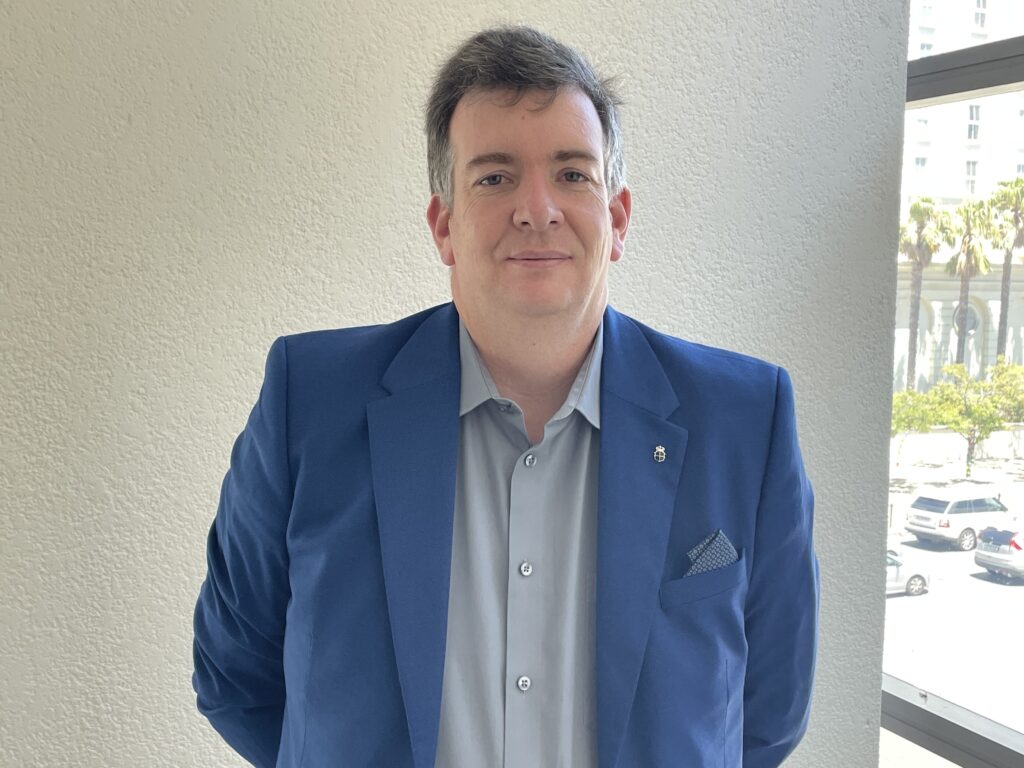
Jonathan Keytel, Director: Strategy and Transformation, Africa at Roche Diagnostics
A STEP AHEAD
Roche Diagnostics has emphasized its dedication to improving lives and fostering better health at a lower cost by highlighting the importance of leveraging data, analytics, and technology across research and development. Roche places itself in the forefront of developing healthcare solutions as a strategic partner of the African Society for Laboratory Medicine (ASLM) at the ASLM 6th Biennial 2023 Conference, which is now taking place in Cape Town, South Africa.
Roche Diagnostics acknowledges the severe lack of diagnostic facilities in many African nations and emphasizes the importance of early diagnosis in enhancing patient outcomes and guaranteeing the sustainability and affordability of healthcare. Recent scientific and technological developments that allow for early sickness identification and a better knowledge of each patient’s unique treatment needs are being highlighted by the company.
In order to facilitate connectivity between service providers and patient care teams without requiring in-person visits, digital health technologies are recognized as transformative tools that enable the real-time collecting and distribution of comprehensive health information. Roche demonstrates how these technologies are changing patient care at the ASLM 2023 conference.
Our Editorial Director, Calvin Manika (CM), spoke with Jonathan Keytel (JK), Director: Strategy and Transformation, Africa at Roche Diagnostics, during a conference side interview. The focus of the discussion was Roche Diagnostics Africa’s 21st-century endeavors, particularly the incorporation of AI into their healthcare programs.
CM: Thank you for the interview! If we may start, how are you deploying artificial intelligence at Roche Diagnostics?
JS: So, obviously, artificial intelligence is a very broad topic. There is a couple of areas that we are working. A lot of it is behind the scenes, so you would not see it. You would not see it directly in a product today, but we use it a lot in our clinical studies. So, how do we manage clinical trials for new drugs, new technologies, etc. We also use it to to help us accelerate the research and development process.
That is one of the areas of where the power of AI is and able to crunch Massive Datasets and make sense of things that humans are not maybe as good as doing so. We are also using it to help to find new questions. But we are starting to use it now more in the market facing components. And here we are specifically looking at how do we improve diagnostics.
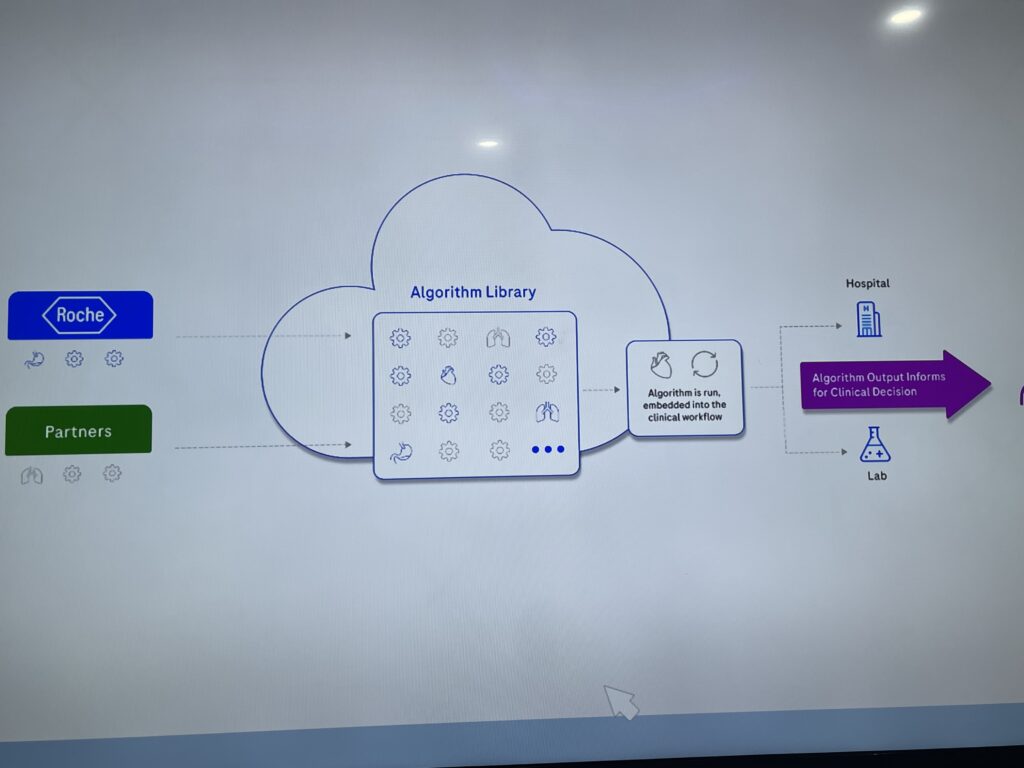
Looking at things like anatomical pathology, you know, typically, pathologists would look through a microscope at a tissue sample and would make a diagnosis. We are exploring ways to leverage image capture, the image and image processing in AI to improve. And then of course, we’re looking at how do we leverage AI also in our day to day business, just to make the work quicker and therefore more efficient.
CM: Great initiatives! In terms of the science and the new initiatives. Roche has got a large footprint across Africa. And you are aiming, like the VP was saying, for a ten-fold production by 2050 from the current capacity. What is your view, on some of your partners or clients in terms of surveillance and preparedness for future pandemics?
JS: It’s a great question. When we consider AI I think the first thing we missed was to realise it is not a silver bullet. It’s not going to solve all the problems. It needs to be applied in a way that is is carefully thought through carefully strategised way and we need to really consider also some of the regulatory and ethical components to deploy AI right.
So, what are the critical potential gaps with the use of AI, you know, where’s the data coming from, training on the AI models? Do we have consent to use the data for for AI? And also how do we ensure that we don’t drive any bias? I see AI being used to really close some critical capability and skills gaps we see in the continent. So, one of the statistics we often quote is that in Africa, on average, there is only one pathologist per million people, which is very low compared to the rest of the world.

We would be looking at how do we leverage AI to bridge that capability gap. One of the things I mentioned earlier was the use of AI to help with the actual diagnosis. So looking for example, at Digital pathology, and really leveraging AI to help clinicians identify abnormal tissues on slide so not necessarily replacing the human but kind of using it for screening purposes. And then I think another big area is really how do we help to interpret the results that the labs produce. I think that is another strong area where we could be leveraged, and then on the perhaps on the more on the supply side.
How do we use AI to improve how we operate? So can we apply them in supplier supply chain circumstances? Can we use AI to plan better? So, could for example, governments partners use AI to understand buying patterns, trends in you know, seasonal trends in diseases on the ground and use that kind of knowledge to help with procurement, help with getting the right commodities on the ground. And ultimately saving money. Because if you think about it, commodities that are purchased and delivered, is sunk cost. If you are able to have a better system that predicts what commodities will be needed, you can save money and you can drive a more efficient healthcare system.
CM: Thank you! My last question! You have talked about ethical standards. Data privacy concerns are very critical. It is an area most of our African companies and organisations are working on. It differs also from country to country and from industry to industry. Do you see people in the peripherals of the society, hard-to-reach communities benefiting from your services at a cheaper cost?
JS: Alright, so I think it’s a great question. Our vision is to increase access tenfold to high quality IBD, so high quality lab testing and how will we do that? So, we’re already in some respects, got the building blocks for it, in that we have a program called the Global Access Program, which has been running since 2014. And what that program does is it seeks ways to drive access to our molecular virology portfolio specifically focused on HIV.
Now expanding to TB, cervical cancer screening as well as hepatitis screening. What this program has done and will continue to do, is to figure out how do we bridge the gap between centralised laboratories, which are the most cost efficient way to run a laboratory and the patient who is often very far away. And so, a lot of the work we’ve done is been around how do we invest in technologies that make sample collection easy. And so we have two technologies we have developed over the years.
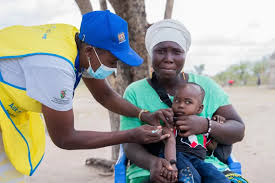
The other one is not a technology we invented, it is just the technology which we deployed and that is called dry blood spot. And it is a way to collect blood on a piece of paper on a cord and dry it and then it becomes stable at room temperature. And that is allowed for the collection of particularly paediatric samples all the way in the village at the lowest level of the healthcare system. And then those samples are transported in to the central lab. So that is the one innovation, the other which is perhaps more exciting and that is something which we developed ourselves is a similar technology that allows us to separate whole blood into plasma which also happens in the field on a card. It is quite a quite a special card called a cobas plasma separator card.
And what that does – is it uses a very specialised membrane to filter the blood and separate it into its two components, the cells and the plasma and that now allows us to roll out HIV viral and actual monitoring quantitative testing of patients with HIV who are on ARVs, all the way to the very edge wherever people are. So, those are two examples of technologies we have developed and on top of that, we are now working with governments to figure out how do we optimise sample transport network. This is how we make the power of the central lab felt wherever the patient is, and we do that by moving the sample, not the patient, and really benefiting from that central approach.
CM: Thank you Jonathan for your time and great insights
JS: My pleasure!