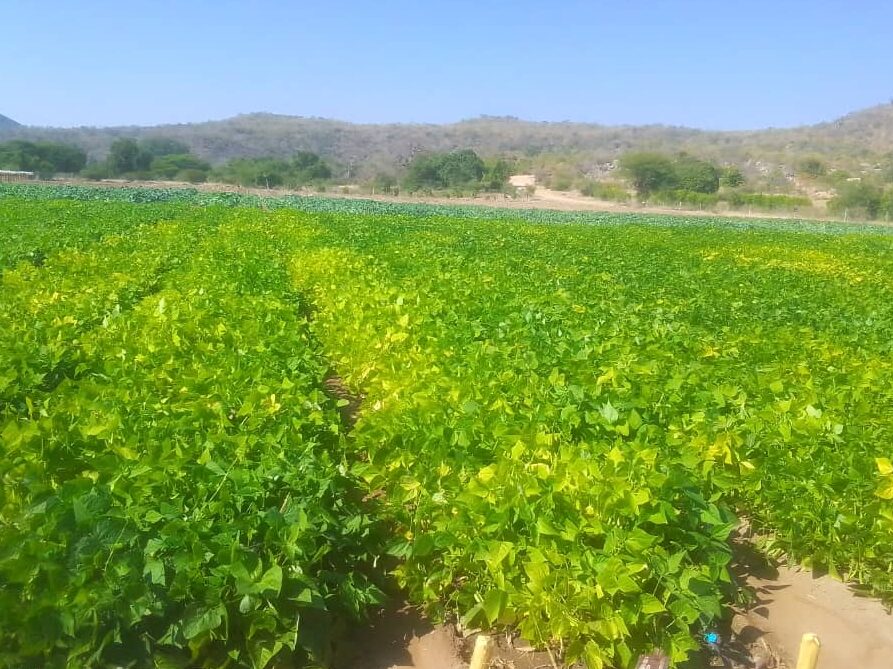
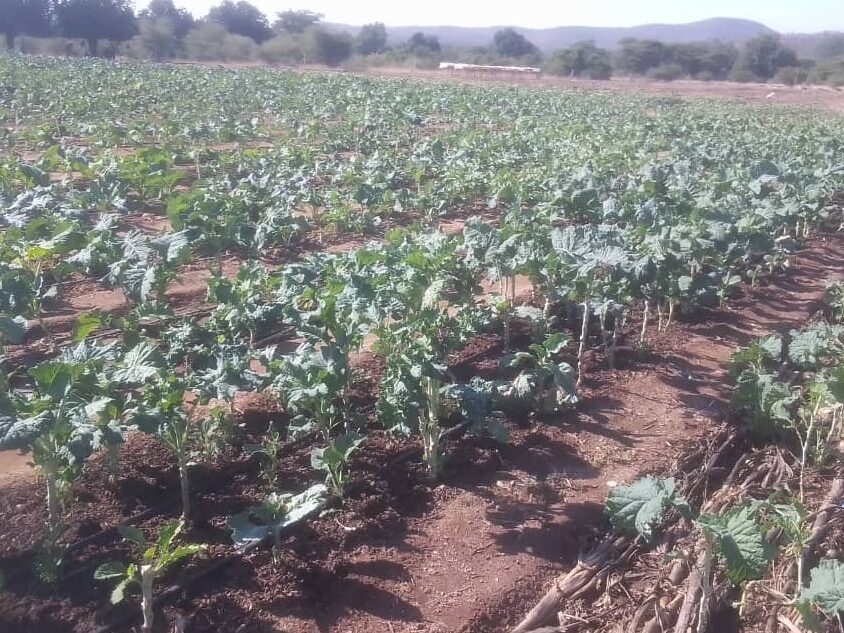
Mashawi Nutrition Garden. Photo Credit - The Besana Mail
Amid prolonged droughts and unpredictable rainfall, communities are turning to nutrition gardens to sustain their livelihoods.
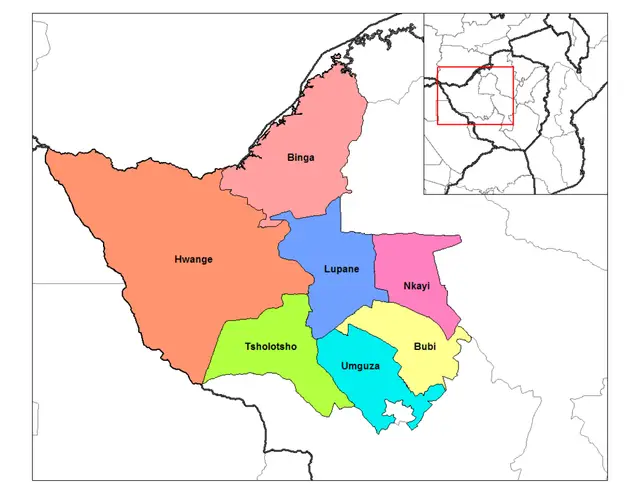
Hwange, Zimbabwe – Communities in Hwange district, North West of Zimbabwe have experienced low yields and poor harvest for years. The region lies under agro-ecological region 5, characterised with low rainfall and high temperatures. The situation has been worsened by successive droughts over the years, including the El Niño-induced drought in 2024 farming season. Many families struggle to sustain their livelihoods.
In response, non-governmental organisations are coming to the rescue of these communities by introducing solar-powered nutrition gardens to provide reliable food sources and improve health nutrition. One such project, the Mashawi Nutrition Garden, enables year-round crop production, reducing dependence on increasingly erratic rainfall. Hwange District’s low, unpredictable rainfall and poor soil conditions have long made rain-fed agriculture unsustainable.
Climate change has intensified these challenges. Projects like the Mashawi Nutrition Garden offer a climate-resilient solution, to help communities adapt and thrive.
Food security as a priority
Mashawi Nutrition Garden was established by World Vision, an international non governmental organization working to improve food security in rural communities across Zimbabwe.
Speaking to the Besana Mail, Hwange District World Vision Operations Director Khumbulani Ndlovu, said his organisation works through a needs assessment approach and close engagements with local communities. He emphasized that food security is a major challenge in Hwange, caused by continuous droughts that have worsened over the years due to climate change.
“The need to get into irrigation schemes came from the needs assessment, the desire of the people to be liberated from having to depend on rain fed agriculture to year round agriculture through irrigation schemes. As a result, World Vision therefore came in to support the people in that endeavour,” said Ndlovu.
These irrigation schemes allow villagers or households to be able to produce their own food throughout the year, not just for consumption, but also for sale.
“We are supporting households to build their resilience, so that there can be a trickle down effect of food to the children, because our focus is actually on the children. If you go around the gardens, you find that there is a production of different types of vegetables throughout the year. So this has ensured that these households can at least have one meal a day,” added Ndlovu.
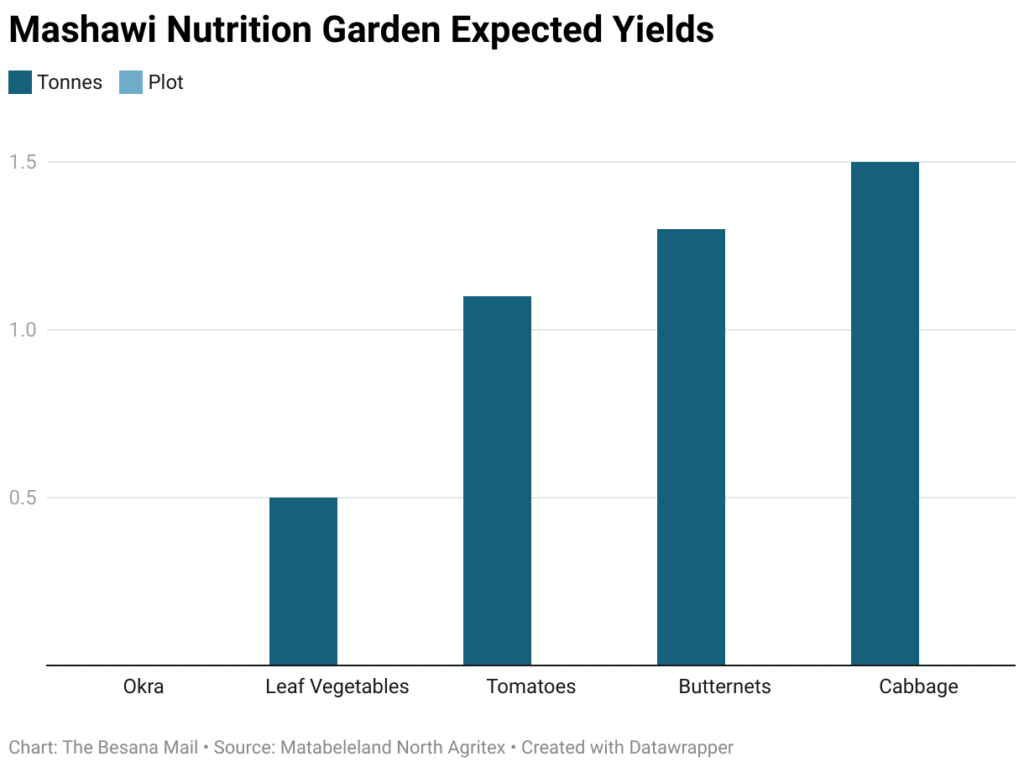
According to the Department of Agricultural, Technical and Extension Services, (Agritex), Hwange District estimated yield for horticulture crops is 1,5 tonnes of cabbage,0.5 tonnes of leaf vegetables, 1.1 tonnes of tomatoes, 1.3 tonnes of butternuts and 0.001 tonnes of okra.
How do nutrition gardens work?
“Usually it starts with the drilling of a high yielding borehole, then which is followed up by the solar mechanisation of that borehole. In other words, installation of a solar power driven pump that then feeds water into the irrigation garden,” Ndlovu explained.
Today, the garden supports local households with fresh produce while promoting resilience against drought.
“We grow maize, tomatoes, onions and green vegetables. The garden was started by World Vision, but now they have handed it over to us, the farmers. They gave us a pump and from the produce we sell here, we contributed some money and managed to buy a bigger pump,” said Euphrasia Ngoma, the chairperson of Mashala Nutritional Garden.

The project’s success is best seen in how fully the community has embraced it. Once NGO-led, the garden is now managed and sustained entirely by local farmers. They oversee infrastructure, reinvest earnings, and ensure continuity. This shift reflects a strong model of sustainability, where donor-initiated projects can grow into self-reliant, community-driven ventures.
The social impact
Skhangezile Mpala, a mother of five, says she managed to take all her children to school using the money she earned from selling her vegetables. Life has become better and she does not only rely on her husband to provide everything for the family.
“I joined the garden so that I could feed my family. Life has changed a lot because before we started the project, we used a lot of money to buy everything we needed to eat. But now, we are sustained by this garden. I sell my produce and can afford to pay school fees. I can also buy whatever I need with my hard earned money,” she said.
The farmers work together with agricultural extension (Agritex) officers who guide them on how to keep their gardens productive.
Matabeleland North Provincial Director for Agritex Mkhunjulelwa Ndlovu, said his department links farmers to local authorities.
“Right now, we have quite a number of these nutrition gardens in Hwange. It has improved in terms of nutrition at the household level and the communities at large, because they’ll be selling to other households. It has improved in terms of income at household level, because when they sell, farmers will get money, a minimum of $20 from the sales. That again, improve communities. They can now buy stationery and some breakfast packages for their children.”
Ndlovu says there are more benefits to this initiative, such as community cohesion.
“When communities meet and socialise over an aspect of development or business, it improves in terms of social life that is very critical,” explained Ndlovu.
In times of need, such as funerals, members contribute produce to support affected families. Another farmer, Gladys Munkuli emphasised the social impact of the Mashawi Nutrition Garden.
“The garden is really helping us as a community. If there is a funeral, we contribute our produce to the bereaved family. It has been helpful to sustain the Change village,” said Munkuli.
Charles Ncube, the village head is also an active member of the Mashawi Nutrition Garden. He praised the initiative, saying it has greatly improved food security and unity in the community.
“As the head of this village, I also support my family through the garden. Besides a traditional field where we grow maize during the rainy season, the garden sustains us throughout the year,” he said
Challenges
Farmers face challenges of water shortages during severe dry seasons. Euphrasia Ngoma said that water levels become very low, as the community will be depending on water from the nutrition garden for home use.
“The borehole that supplies villagers with water is not functioning, and our water levels have decreased. If nothing is done by summer, we will not have enough water for our gardens,” she told The Besana Mail.
Farmers also have limited hosepipes to irrigate their plots, which slows down production. With water levels in the solar powered system expected to drop in the coming months, farmers fear it may affect their ability to continue farming effectively.
The future is bright and collaborative
World Vision supports the villagers with the sensing and planting materials. The organisation does not work alone.
“We work closely with the Agritex Officers and also DDF. Usually the plumbing, the water reticulation in these gardens is done by DDF, working closely with the households themselves, who provide the labour and locally available materials. Once the irrigation scheme is established, the locals working on the garden then work with Agritex for technical support for horticultural production,” said Ndlovu.
Agritex, provides technical input, training, monitoring, and farm mobilization support. They also facilitate farmers’ access to various stakeholders and markets.
“We also give them the skills training in terms of farming as business, the marketing information, market surveys. That’s the support from the office, and also to safeguard the farming communities, in terms of interventions, safeguarding farmers interest, and guiding on government policy implementations,” Ndlovu said.
Agritex said both farmers and their livestock are getting water from the gardens. Ndlovu appreciated the work started by World Vision.
World Vision Zimbabwe has worked with Hwange communities and stakeholders to establish over 30 irrigation schemes across one district, reaching over 1200 vulnerable households. In terms of children, that’s almost close to 6000 children that have a direct benefit to food and nutrition security.
The story was produced as part of Solutions-Focused Rural Economy Reporting for Community Journalists (Audio & Digital), a training programme run by Radio Master Class. The content is the sole responsibility of the author and the publisher.